Autumn Transition Guide: Reading the Six-Week Turn from Summer to Autumn
Autumn does not arrive in a day — it arrives across a six-week process spanning three solar terms: Start of Autumn (立秋), End of Heat (处暑), and White Dew (白露). Learn to read the staged signals — light first, then dew, then animal behavior — so you move with the season before the temperature ever changes.
On the back lake of the China Agricultural Museum, the lotus that bloomed in full confidence at the Summer Solstice has, by late July, begun to loosen its hold. Petals drop silently onto the water. The willow shadows along the bank stretch a little further each evening. No weather station has announced anything, and yet the year has already turned.
Autumn does not arrive in a day. It arrives as a current. By the time the leaves turn, the river of the year has been flowing toward autumn for six weeks — across three solar terms that name the stages of its arrival: 立秋, Start of Autumn, when the year changes direction; 处暑, End of Heat, when summer’s residue finally relents; and 白露, White Dew, when you can see autumn with your own eyes in the morning grass. (If you are here asking for a single date instead of a process, our companion guide When Does Autumn Start lays out the astronomical, meteorological, and solar-term systems side by side.)
That is the first thing the solar terms teach that a weather forecast cannot: the turn is a process, not a date. And the last thing to move in that process is the temperature.
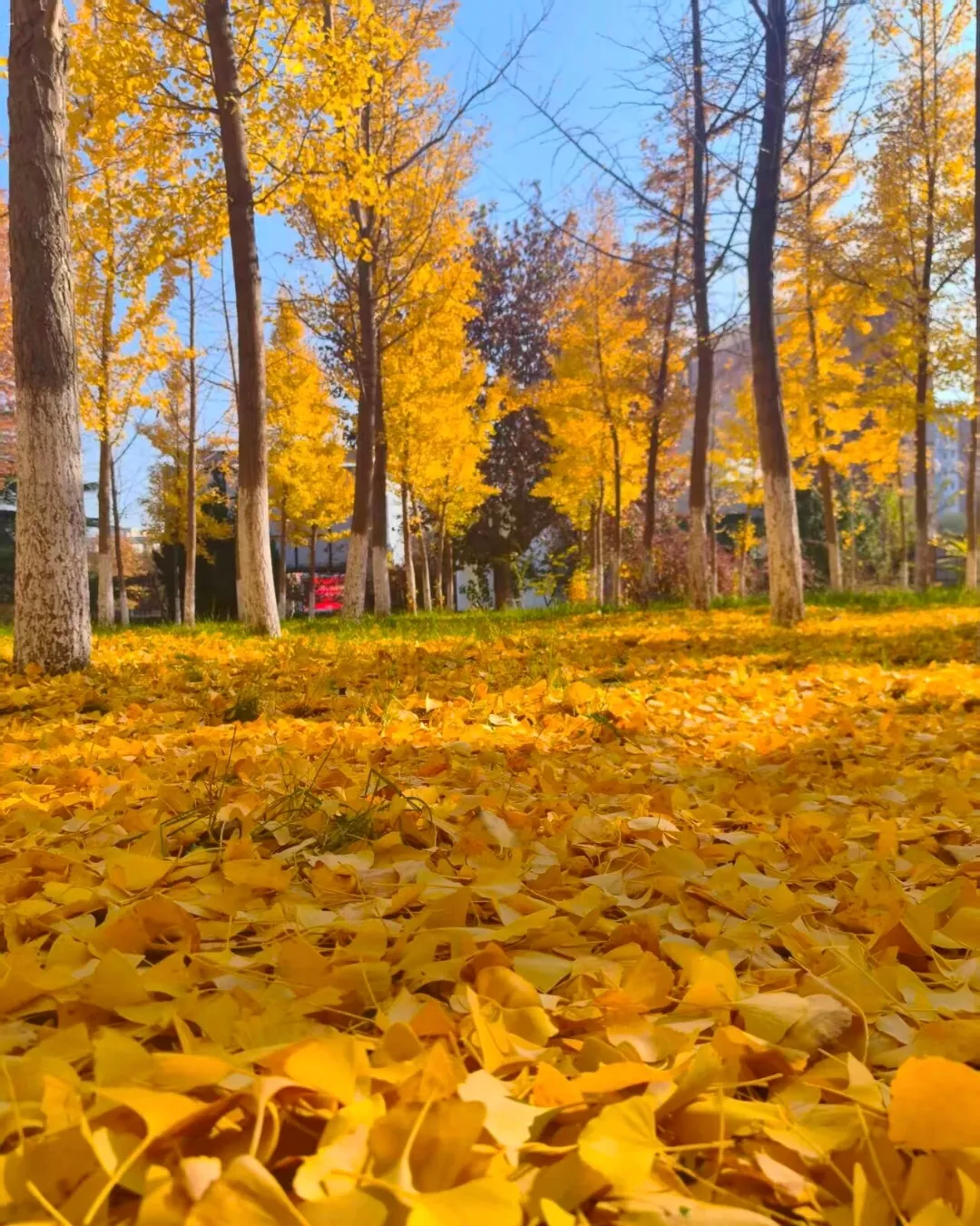
Key Takeaways
The six-week turn from summer to autumn unfolds in a fixed order of evidence. Read it in sequence, and you move with the season before the thermometer ever changes:
- Light changes first. The evening sun angles lower and shadows stretch sooner — usually in the two weeks before 立秋, Start of Autumn.
- Dew forms next. Centered on 处暑, End of Heat, the overnight air gains a thinness and dew begins to form before dawn while the daytime heat lingers.
- Then animal behavior. Swallows gather, crickets move indoors, birds begin storing food — the seventy-two pentads (七十二候) track these scouts at 白露, White Dew.
- Then the body turns. Sleep comes earlier, the appetite turns from summer’s light grazing toward nourishment and stored warmth.
- Temperature moves last. The air cools only reluctantly, after every other signal has already turned — and the forecast is the least reliable read of the turning.
Adjust the six-week window by a week either way for your latitude: a week later south of the Yangtze, a week earlier north of the Yellow River. The solar terms are a frame, not a cage.
The thermometer is the last signal, and the least reliable
Here is the order of evidence, in the sequence an attentive observer can verify within a single season. The light changes first. Then the dew. Then the behavior of birds and insects. Then the body’s appetite for rest. Only much later, almost reluctantly, does the air finally cool.
This is not folklore. It is a timekeeping system built on measurement. At the Dengfeng Observatory in Henan stands the gnomon by which the Yuan-dynasty astronomer Guo Shoujing measured the shadow of the summer solstice — and his reckoning differs from today’s standard time by only twenty-six seconds. Seven hundred years ago, the Chinese had already learned to read the year’s turning precisely, at the scale of light and shadow. The ancient seventy-two pentads, 七十二候, taught ordinary farmers to do the same: not to wait for a calendar or a forecast, but to watch the shortening shadows, the gathering swallows, the cricket climbing the house wall. The cricket, by the way, is among the first scouts — it takes up residence indoors as early as mid-July, weeks before the calendar admits that summer is ending. The natural world turns before our naming of it.
Start of Autumn (立秋): The Year Changes Direction
The solar terms split autumn’s arrival into stages that the English word “fall” collapses into one undifferentiated gesture. The first stage, Liqiu, arrives in early August. It is not a drop in temperature. It is a shift in direction. For the full profile of that first term — its astronomy, its traditions of 贴秋膘 and 咬秋 — see our Start of Autumn guide.
The character 秋 is itself a tiny field study. Some scholars argue its earliest forms picture a cricket — the singing insect that announces the darkening season. Others read it as grain touched by fire, the ripening field and the burn that follows harvest. Both readings say the same thing: at Liqiu, the year stops spending its energy upward and begins consolidating it into seed. The plant’s ambition switches from growing taller to growing heavier, and the grain begins to fill.
The farming logic of this is blunt. In the rice lands of the south they say, 处暑不出头,割谷喂老牛 — by End of Heat, if the grain has not headed, it will never yield; cut it for fodder and move on. The season imposes a deadline, and the farmer respects it because crops do not negotiate.
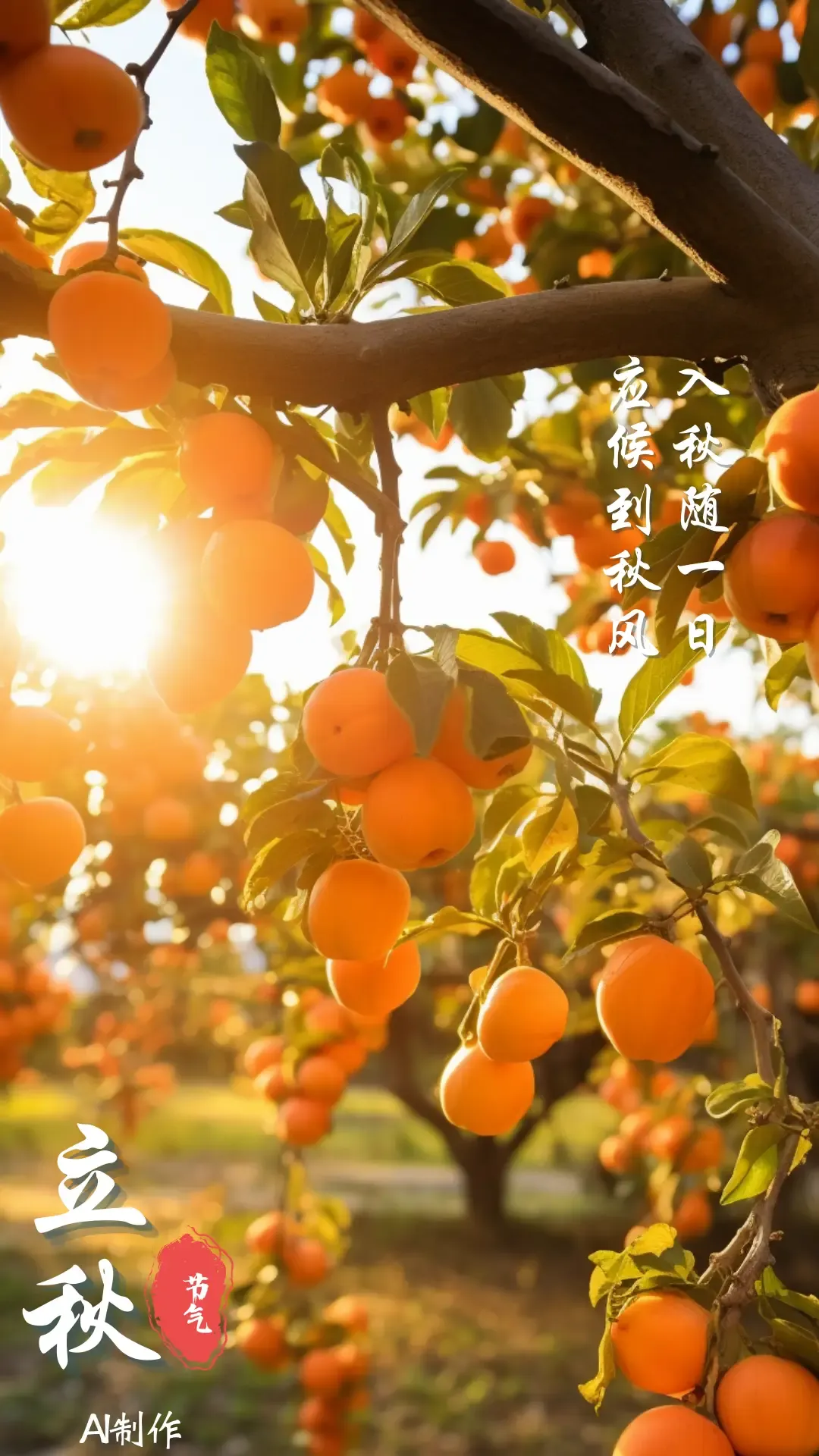
End of Heat (处暑): The Heat That Stops
The second stage, Chushu, carries a strange name — “the place where heat stops.” And yet the late-August forecast still reads thirty-six degrees, and the notorious Autumn Tiger, 秋老虎, is real. The heat does not read the calendar, and it does not appreciate being told to leave. We dig into the science of that residual heat and how it reshapes diet, sleep, and movement in our End of Heat wellness guide.
I have stood in the museum’s research library on such afternoons, the air thick enough to wring, and wondered honestly whether the old sages had invented a comforting fiction. But the pentads record, under End of Heat, 天地始肃 — heaven and earth begin to tighten. You cannot verify this at noon. You verify it at night, when the breeze at the window carries a thinness, a slight edge, that the daytime air refuses to admit. The dew begins to form before dawn. The heat is still in the room. The season has already left it.
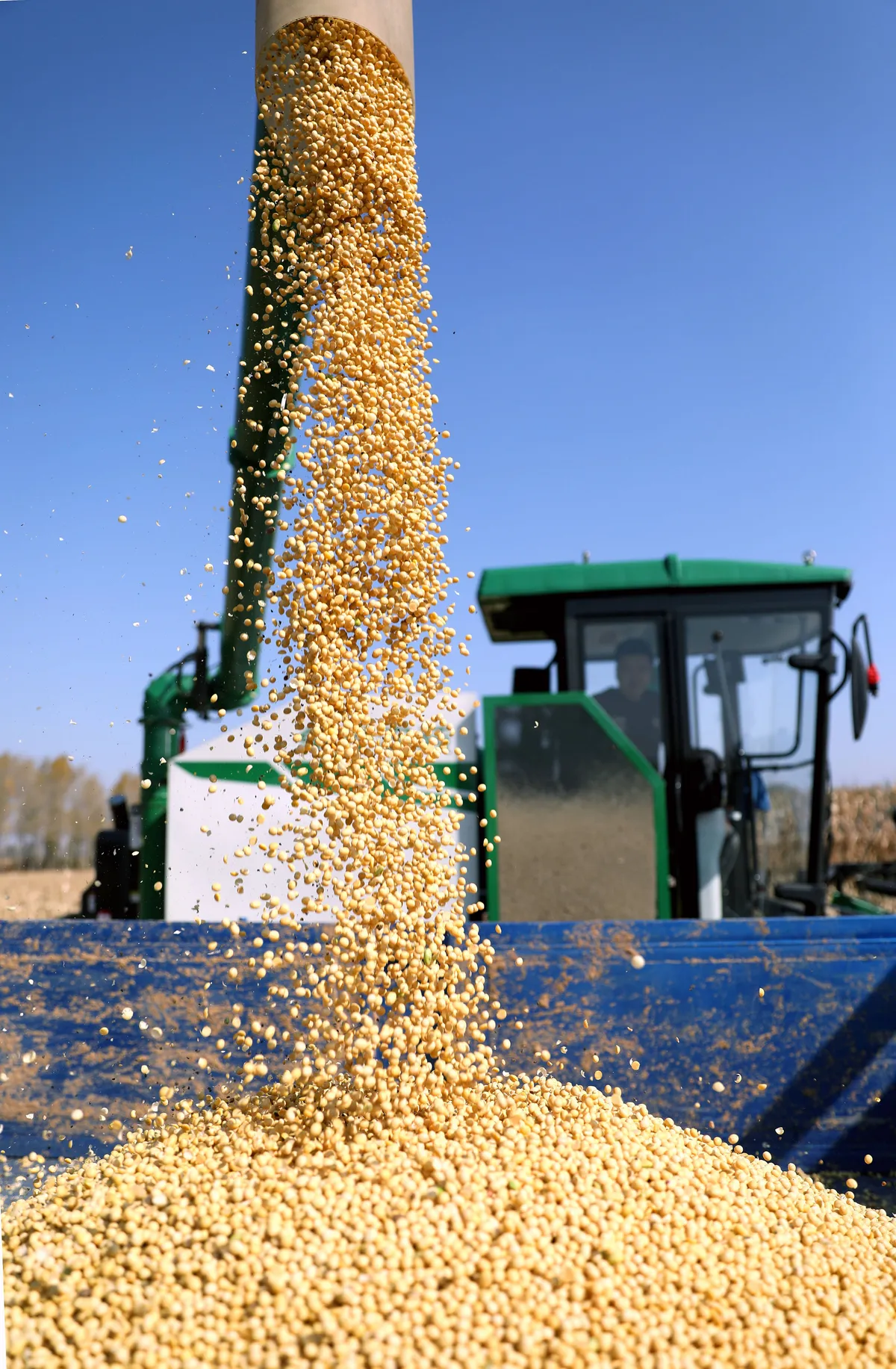
White Dew (白露): The Morning You Can See Autumn
By White Dew, in the first week of September, you no longer need the calendar at all. Overnight, the gap between day and night temperatures has widened enough that moisture condenses visibly on grass, on seed-heads, on car roofs. 蒹葭苍苍,白露为霜 — the old poem in the Book of Songs knew this stage centuries before meteorology gave it a Latin name. For the physics of that first overnight condensation and its place in the season, see our White Dew guide.
The pentads read the sky’s messengers in sequence: 鸿雁来, the wild geese arrive from the north; 玄鸟归, the swallows gather for the long flight south; 群鸟养羞, the birds begin storing food, sensing what we are slow to admit. The folk proverb is blunter: 白露身不露 — at White Dew, do not leave the body bare. The nights will confirm this within a week.
This staged, observational reading of the year is the difference between being carried by a season and walking with it. If you wait for the autumn chill to announce itself, you will be shivering in a thin shirt well into October, waiting for a switch that never comes — because the switch was never the point. The current was.
Read the light, not the thermometer
So here is the decision rule, the one I give to the young researchers on my field teams and to the visitors who ask what they should actually do with all of this: read the light, not the thermometer.
When you notice the evening sun angling lower and the shadows stretching sooner — usually in the two weeks before Liqiu — begin the shift. Move your sleep a little earlier, in small increments, so the change is a current rather than a jolt. Swap the cooling foods of deep summer — watermelon, bitter greens, iced drinks — for the moistening foods that suit the dryer air to come: pear, lotus root, white fungus, yam. Slow the pace of late-day activity, and let the body lean toward rest. When the overnight dew begins to form at White Dew, the transition is complete. You are not “waiting for autumn.” You are already in it.

Adjust the six-week window by a week either way for your latitude: a week later if you live south of the Yangtze, a week earlier if you live north of the Yellow River. The solar terms are a frame, not a cage.
One honest note. The old custom of 贴秋膘 — eating heavily at Liqiu to pad the body against winter — is one of our most beloved seasonal habits, and largely an anachronism in an age of refrigeration and adequate protein. But its kernel is not obsolete: the appetite genuinely turns at this time of year, away from summer’s light grazing toward nourishment and stored warmth. Honor the kernel. Skip the excess.
Living time
In my field investigations in rural Henan, I have sat under village trees with farmers who can recite solar-term proverbs by the dozen from memory — and who have also told me that warming winters have pushed their planting schedules nearly half a month later than their grandfathers’ generation. The proverbs still hold. The timing bends. The constancy within the natural order has not broken; it has only bent.
That is what makes the solar terms living time rather than museum fossils: a language for reading the year, in which the year keeps writing new sentences. Since UNESCO recognized the 24 solar terms as intangible cultural heritage, I have watched people share each solar term on social media like a greeting, and I take it as a sign of genuine revival. At the museum, we now design a seasonal dish set for each solar term in the cafeteria — lotus root at White Dew, pear soup when the dryness begins — and the lunch queue swells a little on those days. Small things, but small things are how an inheritance returns to daily life.
The solar terms are, at root, the Chinese argument for harmony of heaven and humans — a way of keeping human time inside natural time. By the time the leaves finally turn, the river of the year has been flowing toward autumn for six weeks. The light told you in July. The dew told you in September. The sky told you all along. You can be the last to notice, or you can read the signals, walk with the current, and arrive in autumn the way a farmer arrives at harvest: on time, because the year told you when.
For the full library of seasonal guidance across the year, explore our Seasonal Guides hub, and for quick answers to how each of the 24 terms fits together, see the Solar Terms FAQ. And when the turn completes and the dew grows cold, our Cold Dew and Tai Chi guide carries the same walk-with-the-season idea into the colder weeks that follow.
Frequently Asked Questions
Quick answers about autumn transition guide: reading the six-week turn from summer to autumn.
How long does the autumn transition take?
About six weeks, spanning three solar terms: Start of Autumn (立秋, early August), End of Heat (处暑, late August), and White Dew (白露, first week of September). The temperature is the last signal to move in this process.
What is the first sign that autumn is arriving?
The light changes first — the evening sun angles lower and shadows stretch sooner, usually in the two weeks before Start of Autumn. Only later do dew, animal behavior, and finally temperature follow.
Does the autumn transition apply everywhere?
The solar terms are a frame, not a cage. Adjust the six-week window by a week either way for your latitude: a week later south of the Yangtze, a week earlier north of the Yellow River.
Related Solar Terms
Latest Articles
Recent guides and seasonal insights
From Dao of Seasons
Dumplings at Winter Solstice and Lunar New Year: Two Moments in the Seasonal Calendar
Explore why dumplings appear at China's Winter Solstice and Lunar New Year, how seasonal timing shapes food traditions, and why customs vary by region and family.
Cold Dew and Tai Chi: Moving Gently into Late Autumn
Explore Cold Dew, the 17th solar term, through seasonal Chinese wisdom and Tai Chi. Learn how to move, breathe, stay warm, and welcome late autumn.
Mid-Autumn Festival: the Full-Moon Harvest of the Third Quarter
Mid-Autumn Festival falls on lunar 8/15 — the full moon of the harvest month. In 2026 it lands on September 25, inside the same week as the equinox and the Harvest Moon. The traditions, foods, and moon-viewing culture of the year's great moon festival.
From Our Network
Winter Warming Stews — Lamb, Congee & Tang Yuan
Winter calls for deeply warming, nourishing foods that support the body through the coldest months. These three classic recipes — lamb stew, eight-treasure congee, and tang yuan — are traditional winter solstice fare.
When Does Autumn Start? Astronomical, Meteorological, and Seasonal Dates Explained
Autumn does not have one start date. Meteorological autumn begins September 1. Astronomical autumn starts at the equinox, around September 22–23. In the 24 solar terms, autumn begins earlier, with Start of Autumn around August 7–8. Each system measures a different kind of seasonal change.
July Garden — Peak Summer Care and Harvest
July's garden demands daily attention. From deep watering strategies to succession planting, here's how to keep your garden productive through the hottest weeks of the year.
July Walking — Summer Strolls and Moonlit Rambles
Walking in July is about timing. Learn the best hours, routes, and practices for comfortable summer walking — from dawn patrols to night walks under the stars.
Solar Terms FAQ — Answers to Common Questions About All 24 Solar Terms
Comprehensive FAQ covering all 24 solar terms — what each term means, when it occurs, what foods to eat, how to practice seasonal wellness, and what natural changes to observe. Organized by season for easy browsing.
Written by The Way of Nature
Dao of Seasons is part of The Way of Nature ecosystem — a network of seasonal practice, food wisdom, and nature observation.
Meet our contributors →