

Key Takeaways
The essentials of Start of Winter in under a minute.
- This term: Start of Winter (立冬) is the 19th solar term of the 24-term year, running November 8 – November 21.
- What happens in nature: Soil surface freezes overnight for the first time as temperatures drop below 0°C (32°F)
- Why it matters: This is the season's inflection point: the body's conservation systems activate, and all living things shift from outward engagement to deep internal storage.
- Shift since last term: Frost becomes freeze — the temporary crystallizations of Frost Descent give way to persistent ground ice
- Moving toward: The first dusting of snow follows the first freeze — the landscape transforms from bare to covered
- Start here: Begin with Dantian Breathing for Warmth and Stillness.
Core Definition
Winter officially begins — the soil freezes from the surface downward, and the outer activity of the year draws to a close.
This is the season's inflection point: the body's conservation systems activate, and all living things shift from outward engagement to deep internal storage.
Transition
How this term sits between what came before and what comes next
- ←Frost becomes freeze — the temporary crystallizations of Frost Descent give way to persistent ground ice
- ←The last visible preparations for winter are complete — what is not protected is now exposed
- →The first dusting of snow follows the first freeze — the landscape transforms from bare to covered
- →The quiet of winter deepens as snowfall dampens ambient sound
Phenology
What is happening in the natural world
Cook It
The ingredients below are in season now, with how to actually cook them.
Move
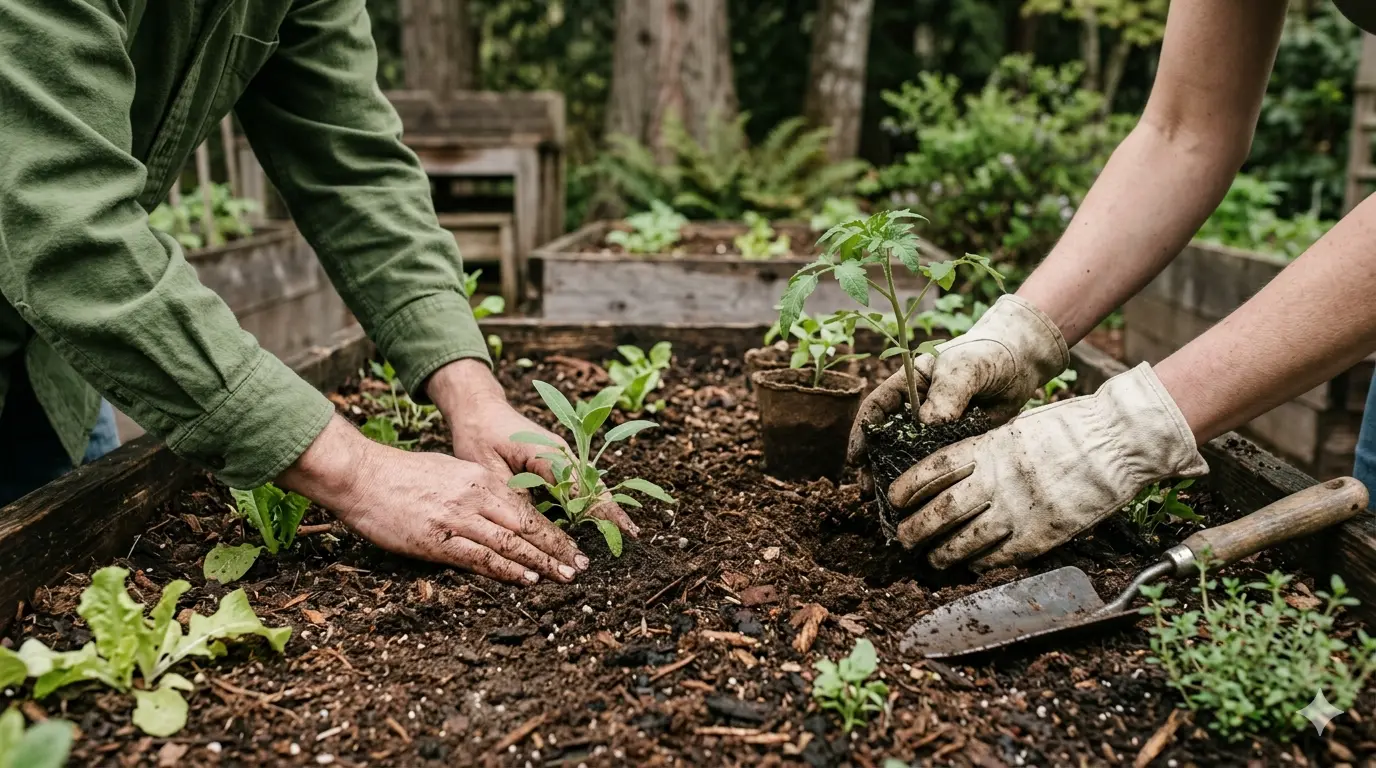
Grow & Cultivate
- Store all tools and clean equipment thoroughly — residual soil and moisture promote rust through the dormant months
- Apply final winter mulch to perennials — straw or leaf cover insulates root systems against freeze-thaw heaving
- Drain and store irrigation systems before the first hard freeze cracks pipes and fittings
- Begin winter pruning of fruit trees and woody shrubs while they are fully dormant
Ecology Signals
Animal behavior, migration, habitat changes
Soil surface freezes overnight, driving soil-dwelling invertebrates below the frost line and triggering hibernation biochemistry in amphibians and reptiles
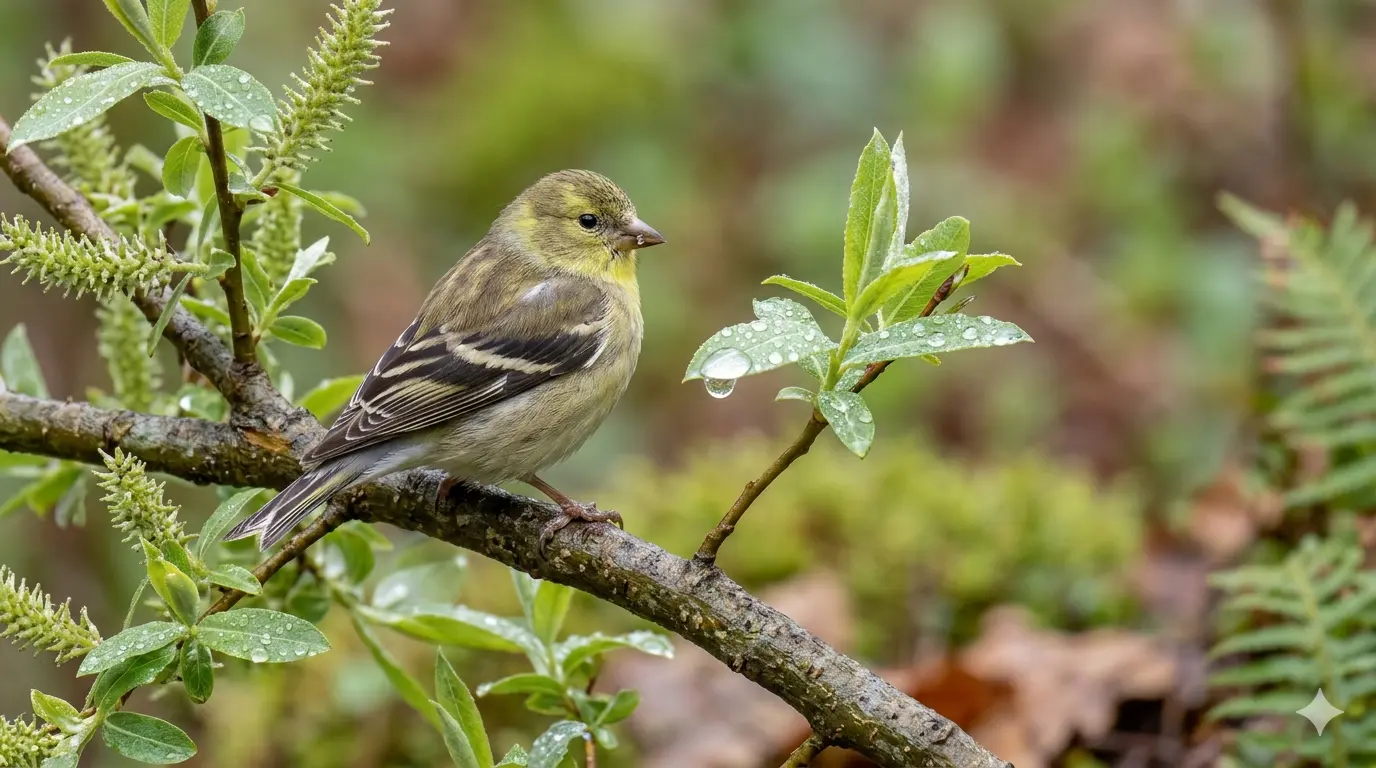
The final migratory species depart — what remains are the resident birds that will endure the full winter: crows, magpies, sparrows
Deciduous trees complete nutrient withdrawal into roots; sap descends fully, and the above-ground structure enters full winter dormancy
Reflection
“Turn inward — the outer year is done”
“Store your energy like the seed stores its life beneath the frozen soil”
Taoist Reflection
This term's seasonal wisdom echoes a deeper theme in Taoist philosophy. Explore it further on Tales With Lee:
Returning in Taoism: The Movement I Keep Resisting and NeedingSeasonal Essay
A deeper look at this solar term
Start of Winter marks the beginning of the water season — the time of deep storage, of conservation, of turning inward toward the essential. The character 立 means “to establish” or “to begin”, and 冬 means winter. Unlike the gradual cooling of autumn, Start of Winter announces a threshold: the freeze has arrived, and everything that lives must now contend with it. It is the nineteenth of the 24 solar terms and the traditional, calendrical start of winter: 立冬 opens the season in the solar-term system, which is not the same as the meteorological first day of winter (set by temperature averages) or the astronomical winter that begins at the winter solstice.
The earth begins to freeze from the surface downward. This is not a single dramatic event but a daily pattern — thawing in afternoon sun, refreezing at night, each cycle driving the frost line a few millimeters deeper. The sound of the ground changes during Start of Winter. What was soft underfoot becomes firm, then hard, then resonant. A footstep on frozen soil produces a different quality of sound than the same step taken a week earlier — a subtle acoustic signal that the season has shifted from living to dormant.
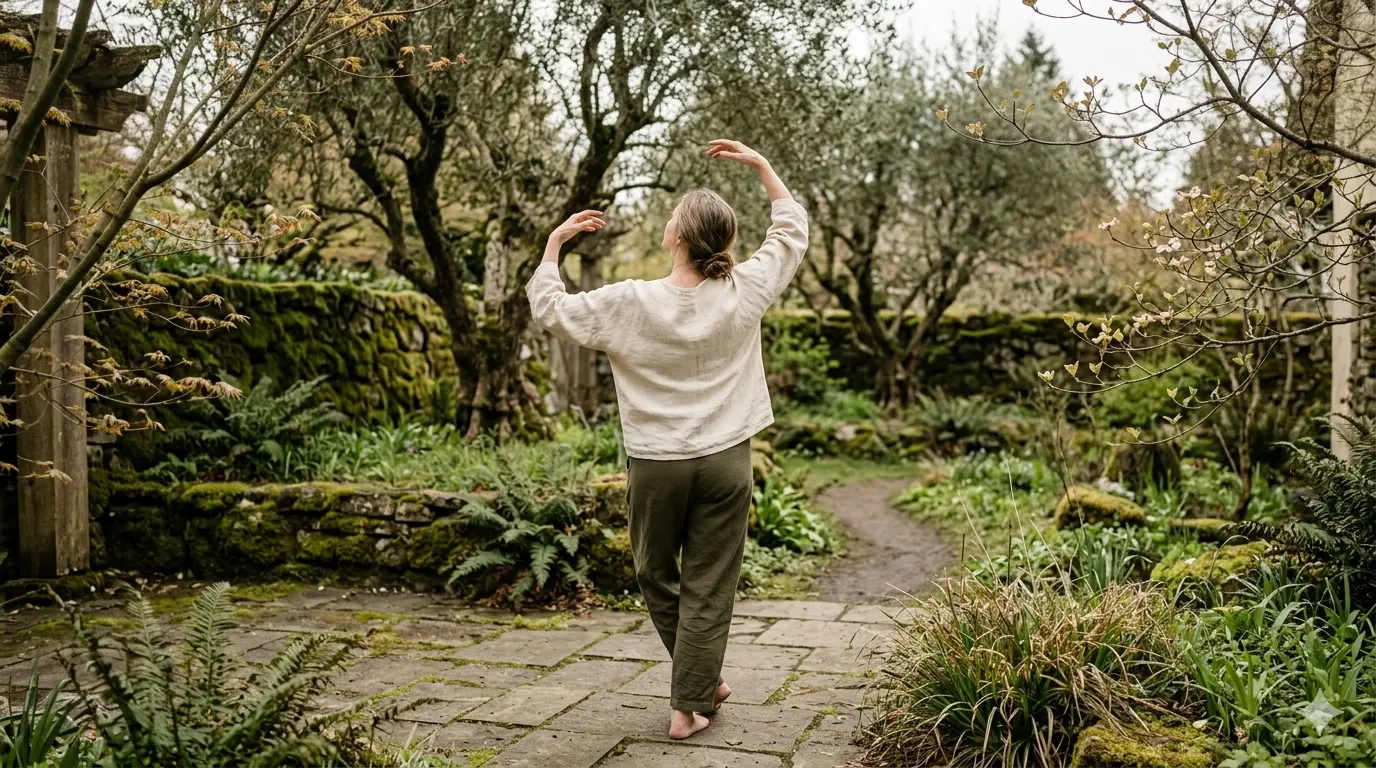
For the human body, Start of Winter triggers a set of metabolic and behavioral responses that are older than civilization. The kidney system, in traditional Chinese physiology, governs the body’s deepest energy reserves — the yuan qi that sustains life through periods of deprivation. This is not metaphor. Cold exposure increases metabolic rate as the body generates heat through shivering and non-shivering thermogenesis. The body literally burns more energy to maintain its core temperature, drawing on stored reserves. Kidney-Warming Standing Meditation and Winter Evening Joint Mobility address this directly — one by generating internal heat through sustained postural engagement, the other by maintaining the range of motion that cold weather naturally restricts.
The agricultural calendar at Start of Winter shifts from production to protection. Tools are cleaned and stored — not put away carelessly, but prepared for months of disuse in conditions that promote rust. Irrigation systems are drained before the first hard freeze can crack pipes and fittings. Perennial plants receive their final mulching, the straw or leaf cover that will insulate root systems against the freeze-thaw cycles that heave soil and expose roots to killing cold. These are not busy-making tasks. They are the final acts of care that determine what survives to grow again in spring.
The ecological signals of Start of Winter are largely about withdrawal. The last migratory birds have departed or are departing — what remains overhead are the resident species that will ride out the full winter: crows, magpies, sparrows, the hardy birds whose metabolisms and foraging strategies are adapted to cold and scarcity. Soil-dwelling invertebrates retreat below the frost line, entering diapause, a state of suspended development that can persist for months. Amphibians and reptiles, whose body temperatures match their environment, have already found their hibernation sites — burrows, crevices, the mud at the bottom of ponds — and will not emerge until spring temperatures reverse the freeze’s command.
This is a term for intentional withdrawal. Just as trees pull their sap down into the roots and animals retreat to their winter shelters, we too are invited to turn our attention inward. The energy conserved during this season — the sleep, the stillness, the warm food, the reduced expenditure — becomes the fuel for spring’s emergence. Rest, properly understood, is not idleness. It is the phase of the cycle that makes the next phase possible. Start of Winter does not apologize for the cold it brings. It simply states: the outer year is done. Go inside. Wait. The cycle will turn. The first visible sign of that turn comes with Minor Snow, when the landscape shifts from bare to covered — and the conservation logic of this season is explored in the Atlas essay on rest as a seasonal practice.
Frequently Asked Questions about Start of Winter
Quick answers to common questions about Start of Winter (立冬) — its dates, foods, and natural signs.
What is Start of Winter (立冬) and what does its name mean?
Start of Winter (立冬, Lìdōng) is the nineteenth solar term. The character 立 means 'to establish' or 'to begin', and 冬 means winter — together they announce a threshold: the freeze has arrived, and everything that lives must now contend with it. Unlike autumn's gradual cooling, this term marks the moment when soil freezes from the surface downward and the outer activity of the year draws to a close.
When does Start of Winter occur and what weather defines it?
Start of Winter typically falls around November 7–8 each year and lasts about 15 days until Minor Snow (小雪). In 2026, it runs from November 8 to November 21. The soil surface freezes overnight as temperatures drop below 0°C (32°F), deciduous trees stand bare, and the first snowfall becomes climatologically possible across northern latitudes.
What foods are traditionally eaten at Start of Winter?
This term calls for the most warming preparations. Hearty bone broth with root vegetables provides minerals, gelatin, and warmth. Slow-cooked lamb with Chinese herbs — goji berries, red dates, and ginger — builds the body's deep warmth for preservation. Black sesame congee, ground into a warm nutty porridge, is traditionally valued for kidney-nourishing properties as cold sets in.
What is the frost line and how does it behave during Start of Winter?
The ground freezes in a daily pattern — thawing in afternoon sun, refreezing at night, each cycle driving the frost line a few millimeters deeper. This is why final winter mulching matters: straw or leaf cover insulates root systems against the freeze-thaw cycles that heave soil and expose roots to killing cold. The earth's sound changes too — a footstep on frozen soil produces a different, more resonant sound than the same step a week earlier.
What does the body's response to cold have to do with the kidneys?
In traditional Chinese physiology, the kidney system governs the body's deepest energy reserves — the yuan qi that sustains life through deprivation. Cold exposure increases metabolic rate as the body generates heat through shivering and non-shivering thermogenesis, burning more energy to maintain core temperature (a mechanism documented in physiology — see Wikipedia, 'Thermogenesis'). Kidney-Warming Standing Meditation generates internal heat through sustained postural engagement, while Winter Evening Joint Mobility maintains range of motion that cold weather naturally restricts.
Start of Winter is part of The Way of Nature Atlas — a broader exploration of ecological wisdom.