

Key Takeaways
The essentials of White Dew in under a minute.
- This term: White Dew (白露) is the 15th solar term of the 24-term year, running September 8 – September 22.
- What happens in nature: Morning dew forms visibly on grass, leaves, and spider webs — the first reliable overnight condensation of the autumn
- Why it matters: Dew is autumn announcing itself before the cold arrives — notice the small change before it becomes obvious.
- Shift since last term: Residual summer heat finally dissipates
- Moving toward: Day and night reach equal length
- Start here: Begin with Dantian: Sinking and Settling the Qi.
Core Definition
Morning dew becomes visible as temperatures drop — the first visible sign of autumn's approach.
Dew is autumn announcing itself before the cold arrives — notice the small change before it becomes obvious.
Transition
How this term sits between what came before and what comes next
- ←Residual summer heat finally dissipates
- ←Night temperatures drop enough for visible condensation
- →Day and night reach equal length
- →Cooling accelerates toward true autumn temperatures
Phenology
What is happening in the natural world
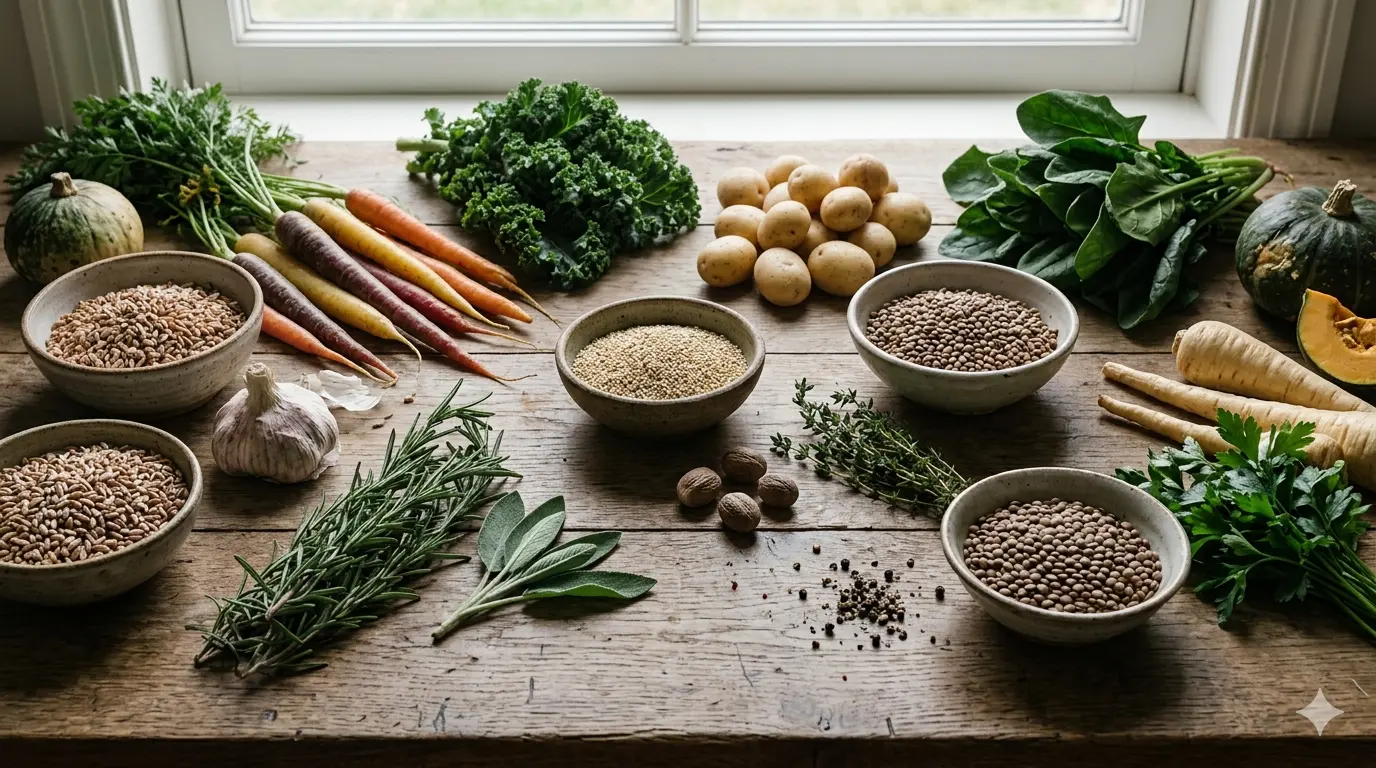
Cook It
The ingredients below are in season now, with how to actually cook them.
Move
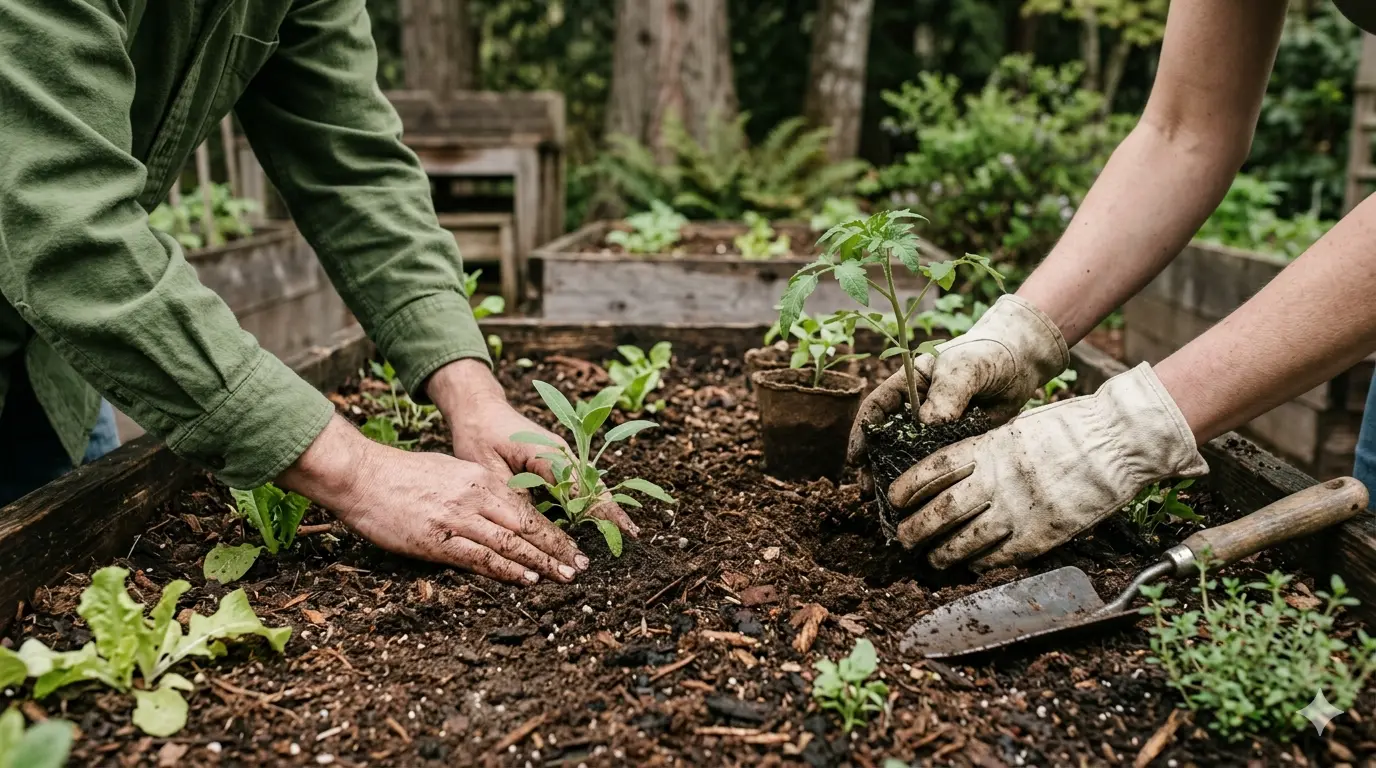
Grow & Cultivate
- Begin autumn crop harvesting — cooler temperatures slow spoilage, extending the harvest window
- Prepare fields for winter wheat planting — soil moisture from dew and early rain supports germination
- Start curing and storing late-summer produce: onions, garlic, winter squash need 2-3 weeks of dry curing
Ecology Signals
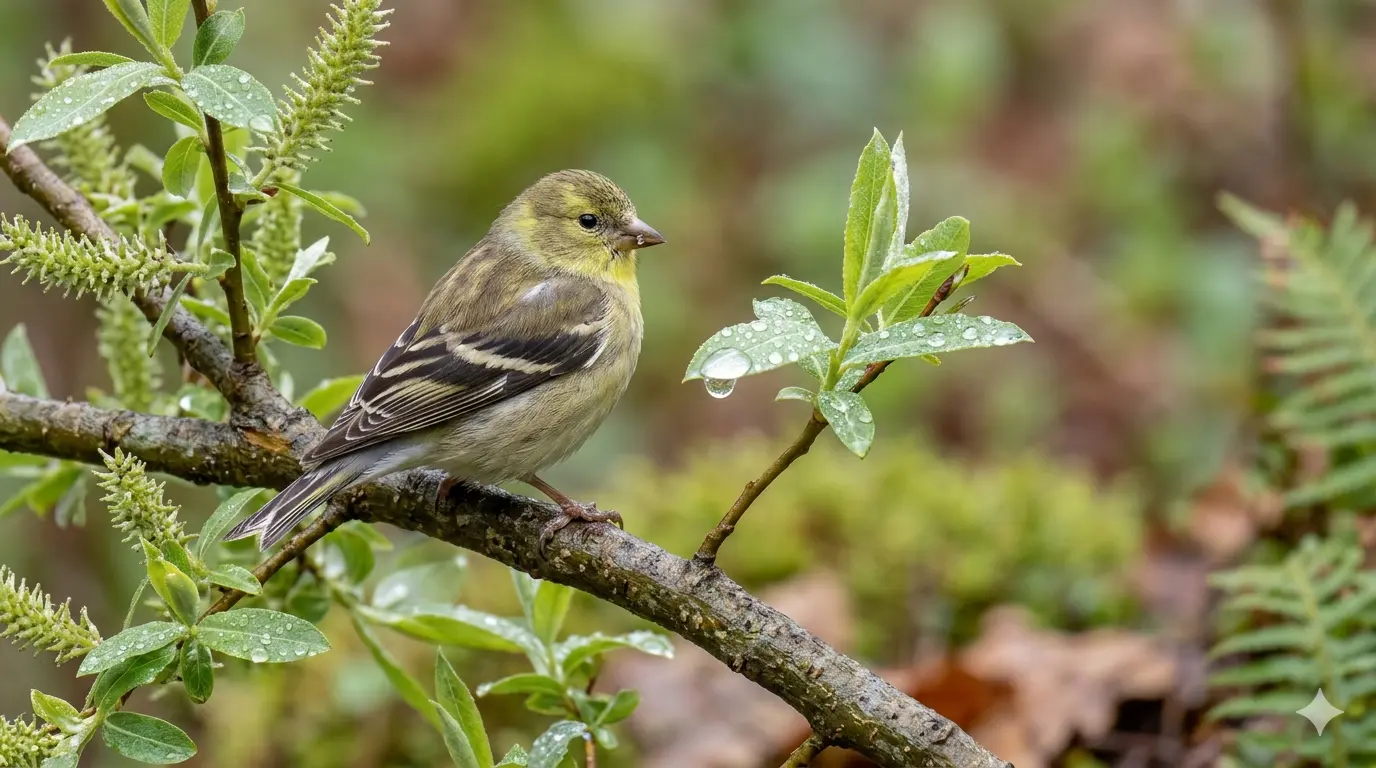
Animal behavior, migration, habitat changes
Swallows gather in large flocks before beginning their southward migration — departure timing is triggered by declining insect availability at cooler temperatures
Crickets dominate the evening soundscape as their chirp rate tracks the cooling trend — each degree of temperature drop produces a measurable slowing of the call frequency
Reliable overnight dew formation begins when nighttime temperatures consistently cross the dew point — the first visible indicator that autumn cooling has passed a threshold
Reflection
“Notice the small change before it becomes obvious”
“Dew announces autumn before cold arrives”
Taoist Reflection
This term's seasonal wisdom echoes a deeper theme in Taoist philosophy. Explore it further on Tales With Lee:
The Uncarved Block: The Taoist Image I Took Too Softly at FirstSeasonal Essay
A deeper look at this solar term
White Dew (白露) is the quietest of the seasonal transitions — so subtle that you could miss it entirely if you were not paying attention. No dramatic event announces its arrival. There is no harvest urgency, no temperature extreme, no visible transformation of the landscape. What changes is a single physical phenomenon: on the first morning of this term, if the night has been clear and the air still, you will find dew on the grass. Not as an occasional occurrence, but as a reliable, season-defining pattern.
The name 白露 is precise. 白 means white, describing the visible quality of moisture condensed on surfaces in the early morning light. 露 means dew — not rain, not frost, but the specific form of water that appears when warm daytime air, still carrying the moisture of late summer, cools through the night to its dew point. This is the first solar term in the annual cycle where overnight cooling consistently crosses that threshold, and the visible result is a landscape transformed each morning into something briefly jeweled and luminous.
The ecological signals of White Dew are just as subtle as its meteorological definition. Swallows, which have been a constant presence throughout the summer, begin gathering in larger flocks on telephone wires and rooflines. They are not yet migrating — that comes later — but the social behavior has shifted from nesting and feeding to flocking and staging. Crickets become the dominant sound of evening, their chirping rate measurably slower than it was during the height of summer, because cricket metabolism is directly tied to ambient temperature. A slower cricket is a cooler cricket, and a cooler cricket is the first audible evidence that the season is changing. In the garden, White Dew opens the autumn harvest window — cooler temperatures slow spoilage, extending the time crops can stay on the plant. Fields are prepared for winter wheat, whose germination will rely on soil moisture carried in by dew and early rain, and the last of the summer produce — onions, garlic, winter squash — goes into curing and storage for the 2-3 weeks it needs to dry properly. Each morning, dew turns spider webs into visible filigree, and late-season fruits reach their sugar peak as the gap between warm days and cool nights widens.
For the body, White Dew represents a threshold that demands specific attention. The Lung-Opening Morning Qigong addresses the organ system that Chinese medicine associates with autumn — the Lungs govern the skin and the body’s boundary with the external world, and the appearance of dew on grass is mirrored by a need to attend to the body’s own surfaces and boundaries. Evening Joint Mobility practice prepares the joints for the stiffness that cooler, damper weather will soon bring. These are not dramatic interventions. Like the dew itself, they are small, precise adjustments that recognize change before it becomes crisis.
There is a profound teaching in White Dew about attention. Most seasonal transitions announce themselves loudly — the first frost, the first snow, the first heat wave. But White Dew arrives almost silently, visible only if you walk outside in the early morning and look down. It rewards the kind of noticing that requires no special equipment, no expert knowledge, only the willingness to pay attention to the world at the moment when most people are still asleep. Autumn is coming. The dew knows it. The question White Dew asks is whether you know it too. The Atlas essay on seasonal observation begins from exactly this premise — that attention is itself a seasonal practice, and that the small changes are where the real information lives. For practical guidance through the term, the White Dew guide walks through what to eat, move, and observe, and our tea notes for this term pair the season’s first cool mornings with the right cup.
Frequently Asked Questions about White Dew
Quick answers to common questions about White Dew (白露) — its dates, foods, and natural signs.
What is White Dew (白露) and why is its name so precise?
White Dew (白露, Báilù) is the fifteenth solar term. The name is exact: 白 means white, describing the visible quality of moisture condensed on surfaces in early morning light, and 露 means dew — not rain, not frost, but the specific form of water that appears when warm daytime air cools through the night to its dew point (see Wikipedia, 'Dew point'). It is the first term where overnight cooling consistently crosses that threshold.
When does White Dew occur and what weather defines it?
White Dew typically falls around September 7–8 each year and lasts about 15 days until the Autumn Equinox (秋分). In 2026, it runs from September 8 to September 22. Night temperatures consistently drop below the dew point, condensing atmospheric moisture into visible droplets by dawn, and the first cool mornings arrive — stepping outside at dawn requires a light layer for the first time since spring.
Why do crickets sing more slowly at White Dew?
Cricket metabolism is directly tied to ambient temperature — a slower cricket is a cooler cricket. Each degree of temperature drop produces a measurable slowing of the chirp rate, which is why crickets become a natural thermometer. At White Dew, the evening chirping is noticeably lower than during the height of summer — the first audible evidence that the season is changing.
What foods are recommended during White Dew?
White Dew brings the peak of the grape harvest alongside the first autumn pears — fruits at their juiciest and sweetest as the days cool, and in the traditional Chinese framework, autumn's fruits are associated with the lungs. Lightly oxidized oolong or fresh autumn-picked green tea offers a gentle seasonal transition. Steamed fish with ginger and spring onion provides easily digestible protein without heaviness, appropriate as the body's needs shift with cooler mornings.
What do swallows and dew have in common at White Dew?
Both are quiet signals of departure and threshold. Swallows, constant presences all summer, begin gathering in larger flocks on wires and rooflines — not migrating yet, but shifting from nesting to flocking and staging. Meanwhile reliable overnight dew formation begins when nighttime temperatures consistently cross the dew point. Together they reward the kind of noticing that requires no equipment — only willingness to look down at the grass and up at the wires.
White Dew is part of The Way of Nature Atlas — a broader exploration of ecological wisdom.