Start of Autumn (立秋): What the First Autumn Solar Term Really Means
Start of Autumn (Liqiu, 立秋) is the 13th of the 24 solar terms and the official beginning of autumn in the traditional Chinese calendar. It marks a directional turning point — summer's expansion peaks and begins yielding to autumn's contraction weeks before temperatures follow. This guide explains what Liqiu actually marks, the autumn tiger, the 72-pentad phenology, and the traditions of 贴秋膘, 咬秋, and 晒秋.
Start of Autumn (Liqiu, 立秋) is the 13th of the 24 solar terms and the official beginning of autumn in the traditional Chinese calendar. It marks a directional turning point: summer’s expansion has reached its peak and now yields to autumn’s contraction — even though actual temperatures may not drop for weeks.
Key Takeaways
- Autumn begins with a change in the quality of light, not a drop in temperature.
- Liqiu marks a directional turn from expansion to contraction — the autumn tiger proves the calendar can turn while the weather does not.
- Trust phenological signals — swallows gathering, crickets moving closer, dew lingering — over the thermometer.
- When the light changes, begin the shift from cooling to moistening foods — and save the watermelon for one last 咬秋.
The First Autumn Signal Isn’t Temperature — It’s Light
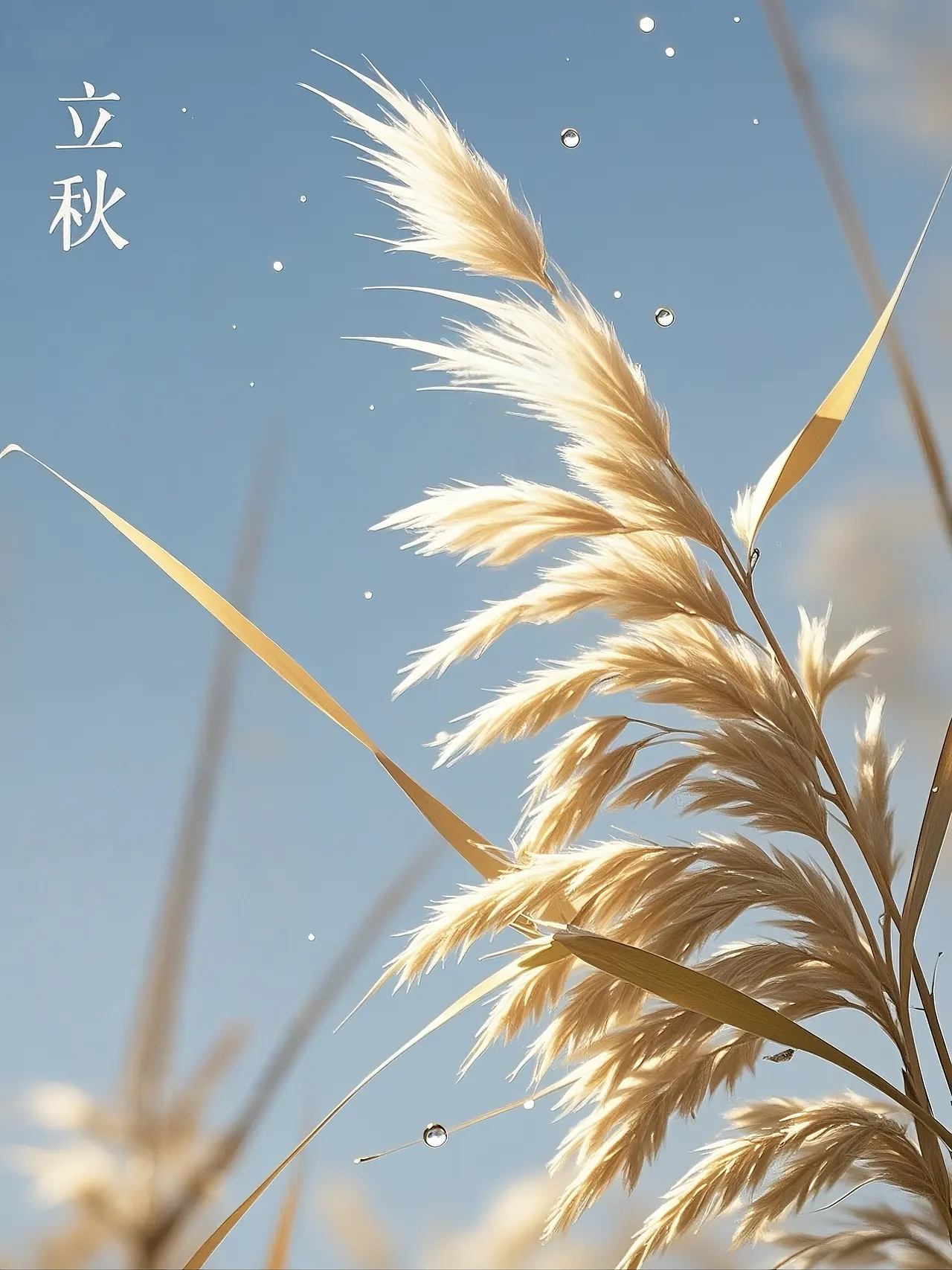
Step outside in early August and the first thing autumn does is not what you expect. It does not cool the air. It changes the light. Shadows stretch a little longer by late afternoon; the evening sun angles through the trees at a gentler slant; the heat still presses on your shoulders, but something in the quality of the day has shifted. Autumn doesn’t begin with cold weather — it begins with a change in the quality of light. Farmers have known this far longer than thermometers have existed. In my field investigations in rural Henan, I have sat with elders who never check the forecast — they read the angle of the sun, the behavior of crickets, the first cool breath at dawn — and they tell you with quiet certainty: the year has turned. This is the deeper meaning of Start of Autumn: phenological observation refined over centuries into a timekeeping system.
What Liqiu Actually Marks — Direction, Not Temperature
Start of Autumn (Liqiu, 立秋) is the 13th of the 24 solar terms and the official beginning of autumn in the traditional Chinese calendar. Astronomically it begins when the sun reaches 135° of solar longitude, measured along the ecliptic from the spring equinox, and it belongs to the jié (节) family of terms that mark the leading edge of a season — rather than the qì (中气) terms such as the equinoxes and solstices that sit at a season’s centre. But what does “beginning” mean here? Within the harmony of heaven and humans, Liqiu marks a directional turning point: summer’s expansion has reached its peak and now yields to autumn’s contraction. It is a turn in the year’s momentum, not a change in the weather. For readers asking when exactly autumn starts across different measurement systems — meteorological, astronomical, and solar term — our When Does Autumn Start guide lays out all the systems side by side. Liqiu is a fixed point in the traditional lunisolar calendar, which reconciles lunar months with the solar year by inserting an intercalary month — the mechanism explained in our lunar calendar and seasonal festivals guide. The ancients measured this turn with astonishing precision. At the Dengfeng Star Observation Platform, Yuan dynasty scientist Guo Shoujing enlarged the gnomon to forty chi, achieving a time precision that differs from today’s standard by only 26 seconds. The shadow that shrank all summer begins, at Liqiu, to lengthen again. That growing shadow is the real signal. The calendar turns; the heat lingers on.
The Autumn Tiger: Why August Still Feels Like Summer
The autumn tiger (秋老虎) is the name Chinese climate observation gives to the residual heat after Liqiu — a stretch of intense, summer-like weather that can persist well into September. Climate researchers such as Song Yingjie of the China Meteorological Administration have confirmed what farmers already knew: Liqiu does not end the heat. The hottest stretch of the year — the sanfu dog days — spans late July into August, and Liqiu usually falls inside it. The calendar turns while the weather does not. This is not a flaw in the solar term system; it is proof that Liqiu measures direction, not temperature. The tiger is the year’s momentum resisting the turn — and in an era of climate change, it can bite harder. Farmers in Henan describe planting schedules shifted by nearly half a month compared with their grandfathers’ time. The frost comes later, but the year still turns. The solar terms remain a frame, not a cage.
What the 72 Pentads Describe at Start of Autumn
The 72 pentads (七十二候) — the refined phenological sequence that divides each solar term into three five-day observations — show autumn arriving in nature before it arrives in the air. At Liqiu, the classic record names three signs: 凉风至, the cool wind arrives; 白露降, white dew descends; 寒蝉鸣, cold cicadas sing. Notice what is not on the list: falling temperatures. Instead, the wind changes character, dew begins to form in the early morning, and the cicadas’ song shifts from summer’s frantic percussion to a thinner, later note. Watch the swallows: they gather in larger flocks on wires, rehearsing the long departure. Crickets edge toward the house, drawn by warmth. These are nature’s signals, and they are more reliable than the thermometer for knowing when the year has turned. Let them be your teachers.
Traditions: 贴秋膘, 咬秋, and 晒秋
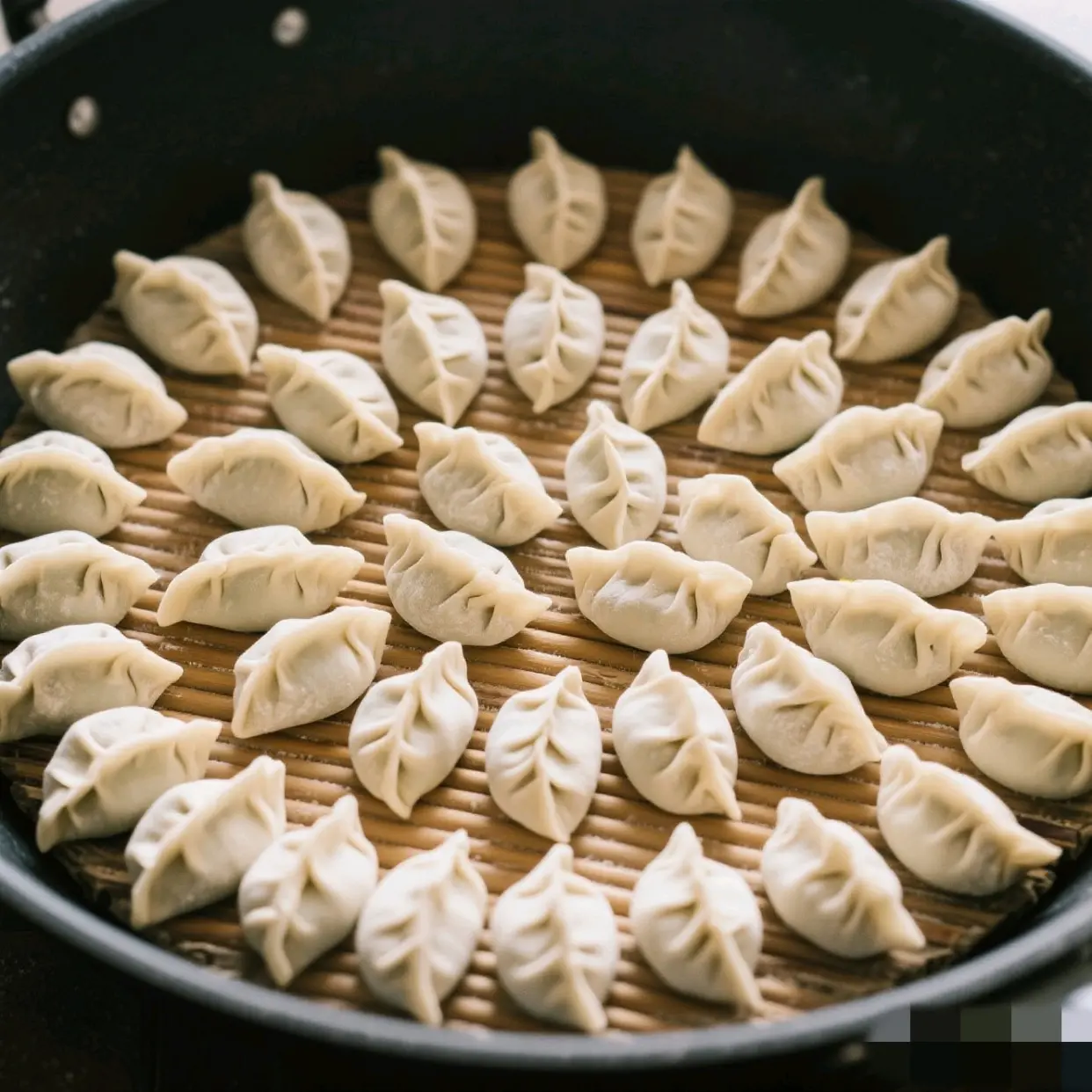
For over two millennia, Chinese farming society marked Liqiu with three living traditions. 贴秋膘 — autumn fattening — grew out of the experience of 苦夏, the summer loss of appetite: people weighed themselves at 立夏 and again at 立秋, then ate rich, nourishing food to restore what the heat had taken. 咬秋, or 啃秋, is the act of biting into watermelon at Liqiu — holding summer’s cool in your mouth a little longer. 晒秋, the drying of harvested crops, remains a vivid living practice in places like Huangling, Jiangxi, where whole villages become tapestries of red peppers, golden corn, and persimmons on rooftops. Let me be honest: none of these are validated medicine. 贴秋膘 cures nothing by itself. But they are not superstition either. They encode the seasonal skill of preparing for what comes — storing food, restoring strength, reading the year’s rhythm. That is the wisdom worth inheriting.
Wellness: Shifting from Cooling to Moistening
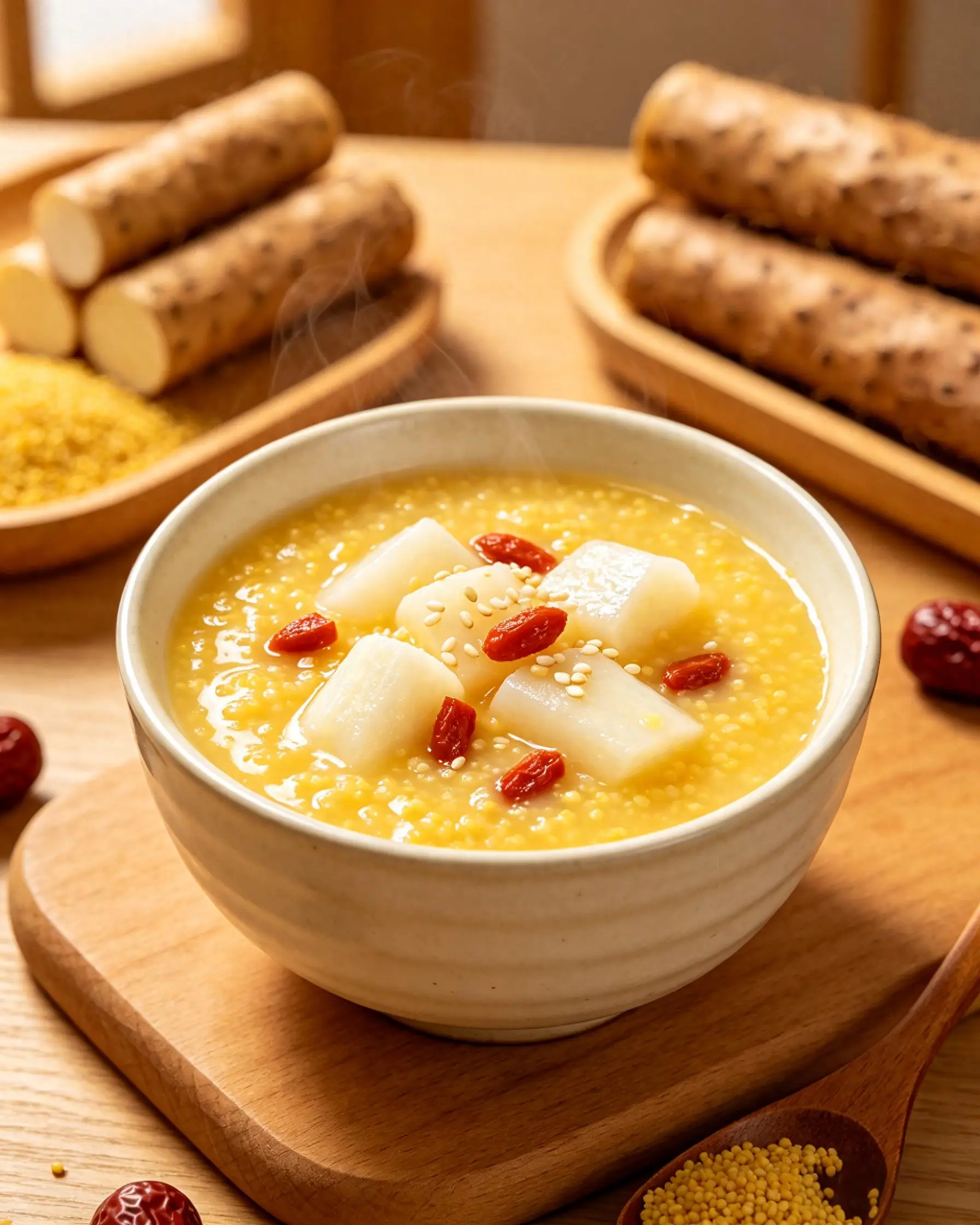
In traditional Chinese wellness practice, summer is governed by cooling foods — bitter melon, mung bean, watermelon — that push heat out of the body. Autumn is governed by dryness, and the organ most vulnerable to dryness is the lung, whose meridian runs through the chest and throat. So Liqiu marks a shift in culinary logic: from cooling to moistening. Pears, white fungus, lotus seeds, and early pumpkin are the classic foods of this turning. They are not medicine, and I would not present them as such — but they are sensible seasonal eating, grounded in the heaven-earth-human understanding that our bodies are continuous with the seasons. The practical decision rule is simple: do not wait for the temperature to drop to adjust your season. When you notice the light angling earlier in the evening and dew lingering into the morning, begin the shift toward autumn’s moistening foods — and save the watermelon for one last 咬秋.
How to Observe Start of Autumn in Your Own Place
You do not need a gnomon or a farm to observe Liqiu. You need only to step outside at the right hour. Watch the light for a week — the angle of late afternoon, the length of shadows, the color of the sky just before sunset. Listen at night for crickets; if they sang in the distance in July, they are closer now. Look at the grass in the morning for dew, and at the market for the season’s turn: early pears, the first pumpkins, lotus seeds still fresh in their pods. At the China Agricultural Museum, we try to practice what we teach — each solar term, the cafeteria designs a themed meal from seasonal ingredients and folk customs. It is a small experiment, but the line grows every Liqiu. That is living transmission (活态传承). Observation is the beginning of participation, and participation is how the solar terms remain living time.
Autumn in Chinese Astrology: The Metal Season Begins
Readers searching for autumn in Chinese astrology are asking a different question — and Liqiu is the answer to that one, too. In the Five Elements (五行), autumn belongs to Metal (金): the season of contraction, precision, and letting go. Its direction is west, its color white, its organs the lungs and large intestine, and its emotion grief — which is why classical texts pair autumn’s falling leaves with deliberate release. Liqiu opens this Metal season: the moment yang energy begins its retreat and yin quietly takes over. The associated celestial image is the White Tiger of the West (白虎), whose appearance among the stars marked autumn’s arrival in ancient China. So when you feel autumn’s crispness in the air, you are also watching the element of Metal assert itself — the cosmic logic behind every dryness-fighting pear and every breath exercise this season prescribes.
Related Guides
This article is a companion to our full profile on the Start of Autumn term page, where you can find the astronomical data, historical records, and regional variations of Liqiu. For the broader question of when autumn officially begins — meteorological, astronomical, or by solar term — see our When Does Autumn Start guide, which lays out the systems without pretending they agree. From here, the season’s logic runs forward: after Liqiu comes Limit of Heat (处暑), the fading of the tiger’s heat, then White Dew, when the dew of Liqiu becomes a name of its own, and finally the Autumn Equinox — the season’s midpoint, falling on September 23, 2026. If you watch the light this week, you have already begun the year’s turn. The solar terms are not museum fossils — they are open narratives, and every one of us is still writing a chapter. Keep your observations, compare them with your neighbors’, and let the season teach you.
Frequently Asked Questions
Quick answers about start of autumn (立秋): what the first autumn solar term really means.
What is Start of Autumn (立秋)?
Start of Autumn (Liqiu / 立秋) is the 13th of the 24 solar terms and the official beginning of autumn in the traditional Chinese calendar. It marks a directional turning point: summer's expansion has peaked and begins to yield to autumn's contraction — even though actual temperatures may not drop for weeks.
When is Start of Autumn in 2026?
Start of Autumn falls on August 7, 2026, and runs until Limit of Heat begins around August 23. For the full comparison of autumn start dates across meteorological, astronomical, and solar-term systems, see our When Does Autumn Start guide.
Does Start of Autumn mean the weather gets cool?
No. Start of Autumn arrives during the hottest period of the year in most regions. Traditional Chinese climate observation calls the residual heat the 'autumn tiger' (秋老虎) — a stretch of intense, summer-like weather after the calendar has turned. Actual cooling typically arrives with Limit of Heat or later.
What traditions are associated with Start of Autumn?
The best-known traditions are 贴秋膘 (eating rich, nourishing food to prepare the body for winter), 咬秋 or 啃秋 (eating watermelon to hold on to summer's cooling), and 晒秋 (drying harvested crops — still a famous practice in rural regions like Huangling, Jiangxi).
What should I eat during Start of Autumn?
Foods shift from summer's cooling emphasis toward moisture and nourishment: pears, white fungus, lotus seeds, and early pumpkin. These traditionally support the lungs and prepare the body for the dry, cool months ahead.
How is Start of Autumn different from the autumn equinox?
The autumn equinox is an astronomical balance point — day and night equal. Start of Autumn is a directional turning point — the moment seasonal energy shifts from expansion to contraction. The equinox is a balance; Liqiu is a turn.
Related Solar Terms
Latest Articles
Recent guides and seasonal insights
From Dao of Seasons
Dumplings at Winter Solstice and Lunar New Year: Two Moments in the Seasonal Calendar
Explore why dumplings appear at China's Winter Solstice and Lunar New Year, how seasonal timing shapes food traditions, and why customs vary by region and family.
Cold Dew and Tai Chi: Moving Gently into Late Autumn
Explore Cold Dew, the 17th solar term, through seasonal Chinese wisdom and Tai Chi. Learn how to move, breathe, stay warm, and welcome late autumn.
Mid-Autumn Festival: the Full-Moon Harvest of the Third Quarter
Mid-Autumn Festival falls on lunar 8/15 — the full moon of the harvest month. In 2026 it lands on September 25, inside the same week as the equinox and the Harvest Moon. The traditions, foods, and moon-viewing culture of the year's great moon festival.
From Our Network
Winter Warming Stews — Lamb, Congee & Tang Yuan
Winter calls for deeply warming, nourishing foods that support the body through the coldest months. These three classic recipes — lamb stew, eight-treasure congee, and tang yuan — are traditional winter solstice fare.
When Does Autumn Start? Astronomical, Meteorological, and Seasonal Dates Explained
Autumn does not have one start date. Meteorological autumn begins September 1. Astronomical autumn starts at the equinox, around September 22–23. In the 24 solar terms, autumn begins earlier, with Start of Autumn around August 7–8. Each system measures a different kind of seasonal change.
July Garden — Peak Summer Care and Harvest
July's garden demands daily attention. From deep watering strategies to succession planting, here's how to keep your garden productive through the hottest weeks of the year.
July Walking — Summer Strolls and Moonlit Rambles
Walking in July is about timing. Learn the best hours, routes, and practices for comfortable summer walking — from dawn patrols to night walks under the stars.
Solar Terms FAQ — Answers to Common Questions About All 24 Solar Terms
Comprehensive FAQ covering all 24 solar terms — what each term means, when it occurs, what foods to eat, how to practice seasonal wellness, and what natural changes to observe. Organized by season for easy browsing.
Written by The Way of Nature
Dao of Seasons is part of The Way of Nature ecosystem — a network of seasonal practice, food wisdom, and nature observation.
Meet our contributors →