Winter Warming Stews — Lamb, Congee & Tang Yuan
Winter calls for deeply warming, nourishing foods that support the body through the coldest months. These three classic recipes — lamb stew, eight-treasure congee, and tang yuan — are traditional winter solstice fare.
Key Ingredients
Winter in the 24 solar terms corresponds to the Water element and the Kidney/Bladder organ system — ancient health practices emphasize how seasonal eating supports internal balance. This is the season of deep rest and storage — the body conserves energy, and food choices shift decisively toward warming, dense, slow-cooked dishes.
The Winter Solstice (冬至) is the most important culinary moment of the winter season. It is the longest night of the year, when yin is at its absolute peak — but within that darkness, yang quietly begins its return. Families gather to share foods that are both warming and auspicious.
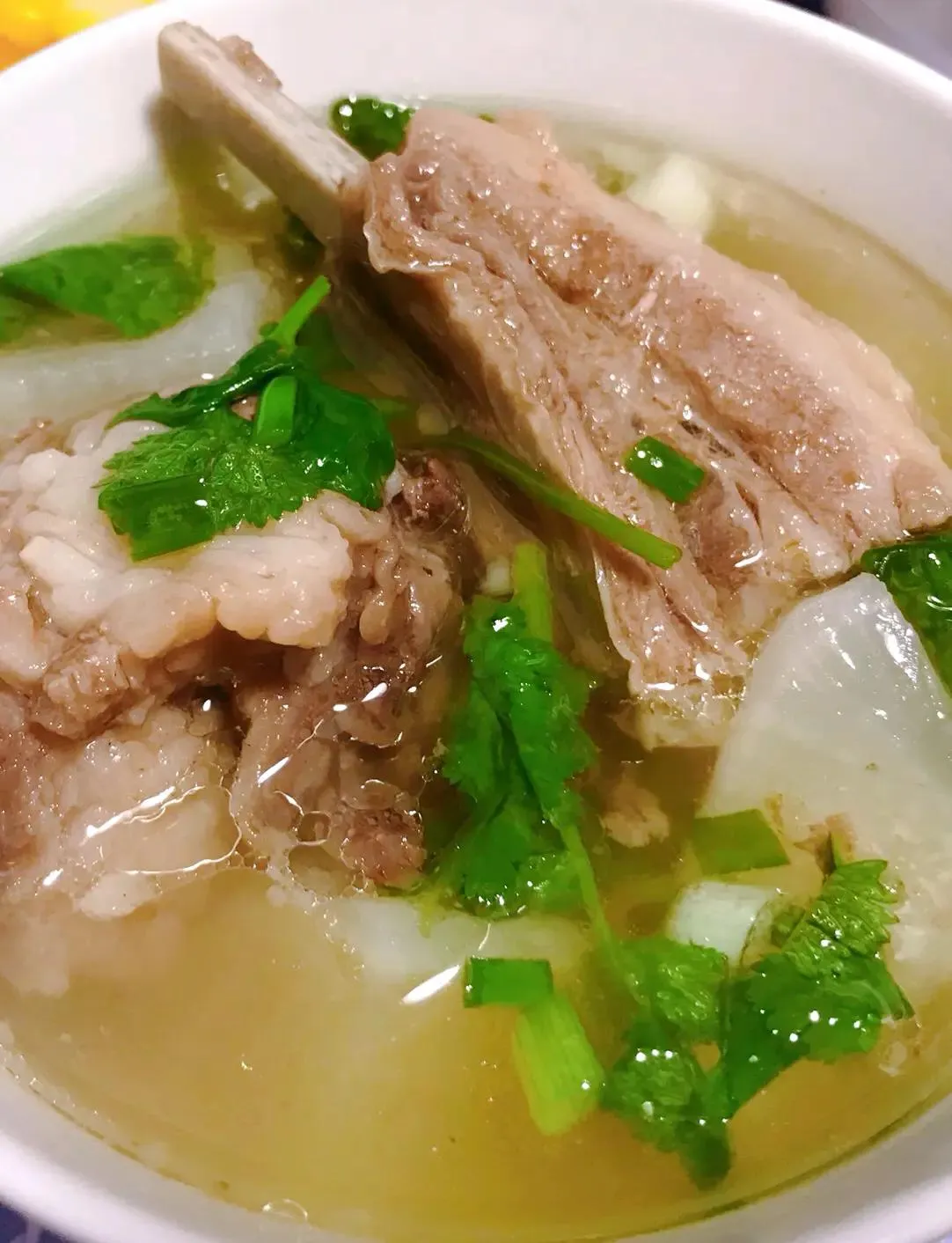
1. Lamb and Radish Stew
Lamb is one of the most warming meats in Chinese food therapy — learn about Sichuan pepper’s unique numbing and warming properties. Combined with daikon radish — which balances lamb’s richness with its cooling, digestive-aiding properties — this stew is the definitive winter warming dish.
Ingredients
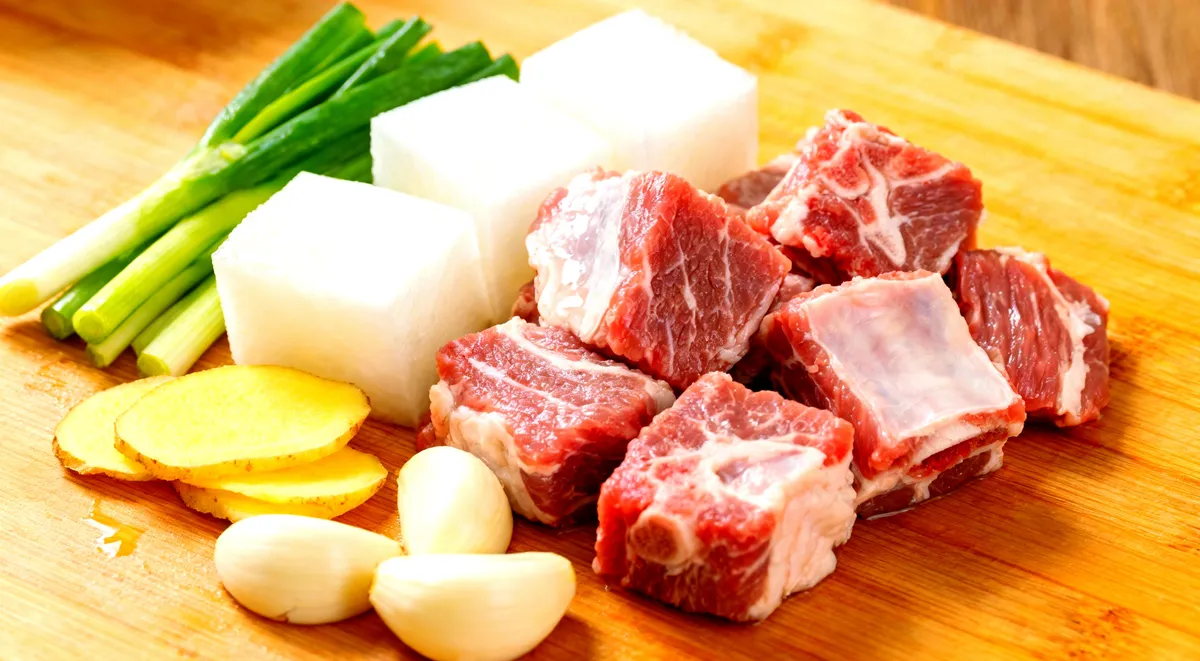
- 500g lamb shoulder or leg, cut into 1.5-inch cubes
- 1 large daikon radish (about 400g), peeled and cut into chunks
- 6 cups water or lamb broth
- 3 slices fresh ginger
- 3 cloves garlic, smashed
- 2 star anise
- 1 cinnamon stick
- 1 tablespoon Sichuan peppercorns
- 2 tablespoons light soy sauce
- 1 tablespoon dark soy sauce
- 1 tablespoon shaoxing wine (or dry sherry)
- 1 teaspoon sugar
- 2 spring onions, cut into 2-inch lengths
- Salt to taste
- Fresh cilantro for garnish
Instructions
-
Blanch the lamb: Place the lamb cubes in a pot of cold water. Bring to a boil and cook for 2-3 minutes. Drain, rinse the lamb clean, and discard the water. This removes any impurities and ensures a clear broth.
-
Build the stew: Return the lamb to the pot. Add 6 cups of fresh water, ginger, garlic, star anise, cinnamon, and Sichuan peppercorns. Bring to a boil, then reduce to a gentle simmer. Skim any foam that rises.
-
Simmer: Cover and cook for 1 hour, stirring occasionally, until the lamb is tender.
-
Add the radish: Add the daikon chunks, soy sauces, shaoxing wine, and sugar. Continue simmering, covered, for another 30-40 minutes until the radish is translucent and tender and the flavors have melded.
-
Finish: Add the spring onions and simmer for 5 more minutes. Taste and add salt as needed.
-
Serve: Ladle into deep bowls with the broth. Garnish generously with fresh cilantro. Serve with steamed rice or crusty bread to soak up the broth.
Seasonal Note
The Winter Solstice (冬至) is the traditional day for lamb consumption in northern China. The combination of lamb (strongly warming) with daikon (slightly cooling, digestive-aiding) represents the balance principle that runs through all Chinese food therapy — even the most warming dish needs a counterbalancing element. This stew is also traditionally eaten during Minor Snow (小雪) and Major Snow (大雪), when the first significant snowfalls arrive.
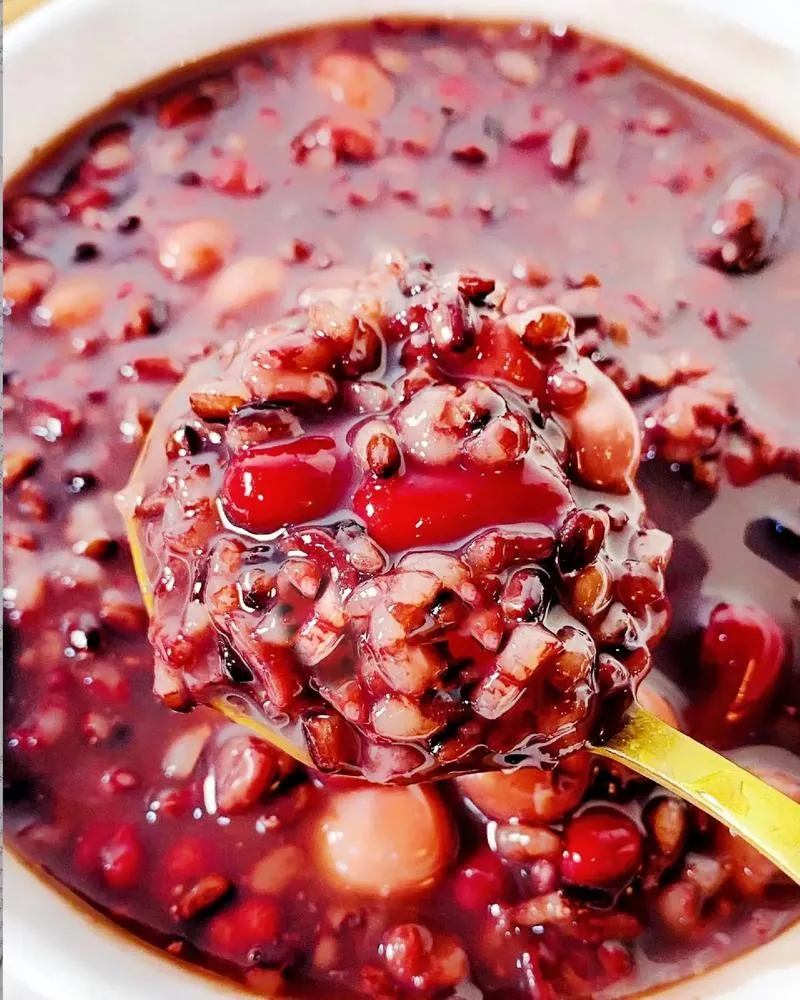
2. Eight-Treasure Congee (Bā Bǎo Zhōu)
A traditional winter breakfast or dessert congee made with eight auspicious ingredients. The number eight represents prosperity, and the combination of grains, beans, nuts, and dried fruits provides sustained warmth through cold winter mornings.
Ingredients
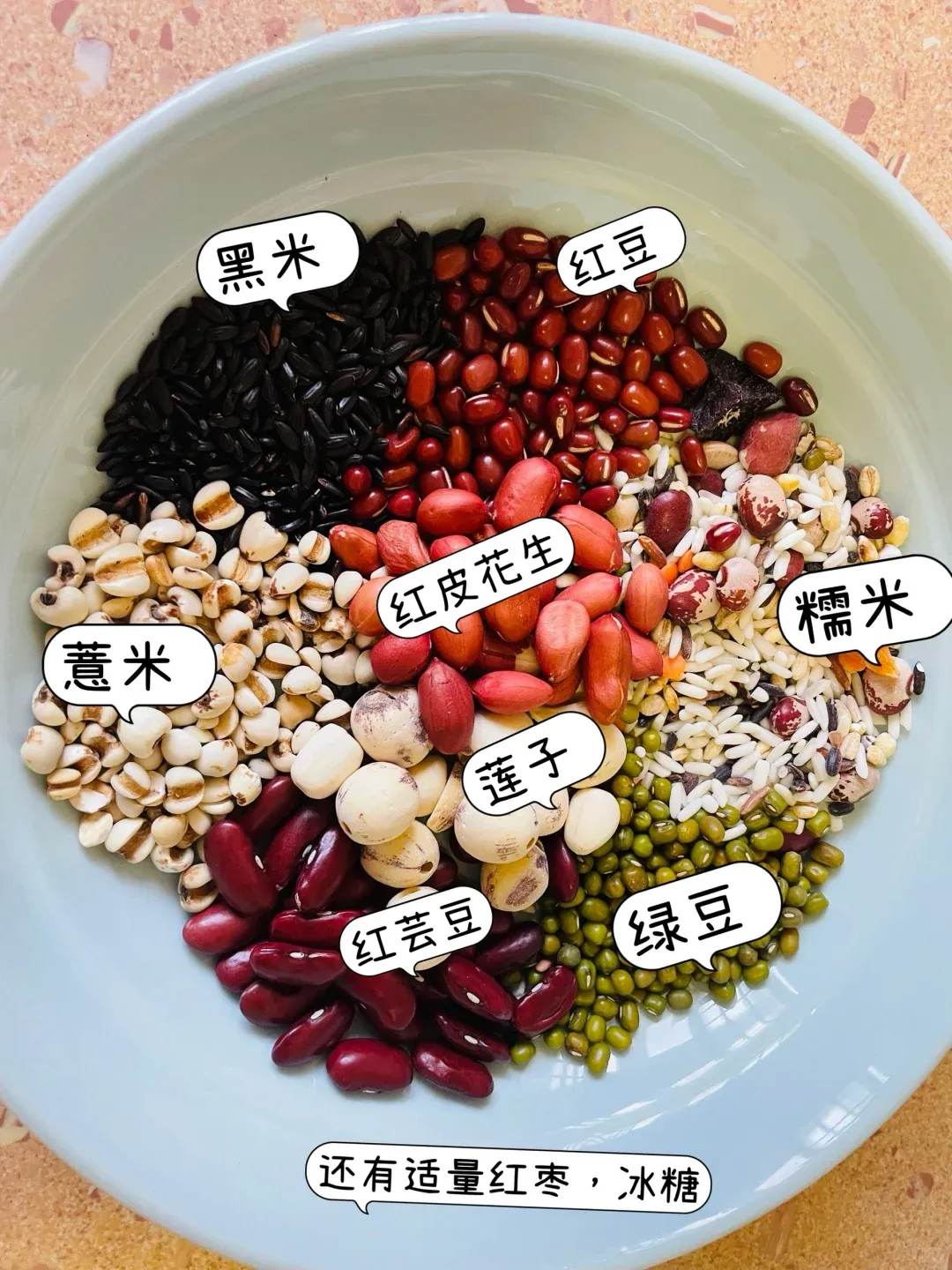
- 1/2 cup short-grain rice (or jasmine rice)
- 1/4 cup glutinous rice
- 1/4 cup red beans (azuki)
- 2 tablespoons lotus seeds
- 2 tablespoons dried longan (dragon eye fruit)
- 2 tablespoons goji berries
- 2 tablespoons red dates (jujubes), pitted and sliced
- 2 tablespoons walnuts or almonds, roughly chopped
- 8 cups water (or a mix of water and milk)
- 3 tablespoons rock sugar or brown sugar (adjust to taste)
Instructions
-
Soak the dry ingredients: Rinse the rice, glutinous rice, red beans, and lotus seeds. Soak them together in cold water for at least 4 hours or overnight.
-
Cook the base: Drain and place the soaked grains, beans, and lotus seeds in a large heavy-bottomed pot. Add 8 cups of water. Bring to a boil, then reduce to the lowest possible simmer.
-
Simmer slowly: Cook for 1.5 to 2 hours, stirring occasionally, until the rice and beans have broken down into a thick, porridge-like consistency. Add more water if it becomes too thick — the congee should be creamy but fluid.
-
Add the fruits and nuts: Stir in the dried longan, goji berries, red dates, and walnuts. Cook for another 15 minutes.
-
Sweeten: Add rock sugar or brown sugar and stir until dissolved. Taste and adjust sweetness.
-
Serve: Ladle into bowls and serve warm. This congee is traditionally eaten for breakfast on cold winter mornings, but it also works beautifully as a dessert.
Seasonal Note
Eight-Treasure Congee is traditionally served during the Winter Solstice and throughout the coldest weeks of winter. Each ingredient has a specific function in Chinese food therapy: red beans support kidney energy, lotus seeds calm the spirit, goji berries nourish the liver and eyes, and walnuts strengthen the kidneys and lower back. Together, they create a complete, balanced meal that sustains the body through the most yin-intensive months of the year.
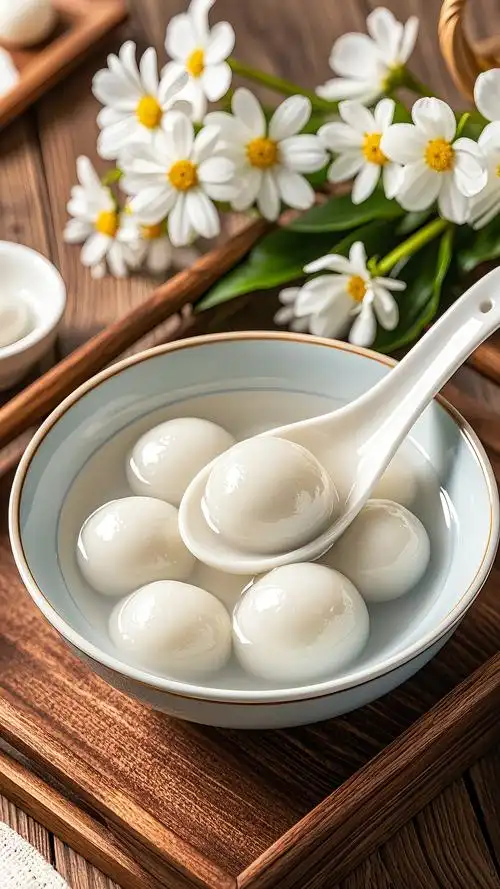
3. Tang Yuan (Glutinous Rice Balls in Ginger Broth)
Tang yuan are small glutinous rice balls served in a sweet ginger broth. Their round shape symbolizes family reunion and completeness — a concept of wholeness echoed in Taoist philosophy — they are the definitive Winter Solstice dessert across China.
Ingredients
For the dough:
- 1 cup glutinous rice flour
- 1/3 cup warm water (plus more as needed)
- 1 tablespoon sugar
For the filling (black sesame):
- 1/4 cup black sesame seeds, toasted and ground
- 2 tablespoons sugar
- 1 tablespoon coconut oil or butter, softened
For the ginger broth:
- 4 cups water
- 3 slices fresh ginger (about 1/4-inch thick)
- 3 tablespoons rock sugar or brown sugar
- 1 tablespoon goji berries (optional)
Instructions
-
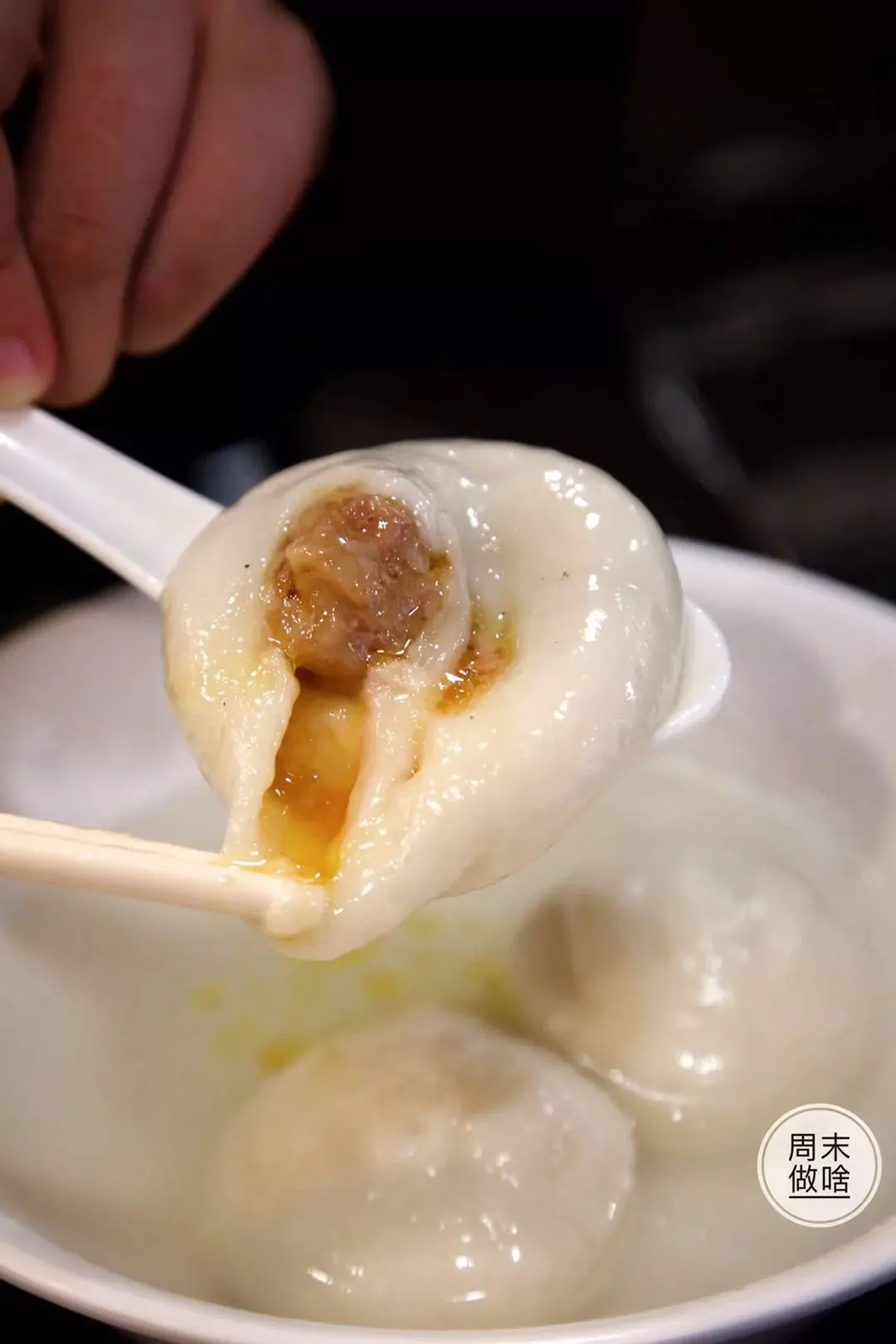
Make the filling: Grind the toasted black sesame seeds in a spice grinder or mortar until fine. Mix with sugar and softened coconut oil to form a paste. Roll into small balls (about 1/2 teaspoon each) and place on a tray in the freezer for 10 minutes.
-
Make the dough: In a bowl, combine glutinous rice flour with warm water and sugar. Mix with your hands until a smooth, pliable dough forms. Add a few drops more water if too dry, or a dusting more flour if too sticky. The dough should feel like soft play-dough.
-
Assemble: Divide the dough into small portions (about 2 teaspoons each). Flatten each portion into a disc, place a frozen sesame ball in the center, and carefully seal the dough around it. Roll gently between your palms to form a smooth ball. Place on a tray dusted with glutinous rice flour.
-
Make the broth: While assembling the tang yuan, bring 4 cups of water with ginger slices to a simmer in a separate pot. Add the rock sugar and goji berries. Simmer gently while you finish the dumplings.
-
Cook the tang yuan: Bring a large pot of water to a gentle boil. Drop the tang yuan in carefully — they will sink to the bottom. Stir gently to prevent sticking. When they float to the surface (about 3-4 minutes), cook for 1 more minute. They should be slightly translucent and pillowy.
-
Serve: Divide the ginger broth among serving bowls. Lift the tang yuan out with a slotted spoon and place 4-6 in each bowl. Serve immediately.
Seasonal Note
Tang yuan are the quintessential Winter Solstice (冬至) food. Their round shape represents the completeness of the year’s cycle — at the deepest point of winter darkness, families gather to share this sweet symbol of wholeness and connection. The ginger broth is not optional: ginger’s warming properties counteract the cooling nature of glutinous rice, making this dessert appropriate even for cold winter nights. The black sesame filling is rich in calcium and healthy fats, providing concentrated nutrition in a small, comforting package.
Latest Articles
Recent guides and seasonal insights
From Dao of Seasons
Dumplings at Winter Solstice and Lunar New Year: Two Moments in the Seasonal Calendar
Explore why dumplings appear at China's Winter Solstice and Lunar New Year, how seasonal timing shapes food traditions, and why customs vary by region and family.
Cold Dew and Tai Chi: Moving Gently into Late Autumn
Explore Cold Dew, the 17th solar term, through seasonal Chinese wisdom and Tai Chi. Learn how to move, breathe, stay warm, and welcome late autumn.
Mid-Autumn Festival: the Full-Moon Harvest of the Third Quarter
Mid-Autumn Festival falls on lunar 8/15 — the full moon of the harvest month. In 2026 it lands on September 25, inside the same week as the equinox and the Harvest Moon. The traditions, foods, and moon-viewing culture of the year's great moon festival.
From Our Network
Warm Autumn Comforts — Pear Compote & Mushroom Hot Pot
As autumn deepens toward winter, warming desserts and hearty one-pot meals support the body's transition — [Taoist seasonal wisdom](https://www.taleswithlee.com/concepts/) recognizes this shift as a movement from expansion to contraction. These recipes use seasonal pears, mushrooms, and tofu for deep comfort — explore [tofu varieties](https://www.missingumami.com/ingredients/silken-tofu/) and their different culinary applications.
When Does Autumn Start? Astronomical, Meteorological, and Seasonal Dates Explained
Autumn does not have one start date. Meteorological autumn begins September 1. Astronomical autumn starts at the equinox, around September 22–23. In the 24 solar terms, autumn begins earlier, with Start of Autumn around August 7–8. Each system measures a different kind of seasonal change.
July Garden — Peak Summer Care and Harvest
July's garden demands daily attention. From deep watering strategies to succession planting, here's how to keep your garden productive through the hottest weeks of the year.
July Walking — Summer Strolls and Moonlit Rambles
Walking in July is about timing. Learn the best hours, routes, and practices for comfortable summer walking — from dawn patrols to night walks under the stars.
Solar Terms FAQ — Answers to Common Questions About All 24 Solar Terms
Comprehensive FAQ covering all 24 solar terms — what each term means, when it occurs, what foods to eat, how to practice seasonal wellness, and what natural changes to observe. Organized by season for easy browsing.
Written by The Way of Nature
Dao of Seasons is part of The Way of Nature ecosystem — a network of seasonal practice, food wisdom, and nature observation.
Meet our contributors →