

Key Takeaways
The essentials of Major Cold in under a minute.
- This term: Major Cold (大寒) is the 24th solar term of the 24-term year, running January 20 – February 3.
- What happens in nature: The deepest freeze of the entire year reaches its peak — the accumulated cold of months is now fully expressed
- Why it matters: This is the last cold — the hardest freeze comes just before the thaw, as if testing whether you paid attention all year.
- Shift since last term: Cold reaches its absolute peak intensity
- Moving toward: Winter's grip breaks as spring's first signals appear
- Start here: Begin with Ba Duan Jin (2026 Group Standard): The Eight Pieces.
Core Definition
The deepest freeze of the year. The final push of winter before spring's return becomes visible.
This is the last cold — the hardest freeze comes just before the thaw, as if testing whether you paid attention all year.
Transition
How this term sits between what came before and what comes next
- ←Cold reaches its absolute peak intensity
- ←The final phase of winter endurance begins
- →Winter's grip breaks as spring's first signals appear
- →The annual cycle completes itself and begins anew
Phenology
What is happening in the natural world
Eat
Cook It
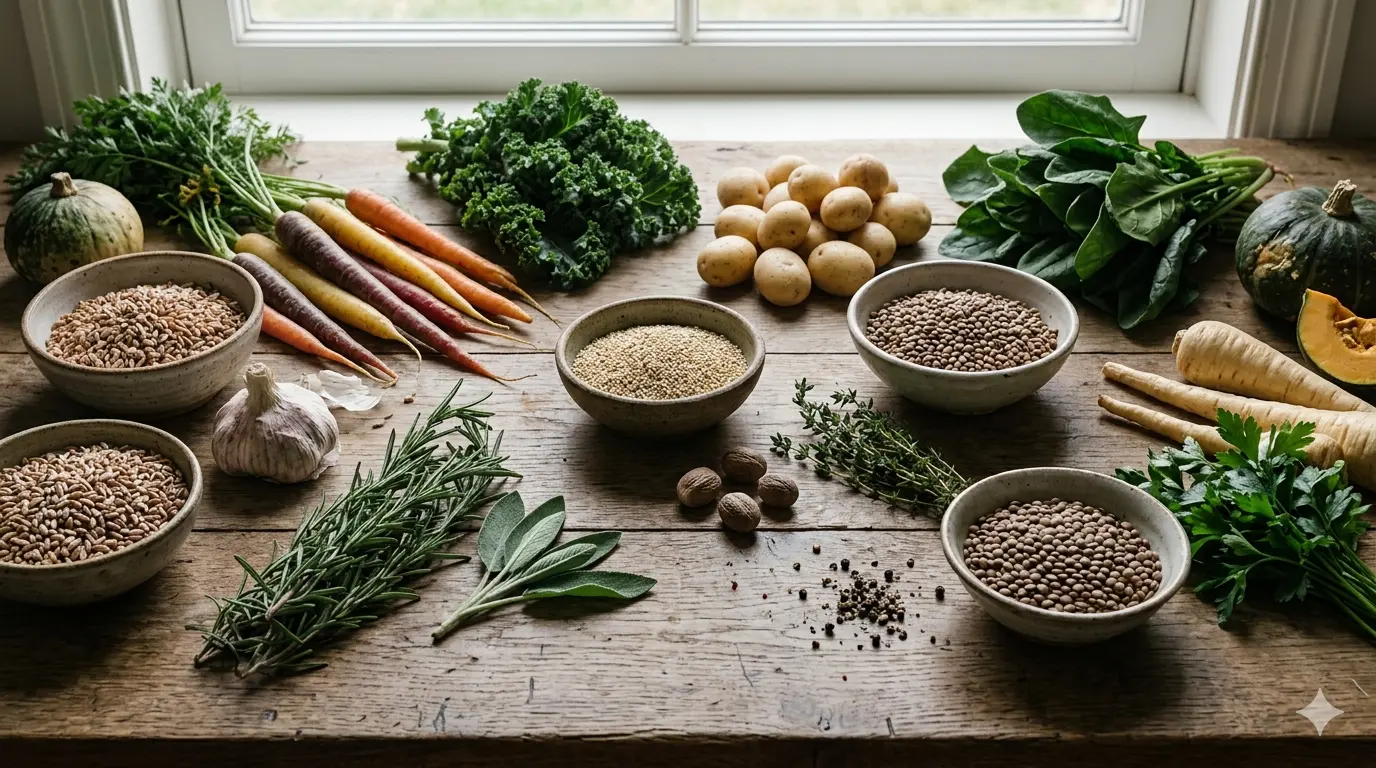
The ingredients below are in season now, with how to actually cook them.
Move
Grow & Cultivate
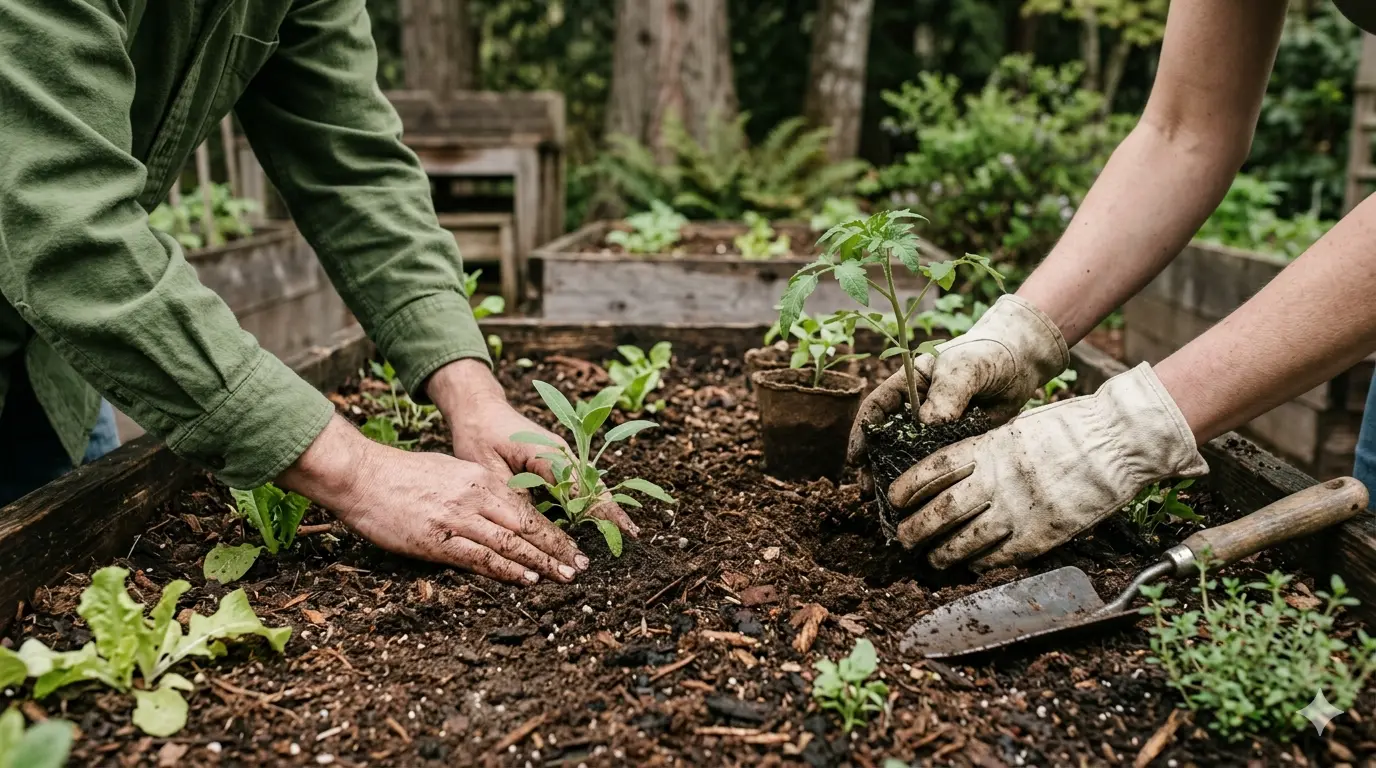
- Final rest and preparation before spring planting begins — inspect and repair all farming equipment and tools now
- Check stored grain and preserves one last time before the storage season ends — what survived until now must last until the first fresh harvest
- Begin indoor seed starting for the earliest spring crops — the growing season begins indoors while the ground outside is still frozen
Ecology Signals
Animal behavior, migration, habitat changes
Rivers and lakes reach maximum ice thickness — the layered ice that has been accumulating since early winter now fully expresses the season's cumulative cold
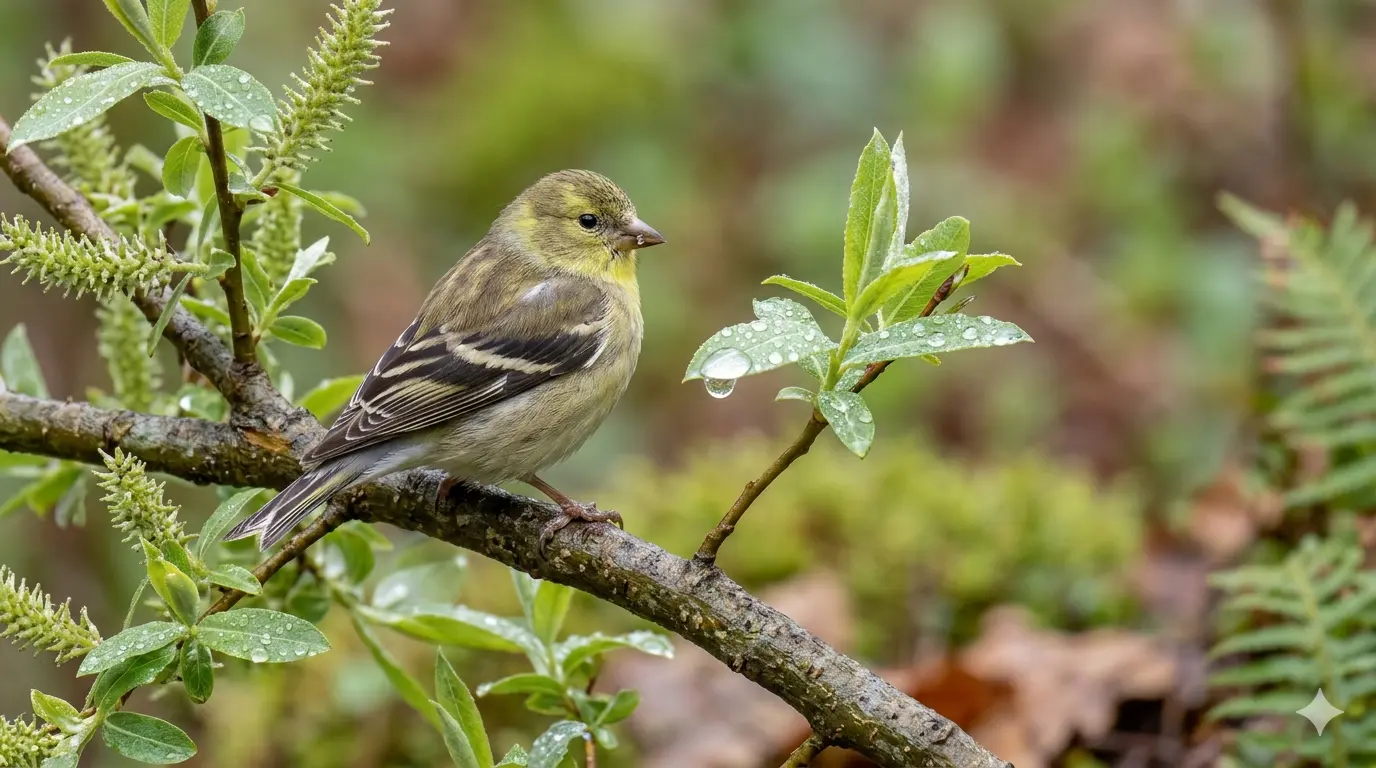
All hibernating species in deepest metabolic suppression — body temperatures and heart rates at annual minimums, life suspended in the most complete stillness of the annual cycle
Daylight has been incrementally lengthening since Winter Solstice a month earlier — the astronomical turn is now established even as the thermal lag keeps temperatures at their coldest
Reflection
“After the greatest cold comes the first warmth”
“The cycle turns — winter completes itself so spring can begin”
Taoist Reflection
This term's seasonal wisdom echoes a deeper theme in Taoist philosophy. Explore it further on Tales With Lee:
Taoism for ChangeSeasonal Essay
A deeper look at this solar term
Major Cold (大寒) is the last solar term of the annual cycle — the twenty-fourth and final station in the year’s journey through the seasons. Its position gives it a significance that goes beyond temperature. This is not merely the coldest term. It is the conclusion of winter, the final expression of yin energy before the turn toward spring that follows immediately in Start of Spring. The freeze is deepest here, but it is also most fragile, because the conditions that sustain it are already beginning to shift.
The character 大 means great, and the cold of this term is indeed the greatest of the year — though not always the most extreme in temperature. What distinguishes Major Cold from the Minor Cold that precedes it is not necessarily a lower number on a thermometer but a different quality of cold. This is the cold of completion, the freeze that has had months to establish itself, ice that has been thickening since early winter and now reaches its structural maximum. Rivers that froze in December are now solid enough to walk on. Lakes that first developed a skin of ice in November are now sealed under layers thick enough to support weight.
Yet within this terminal freeze, something is already shifting. The daylight, which reached its minimum at the Winter Solstice, has been lengthening for a full month. The change is still subtle — the eye may not detect it, and the extra minutes of light are easily consumed by cloud cover or the angle of winter sun — but it is real and accumulating. A farmer who has lived through enough winters can feel it: not warmth, not yet, but the knowledge that warmth is no longer receding. The turn has happened. The arc is now bending back toward light, even if the temperature has not yet received the message.
Ecologically, Major Cold is the term of maximum dormancy. Hibernating animals are at their deepest levels of metabolic suppression — not the lighter sleep of early winter from which a warm spell might rouse them, but the profound state in which heart rate, breathing, and body temperature have all dropped to levels that would be unsustainable in any other season. Ice formations on rivers and lakes are at their most developed, the accumulated work of months of freezing now fully expressed. The landscape appears completely still, completely frozen, completely held. But this stillness is not death. It is the final, deepest rest before the cycle begins again.
The food and practices of Major Cold reflect its position as the last cold rather than the beginning of cold. Lamb and Daikon Stew embodies the traditional Chinese framework — lamb as a warming food for the deepest cold, daikon as its balancing counterpart. Fermented Bean Curd with Congee is the food of deep winter simplicity — fermented foods represent the preservation wisdom of autumn, consumed now when fresh food is scarce. Deep Breath and Warmth Practice and Standing Posture for Energy Storage are practices of conservation, not generation — the body’s energy is being stored for the coming spring, not spent on unnecessary activity.
Major Cold teaches the completion of cycles. The hardest freeze comes just before the thaw, as if testing whether you paid attention through all the terms that came before. Winter, in this final expression, asks its most demanding question: did you prepare enough? Did you store enough? Did you learn what the cold was trying to teach you? If you did, then this last freeze is not a crisis but a confirmation — the final proof that winter’s curriculum was absorbed, that the cycle can now complete itself, and that spring, when it arrives in the very next term, will find you ready. Major Cold completes the cycle that began at Start of Spring, and the slow, patient knowledge that carries a full year’s wisdom is explored in the Atlas essay on slow knowledge.
Frequently Asked Questions about Major Cold
Quick answers to common questions about Major Cold (大寒) — its dates, foods, and natural signs.
What is Major Cold (大寒) and why is it the final solar term?
Major Cold (大寒, Dàhán) is the twenty-fourth and final solar term of the annual cycle — the deepest freeze of the year and the conclusion of winter. The character 大 means great, and this is the cold of completion: ice that has been building since early winter reaches its structural maximum, and hibernating species reach their deepest metabolic suppression. It comes just before Start of Spring, when the cycle turns.
When does Major Cold occur and what weather defines it?
Major Cold typically falls around January 20–21 each year and lasts about 15 days until Start of Spring (立春). In 2026, it runs from January 20 to February 3. Rivers and lakes reach maximum ice thickness, and the accumulated cold of months is fully expressed — yet daylight has been lengthening for a full month since Winter Solstice, the astronomical turn already established even as thermal lag keeps temperatures at their coldest (a seasonal-lag effect; see Wikipedia, 'Seasonal lag').
What foods are traditionally eaten during Major Cold?
Lamb and daikon stew draws on the traditional Chinese framework — lamb a warming food and daikon a balancing counterpart for the deepest cold. Fermented bean curd with congee represents winter preservation wisdom — fermented foods consumed when fresh food is scarce, their live cultures and complex flavor adding depth to a simple meal. Ginger chicken soup, slow-simmered with goji berries and red dates, is prized in Chinese food therapy as a warming remedy for the deepest cold.
What practices support the body during the deepest freeze?
Deep Breath and Warmth Practice and Standing Posture for Energy Storage are practices of conservation, not generation — the body's energy is being stored for the coming spring rather than spent on unnecessary activity. In the garden, inspect and repair equipment now, check stored grain and preserves one last time, and begin indoor seed starting for the earliest spring crops while the ground outside is still frozen.
Why is Major Cold also a term of light's return?
While temperatures are at their annual minimum, daylight has been incrementally lengthening since the Winter Solstice a month earlier. The change is subtle — the extra minutes of light easily consumed by cloud cover — but it is real and accumulating. The arc has already bent back toward light, and in the very next term, Start of Spring, winter's grip breaks. The hardest freeze comes just before the thaw.
Major Cold is part of The Way of Nature Atlas — a broader exploration of ecological wisdom.