Cold Dew and Tai Chi: Moving Gently into Late Autumn
Explore Cold Dew, the 17th solar term, through seasonal Chinese wisdom and Tai Chi. Learn how to move, breathe, stay warm, and welcome late autumn.
Cold Dew (寒露, Hánlù) is the seventeenth of the 24 solar terms in the traditional Chinese calendar. It arrives around October 8 each year and marks a noticeable shift in the character of autumn.
The warmth of early autumn has begun to fade. Mornings feel colder, the difference between daytime and nighttime temperatures becomes more pronounced, and in many regions the landscape begins its gradual movement toward winter.
For traditional Chinese culture, Cold Dew is more than a date on the calendar. It is a point of observation: a moment when nature tells us that the season is changing, and that our own pace may need to change with it.
This is also a natural time to reconsider how we move.
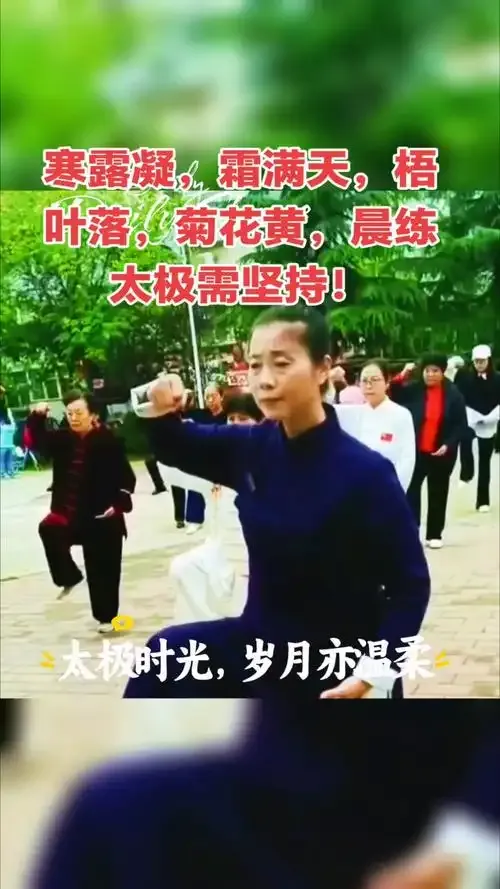
Tai Chi offers one way to do that. Rather than meeting the colder season with harder exercise or greater intensity, its slow, controlled movements encourage balance, warmth, relaxed breathing, and a gradual transition from activity toward inward attention.
Cold Dew can therefore be understood as an invitation to move with the season rather than against it.
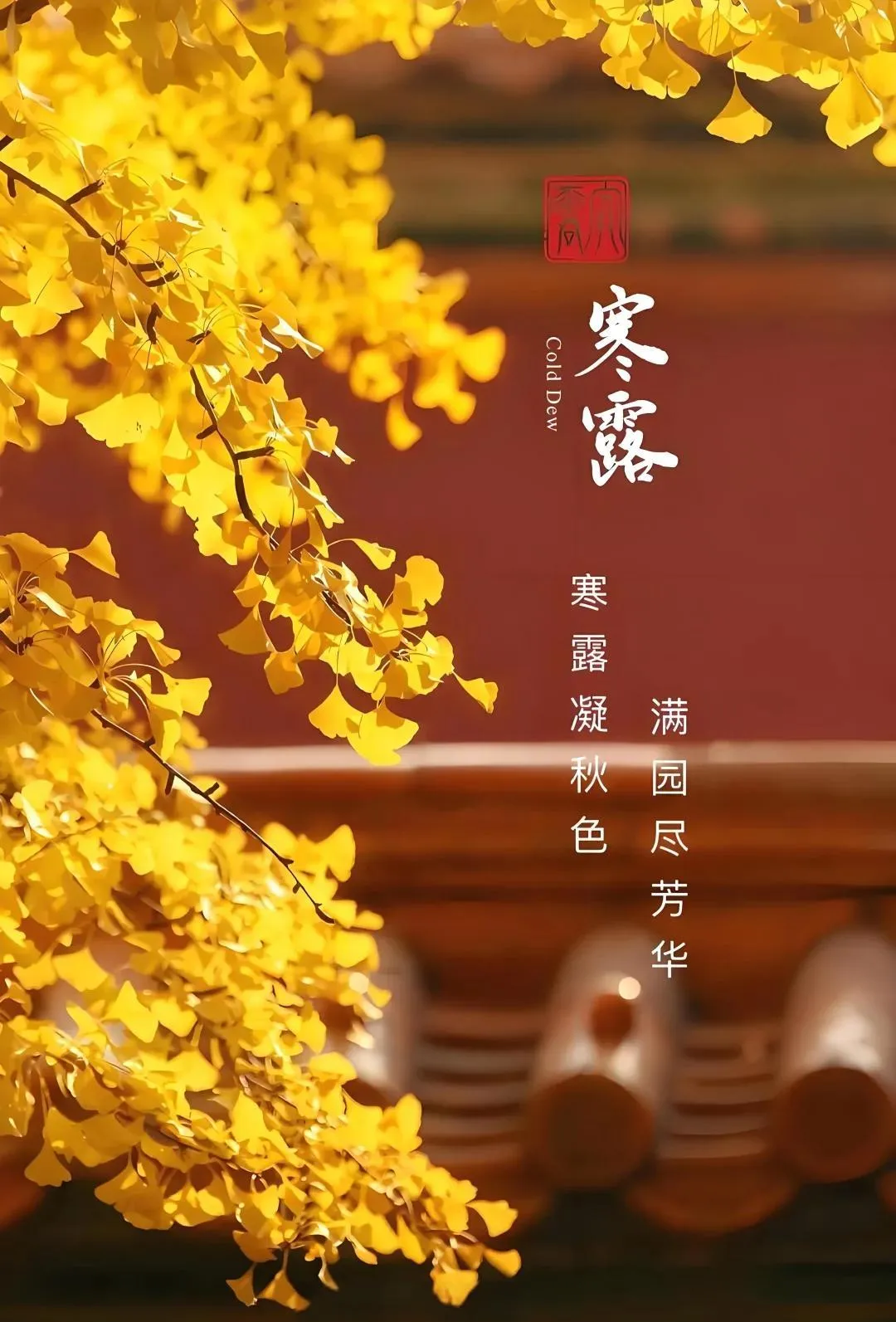
What Is Cold Dew?
In the traditional Chinese calendar, Cold Dew is the fifth solar term of autumn and the first whose name explicitly refers to cold.
The traditional description of the solar term says:
“The dew becomes cold and is about to freeze.”
This does not mean that frost appears everywhere at Cold Dew. Rather, it describes a seasonal threshold. The coolness already present during White Dew becomes more pronounced, and autumn begins moving toward its colder phase.
Traditional observations associated with the period describe three seasonal signs:
- Wild geese arrive as guests, continuing their southward migration.
- Small birds disappear toward shelter, reflecting the increasingly cold landscape.
- Chrysanthemums bloom, becoming one of the characteristic flowers of late autumn.
The imagery is striking. One part of nature is moving south, another is retreating into shelter, while the chrysanthemum remains in bloom despite the increasing cold.
Cold Dew is therefore a season of transition, gathering, and preparation.
The days continue to shorten. Nights become colder. In many parts of the Northern Hemisphere, the landscape begins to lose the expansive energy of summer.
Autumn is no longer simply a season of harvest.
It is beginning to turn toward winter.
For the wider system behind the date — how the 24 terms are defined and ordered — see our Solar Terms FAQ.
From “Cooling” to “Cold”
The 24 solar terms were developed through long-term observation of seasonal change. They form a traditional Chinese system of seasonal observation and cultural knowledge, and are recognized as part of China’s living cultural heritage.
This makes Cold Dew particularly interesting when viewed through a modern seasonal lens.
There is a difference between coolness that refreshes and cold that asks us to adapt.
Earlier in autumn, cooler air may simply make outdoor activity more comfortable. By Cold Dew, however, morning temperatures can begin to change how we dress, how long we stay outside, and how quickly the body feels ready to move.
The traditional saying,
“During White Dew, keep your body covered; during Cold Dew, keep your feet covered,”
captures this transition in a memorable way.
It is not necessary to interpret the saying literally as a medical rule. Its broader wisdom is practical: as the environment becomes colder, pay attention to warmth, especially during the transition into activity.
This principle fits naturally with Tai Chi.
Why Practice Tai Chi in Cold Dew?
Tai Chi is often described as slow movement, but slowness is only part of the practice.
A Tai Chi movement combines:
- shifting weight from one leg to another
- maintaining balance and alignment
- coordinating the upper and lower body
- opening and closing movements
- relaxed breathing
- continuous attention
These qualities make Tai Chi particularly compatible with a season when the natural environment is becoming quieter and more inward.
You do not need to exercise harder simply because the weather is colder.
Instead, Cold Dew offers an opportunity to practice warmth without force.
The goal is not to generate as much heat as possible through intense exercise. It is to allow the body to become gradually warmer while remaining relaxed and attentive.
A useful principle for this time of year is:
Move slowly enough to feel the change of weight, and gently enough to remain warm rather than exhausted.
Autumn in Traditional Chinese Seasonal Thought
Traditional Chinese medicine and seasonal philosophy associate autumn with the Lung system, while the transition toward winter brings increasing attention to the Kidney system.
These terms belong to the theoretical framework of Traditional Chinese Medicine (TCM). They should not be understood as direct equivalents of individual organs in modern Western anatomy.
Within that traditional framework, autumn is associated with qualities such as:
- gathering
- contraction
- dryness
- inward movement
- preservation
Winter takes this process further, emphasizing storage and conservation.
This creates a useful seasonal progression:
- Spring expands.
- Summer expresses.
- Autumn gathers.
- Winter conserves.
Tai Chi can embody this progression physically.
In summer, movement may naturally become more expansive and energetic. As autumn deepens, practice can become more centered and deliberate.
The body still moves.
But the movement begins to gather rather than scatter.
Three Ways Cold Dew Changes Tai Chi Practice
1. Warm the body gradually
A cold morning is not the ideal time to begin with large, fast movements.
Give the body time to arrive.
Start with standing, gentle weight shifting, shoulder relaxation, and small movements before moving into a longer Tai Chi sequence.
You are not trying to “fight” the cold.
You are allowing the body to transition from stillness into movement.
2. Pay attention to the feet
Tai Chi places unusual importance on the relationship between the feet, legs, waist, and upper body.
The traditional saying,
“The root is in the feet, develops through the legs, is directed by the waist, and expressed through the hands,”
describes an important principle of Tai Chi coordination.
Cold Dew provides an especially good opportunity to pay attention to this connection.
Notice:
- where your weight is located
- when one foot becomes substantial and the other light
- how the knees respond to weight transfer
- whether the soles of the feet remain relaxed
- whether the upper body remains balanced over the lower body
This is not about forcing the feet or legs to work harder.
It is about becoming more aware of the body’s foundation.
3. Let the breath remain natural
Cold weather can make breathing feel different, especially outdoors.
Tai Chi does not require exaggerated breathing.
Allow the breath to remain smooth and comfortable. Coordinate it with movement without forcing a particular breathing pattern.
For many practitioners, the simplest approach is also the most sustainable:
relaxed body, natural breath, attentive movement.
A Simple Cold Dew Tai Chi Practice
You do not need a full Tai Chi class to connect movement with the season.
A short practice of approximately 15–20 minutes can be enough.
If you are new to Tai Chi, use the movements below as general movement ideas rather than trying to reproduce a formal traditional sequence without instruction.
1. Arrive and Warm the Body — 2–3 minutes
Stand comfortably with your feet approximately shoulder-width apart.
Let the arms hang naturally.
Take a moment to notice:
- the temperature of the air
- the contact of your feet with the ground
- your posture
- the natural rhythm of your breathing
Begin with small movements.
Gently shift your weight from side to side. Relax the shoulders. Allow the knees to bend naturally.
The purpose is simple:
arrive before you move.
2. White Crane Spreads Its Wings — 4–5 minutes
“White Crane Spreads Its Wings” is a familiar movement in many Tai Chi traditions.
From a stable stance, shift the weight gradually from one leg to the other while the arms separate vertically, one rising as the other lowers.
The movement creates a sense of opening through the chest while requiring the legs and feet to maintain balance.
Rather than trying to stretch as far as possible, keep the shoulders relaxed and allow the arms to form gentle curves.
What to notice
- Can the weight transfer happen smoothly?
- Does the supporting leg feel stable?
- Can the chest remain open without pushing it forward?
- Do the shoulders stay relaxed?
- Can the movement remain continuous?
Repeat on both sides several times.
For Cold Dew practice, the important quality is not the number of repetitions.
It is smooth opening and closing with stable footing.
3. Raise Hands — Gather and Lift — 4–5 minutes
A second useful pattern is a gentle raising and gathering movement.
Begin with the weight primarily on one leg. Allow the arms to open outward, then gradually bring them forward and upward as the body settles back toward the supporting leg.
Imagine gathering rather than grabbing.
The movement should remain rounded and unforced.
This is an excellent opportunity to explore one of the central ideas of autumn practice:
gathering rather than dispersing.
As you move, notice the relationship between your hands and feet.
The arms do not need to work independently of the lower body. The movement begins with the whole body shifting together.
Repeat slowly on both sides.
4. Cross Hands — Opening and Closing — 4–5 minutes
Cross Hands is one of the clearest examples of opening and closing in Tai Chi.
Begin with the arms rising gently in front of the body. Open them to the sides, then allow them to return inward in a rounded embrace.
The movement can be performed slowly with a small rotation of the body and a controlled transfer of weight.
At the end, allow the hands to settle downward in front of the body.
Stand quietly for several breaths.
This final stillness is important.
Tai Chi is not only movement.
Sometimes the transition from movement back to stillness is where the practice becomes most noticeable.
After Practice: Keep the Warmth
Cold Dew is a good season to pay attention to what happens after exercise as much as during it.
If you practice outdoors:
- dress appropriately for the temperature
- avoid standing barefoot on cold ground
- change out of damp clothing promptly
- give the body time to cool down gradually
- avoid exposing a warmed body immediately to strong cold wind
There is no need to turn seasonal practice into a complicated health ritual.
A warm drink, comfortable clothing, a few quiet minutes, and enough time to transition back into the day may be all that is needed.
The principle is simple:
Do not rush the transition.
Cold Dew, Food, and the Idea of Warmth
Traditional Chinese seasonal culture also places considerable emphasis on food.
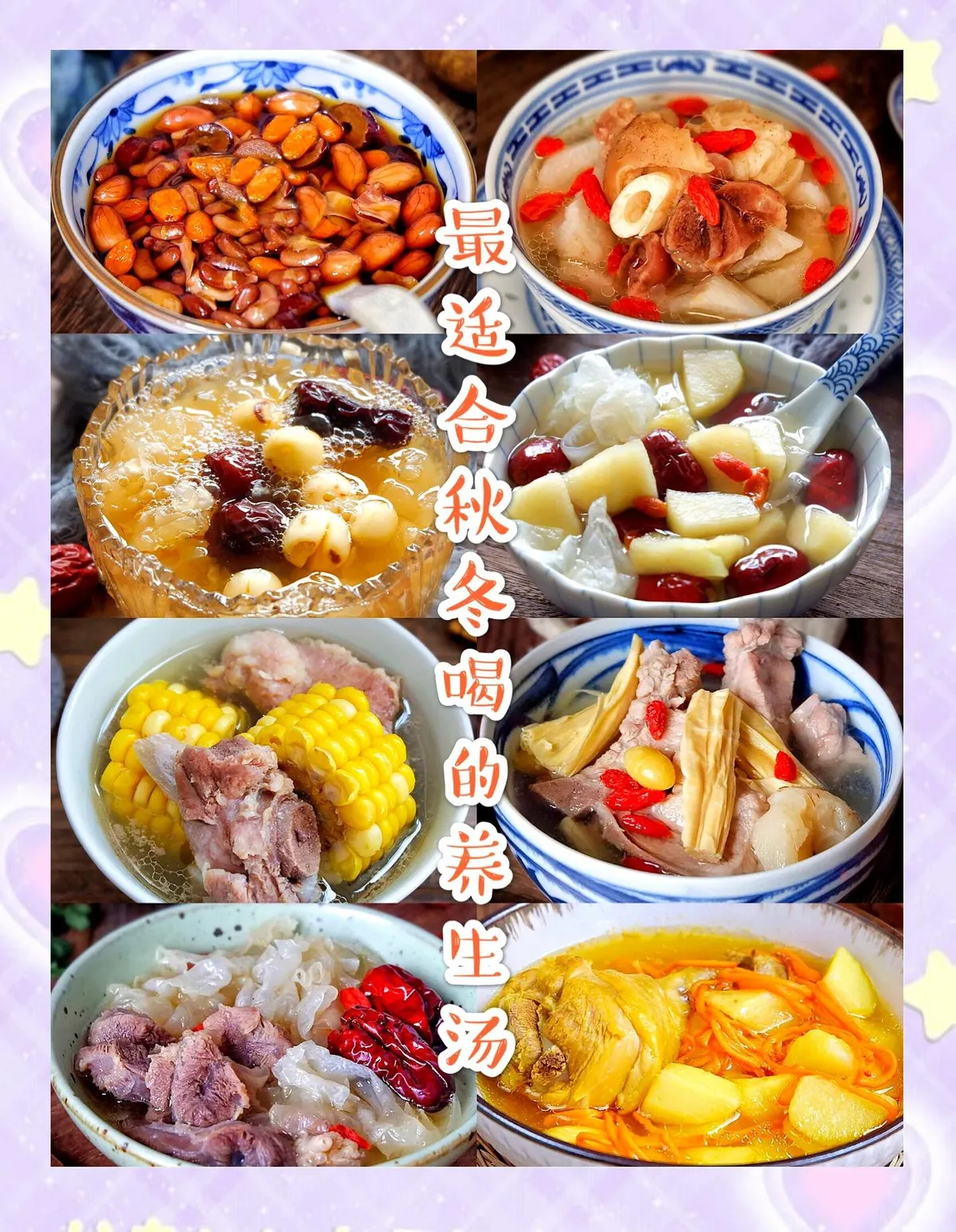
Cold Dew is associated with foods and drinks that are warming, nourishing, and suitable for the increasingly dry autumn environment.
Traditional customs include:
Sesame
Sesame has long been associated with autumn nourishment in Chinese food culture. Black sesame in particular appears in many traditional foods, including sesame paste, cakes, and sweet soups.
Chrysanthemum
Chrysanthemums are closely associated with the ninth lunar month and with the season of Cold Dew.
Chrysanthemum tea is a familiar autumn drink in Chinese culture and is often enjoyed as part of seasonal routines — see our seasonal tea guide for how drinking shifts with the terms.
Seasonal foods
In different regions, people traditionally eat foods such as walnuts, sesame, yam, lotus root, pears, persimmons, and other autumn produce.
These customs vary greatly by region and family.
The larger principle is more interesting than any single ingredient:
eat with the season.
As autumn becomes colder and drier, many traditional cuisines naturally shift toward warmer cooked foods, soups, grains, nuts, seeds, and other substantial dishes.
That is a cultural practice, not a prescription.
There is no single “Cold Dew diet” that everyone needs to follow.
To explore how these ingredients are used in seasonal cooking, see Missing Umami’s seasonal ingredients and recipes.
Chrysanthemums, Climbing, and the Culture of Late Autumn
Cold Dew is also surrounded by seasonal customs.
Because it falls close to the Double Ninth Festival (重阳节), climbing to higher ground has traditionally been an important autumn activity in China.
The custom is sometimes described as “bidding farewell to green” — a counterpart to the spring tradition of going outdoors to enjoy the new growth of the season.
The symbolism is beautiful.
Spring invites us outward into new growth.
Late autumn invites us to look farther, gather ourselves, and appreciate what remains before winter arrives.
Chrysanthemums have a similar symbolism.
They bloom when many other flowers are fading and have therefore become associated with resilience and quiet endurance.
These traditions provide another way to understand Cold Dew:
late autumn is not simply a season of decline.
It is a season of clarity.
The landscape becomes quieter.
The air becomes sharper.
The remaining colors become more noticeable.
And movement can become more deliberate.
Cold Dew and the Tai Chi Principle of “Returning”
One of the most useful ways to approach seasonal Tai Chi is through the idea of returning.
Returning to the feet. Returning to balance. Returning to the breath. Returning to stillness. Returning to the center.
This does not require any particular spiritual belief.
It is something that can be experienced physically.
When weight moves from one foot to the other, the body repeatedly returns to balance.
When the arms open and close, the movement repeatedly returns toward the center.
When a sequence ends, the practitioner returns to stillness.
Autumn has a similar rhythm.
After the outward growth of spring and summer, the natural world begins to gather itself.
Cold Dew sits near the point where this gathering becomes unmistakable.
A Cold Dew Practice for Everyday Life
You do not have to practice a complete Tai Chi routine every morning to work with the season.
Instead, try making a few small changes.
In the morning
Give yourself a little more time to warm up before vigorous activity.
During movement
Pay attention to your feet and the transfer of weight.
During breathing
Let the breath remain natural rather than forcing deeper breaths.
Outdoors
Notice how the temperature changes between sunlight and shade.
In the evening
Allow your pace to become quieter as daylight fades.
In your surroundings
Look for the signs of the season: colder mornings, migrating birds, changing leaves, chrysanthemums, longer shadows.
This is the deeper purpose of a solar term.
It gives us a reason to look again.
Safety and Individual Differences
Tai Chi is generally a gentle form of movement, but gentle does not mean that every movement is appropriate for every person.
If you are new to Tai Chi, have significant balance limitations, joint problems, or another condition that affects your ability to exercise safely, consider learning from a qualified instructor and adapting movements to your own abilities.
You should not force a range of motion, hold your breath, or practice through pain.
Cold weather also changes the physical environment. Wet ground, slippery surfaces, poor visibility, and very low temperatures can create risks that have nothing to do with the Tai Chi movement itself.
Choose a safe practice environment first.
The goal of seasonal practice is not to prove endurance.
It is to build a sustainable relationship between movement, environment, and attention.
Cold Dew: A Season of Quiet Strength
Cold Dew arrives quietly.
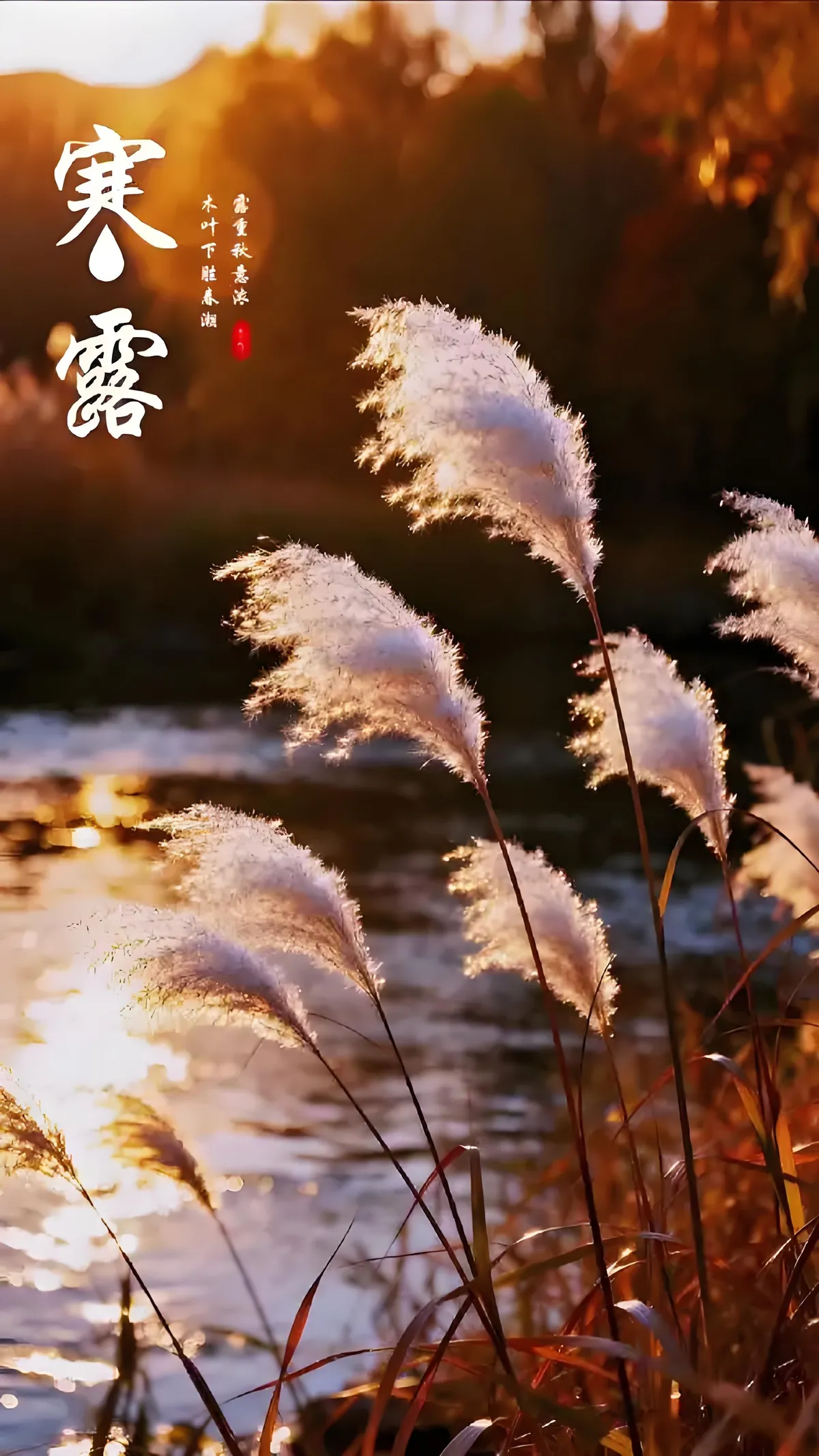
There is no dramatic boundary between autumn and winter. Instead, the change reveals itself gradually: a colder morning, a longer shadow, a sharper wind, the first signs of frost, a flock of birds moving south, a chrysanthemum still flowering in the cold.
This is why the solar terms remain useful even in the modern world.
They give us a vocabulary for noticing transitions that we might otherwise overlook.
Tai Chi offers a physical vocabulary for the same idea.
Shift the weight. Open. Close. Rise. Settle. Move. Return.
As autumn turns toward winter, practice does not have to become harder.
It can become quieter, warmer, and more deliberate.
That may be the most useful lesson of Cold Dew.
When the season gathers inward, let your movement gather inward too.
Stay warm. Move without force. Breathe naturally. Pay attention to your foundation.
And allow the changing season to become something you experience with your whole body, rather than simply something you read on a calendar.
Continue the Practice
If Cold Dew inspires you to explore Tai Chi more deeply, the next step is not to read more about the season.
It is to move.
Tai Chi Wuji offers guided Tai Chi, Qigong, and foundational movement programs for people who want to develop a deeper and more consistent practice.
Dao of Seasons explains when and why to pay attention to seasonal change. Tai Chi Wuji provides a place to practice the movement.
Frequently Asked Questions
Quick answers about cold dew and tai chi: moving gently into late autumn.
What is Cold Dew?
Cold Dew (寒露, Hánlù) is the seventeenth of the 24 solar terms, arriving around October 8 each year. It is the fifth solar term of autumn and the first whose name explicitly refers to cold — the threshold at which autumn's coolness becomes pronounced and the season begins its turn toward winter.
Why practice Tai Chi during Cold Dew?
Tai Chi suits late autumn because its slow, controlled movements build balance and relaxed warmth rather than intensity. Cold Dew is a season of gathering and inward movement, so the seasonal idea is 'warmth without force' — allowing the body to become gradually warmer while remaining relaxed and attentive.
How long should a Cold Dew Tai Chi practice be?
A short practice of about 15–20 minutes is enough. It can include arriving and warming the body, White Crane Spreads Its Wings, a gathering raise-hands movement, and Cross Hands opening and closing — finishing with a few quiet breaths in stillness.
Is Cold Dew about Traditional Chinese Medicine organ theory?
Traditional Chinese seasonal thought associates autumn with the Lung system and the approach of winter with the Kidney system, but these belong to the theoretical framework of Traditional Chinese Medicine and are not direct equivalents of organs in modern Western anatomy. The practical takeaway is seasonal: gather inward, stay warm, and move without force.
Related Solar Terms
Latest Articles
Recent guides and seasonal insights
From Dao of Seasons
Dumplings at Winter Solstice and Lunar New Year: Two Moments in the Seasonal Calendar
Explore why dumplings appear at China's Winter Solstice and Lunar New Year, how seasonal timing shapes food traditions, and why customs vary by region and family.
Mid-Autumn Festival: the Full-Moon Harvest of the Third Quarter
Mid-Autumn Festival falls on lunar 8/15 — the full moon of the harvest month. In 2026 it lands on September 25, inside the same week as the equinox and the Harvest Moon. The traditions, foods, and moon-viewing culture of the year's great moon festival.
How the Lunar Calendar Sets the Year's Seasonal Festivals
The moon's phases, not just the sun's progress, set the Chinese year's festivals: Mid-Autumn falls on lunar 8/15 — the full or harvest moon — and the lunar calendar is the second clock the calendar system reconciles with the solar terms.
From Our Network
Winter Warming Stews — Lamb, Congee & Tang Yuan
Winter calls for deeply warming, nourishing foods that support the body through the coldest months. These three classic recipes — lamb stew, eight-treasure congee, and tang yuan — are traditional winter solstice fare.
When Does Autumn Start? Astronomical, Meteorological, and Seasonal Dates Explained
Autumn does not have one start date. Meteorological autumn begins September 1. Astronomical autumn starts at the equinox, around September 22–23. In the 24 solar terms, autumn begins earlier, with Start of Autumn around August 7–8. Each system measures a different kind of seasonal change.
July Garden — Peak Summer Care and Harvest
July's garden demands daily attention. From deep watering strategies to succession planting, here's how to keep your garden productive through the hottest weeks of the year.
July Walking — Summer Strolls and Moonlit Rambles
Walking in July is about timing. Learn the best hours, routes, and practices for comfortable summer walking — from dawn patrols to night walks under the stars.
Solar Terms FAQ — Answers to Common Questions About All 24 Solar Terms
Comprehensive FAQ covering all 24 solar terms — what each term means, when it occurs, what foods to eat, how to practice seasonal wellness, and what natural changes to observe. Organized by season for easy browsing.
Written by The Way of Nature
Dao of Seasons is part of The Way of Nature ecosystem — a network of seasonal practice, food wisdom, and nature observation.
Meet our contributors →