


Key Takeaways
The essentials of Frost Descent in under a minute.
- This term: Frost Descent (霜降) is the 18th solar term of the 24-term year, running October 24 – November 7.
- What happens in nature: First frost forms on clear, still nights — the defining signal of this term
- Why it matters: Frost is nature's deadline — what isn't harvested now will be lost. The season of gathering ends here.
- Shift since last term: Cold shifts from damp to crystalline — dew becomes frost
- Moving toward: The deep freeze begins in earnest
- Start here: Begin with Dantian: Grounding and Root.
Core Definition
First frost arrives. Leaves fall in earnest and all life makes its final visible preparations for winter.
Frost is nature's deadline — what isn't harvested now will be lost. The season of gathering ends here.
Transition
How this term sits between what came before and what comes next
- ←Cold shifts from damp to crystalline — dew becomes frost
- ←Ground begins freezing from the surface down
- →The deep freeze begins in earnest
- →Winter crops enter dormancy
Phenology
What is happening in the natural world
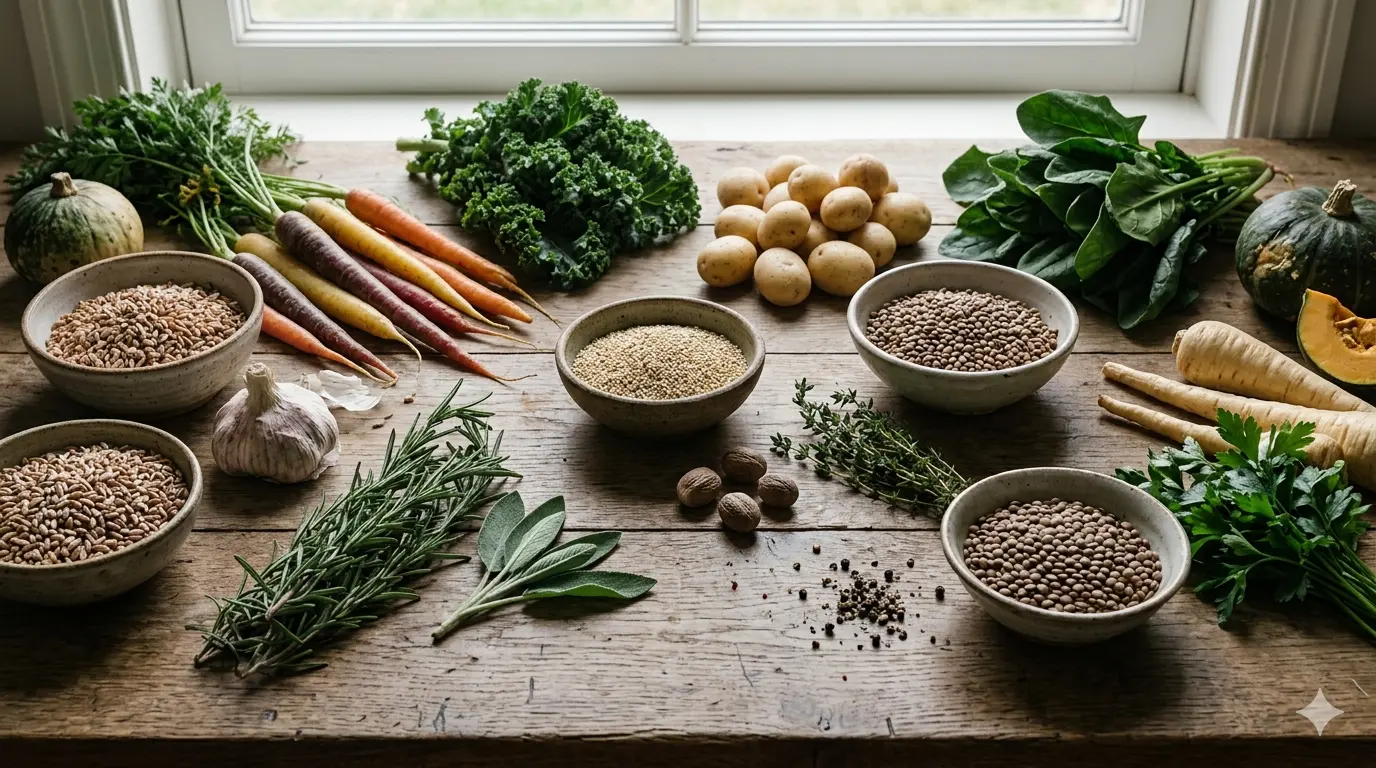
Cook It
The ingredients below are in season now, with how to actually cook them.
Move
Grow & Cultivate
- Final harvest of root vegetables: radish, carrot, turnip
- Apply winter mulch to perennials and garlic beds
Ecology Signals
Animal behavior, migration, habitat changes
Squirrels and chipmunks at maximum caching intensity — each animal must secure several thousand calories of stored food before the ground freezes solid
Most insects enter winter diapause — only hardy winter moths and a few cold-tolerant fly species remain active during daylight hours
Frost forms on still, clear nights when ground temperature drops below freezing while air remains just above — the crystalline patterns are most visible on fallen leaves and grass blades at dawn
Reflection
“Endings are not failures — they are the natural completion of cycles”
“What falls returns to the soil and feeds what comes next”
Taoist Reflection
This term's seasonal wisdom echoes a deeper theme in Taoist philosophy. Explore it further on Tales With Lee:
Taoism for ChangeSeasonal Essay
A deeper look at this solar term
Frost Descent is the eighteenth solar term and the last of autumn — the threshold between the harvest season and winter’s arrival. Its name is descriptive: this is when frost first appears, typically on still, clear nights when ground temperatures drop below freezing while the air above remains just above.
The physics of frost explains why it arrives now and not earlier. On a clear night, heat radiates away from the ground faster than the air can replenish it, so the surface cools below freezing even while the air a meter up stays above zero. Water vapor freezes directly onto the cold surface — no dew stage, just the crystalline pattern you find on fallen leaves and grass blades at dawn. In northern regions those patterns last only 30-60 minutes before the rising sun melts them, which makes them easy to miss if you are not outside early. The ground is beginning to freeze from the surface down on consecutive cold nights, and in Northeast China the trees are nearly bare as leaf-fall reaches its peak.
The transition from Cold Dew, where the emphasis was on cooling and moisture, is now complete. Cold Dew brought dew; Frost Descent brings ice. The change is no longer subtle. Leaves that were turning color a month ago are now on the ground. The landscape strips down to its structure — bare branches, harvested fields, the architecture of the land made visible.
This term teaches preparation without anxiety. Animals cache food, trees shed leaves, the soil receives its blanket of organic matter. Squirrels and chipmunks are at maximum caching intensity, each animal securing several thousand calories of stored food before the ground freezes solid. Nothing is panicking; everything is responding to clear signals. The cultural association with persimmons — the bright orange fruit that hangs on bare branches after leaf-fall — captures the spirit of the term: vivid color in a graying world, sweetness after the frost. The astringency that makes unripe persimmons unpleasant vanishes as the frost concentrates their sugars, so the fruit reaches its peak just as everything around it winds down.
In the garden, the frost line is a deadline. Root vegetables — radish, carrot, turnip — must be harvested before the ground freezes, and winter mulch should be applied to perennials and garlic beds to insulate them through the cold. Morning breath becomes visible for the first time since spring, a daily reminder that the air has crossed a threshold. Most insects have entered winter diapause, leaving only hardy winter moths and a few cold-tolerant fly species active during daylight hours.
Movement shifts toward grounding and warmth — standing practices, slow joint work, anything that keeps the body’s core temperature stable without overheating. Food turns decisively toward the warming and nourishing: lamb, root vegetables, dried fruits. Winter is coming, but Frost Descent is not about fear — it is about the quiet satisfaction of being ready. The essay on embodied adaptation explains how this kind of readiness is the body’s oldest form of intelligence, and the move from Frost Descent into Start of Winter completes the shift from gathering to conserving.
Frequently Asked Questions about Frost Descent
Quick answers to common questions about Frost Descent (霜降) — its dates, foods, and natural signs.
What is Frost Descent (霜降) and why is it the last term of autumn?
Frost Descent (霜降, Shuāngjiàng) is the eighteenth solar term and the final one of autumn — the threshold between harvest and winter. Its name is descriptive: this is when frost first forms, typically on clear, still nights when ground temperature drops below freezing while the air above remains just above (see Wikipedia, 'Frost'). Leaves fall in earnest, and the landscape strips down to bare branches and harvested fields.
When does Frost Descent occur and what weather defines it?
Frost Descent typically falls around October 23–24 each year and lasts about 15 days until Start of Winter (立冬). In 2026, it runs from October 24 to November 7. Ground begins to freeze from the surface down on consecutive cold nights, and in Northeast China deciduous trees are nearly bare as leaf-fall peaks.
Why are persimmons associated with Frost Descent?
Persimmons are the definitive fruit of this term. The astringency that makes unripe fruit unpleasant vanishes as frost concentrates their sugars, so persimmons reach peak sweetness just as the first frost arrives. In Shandong, persimmon trees are stripped bare of leaves while bright orange fruit hangs on otherwise empty branches — vivid color in a graying world.
What harvest and garden tasks are critical during Frost Descent?
This is the final harvest of root vegetables — radish, carrot, and turnip — before the ground freezes solid. Apply winter mulch to perennials and garlic beds to insulate them through the cold months. The window is narrow: squirrels and chipmunks work at maximum caching intensity, each securing several thousand calories of stored food before the ground freezes.
What natural phenomena mark Frost Descent?
The defining phenomena are all visible at dawn: frost patterns on fallen leaves and grass that last 30-60 minutes before melting, morning breath visible for the first time since spring, squirrels and chipmunks at peak caching activity, and the crystalline structures formed when ground temperatures cross below freezing on still, clear nights.
Frost Descent is part of The Way of Nature Atlas — a broader exploration of ecological wisdom.