

Key Takeaways
The essentials of Autumn Equinox in under a minute.
- This term: Autumn Equinox (秋分) is the 16th solar term of the 24-term year, running September 23 – October 7.
- What happens in nature: Day and night equal in length for the second time this year — the balance point before darkness overtakes light
- Why it matters: This is the second balance point of the year — but unlike spring's balance, this one leads toward darkness.
- Shift since last term: Morning moisture shifts from dew to potential frost
- Moving toward: First genuine risk of frost
- Start here: Begin with Qigong for Autumn: A 立秋–秋分 Daily Routine.
Core Definition
Day and night equal for the second time. The harvest peaks and the landscape turns brilliant.
This is the second balance point of the year — but unlike spring's balance, this one leads toward darkness.
Transition
How this term sits between what came before and what comes next
Phenology
What is happening in the natural world
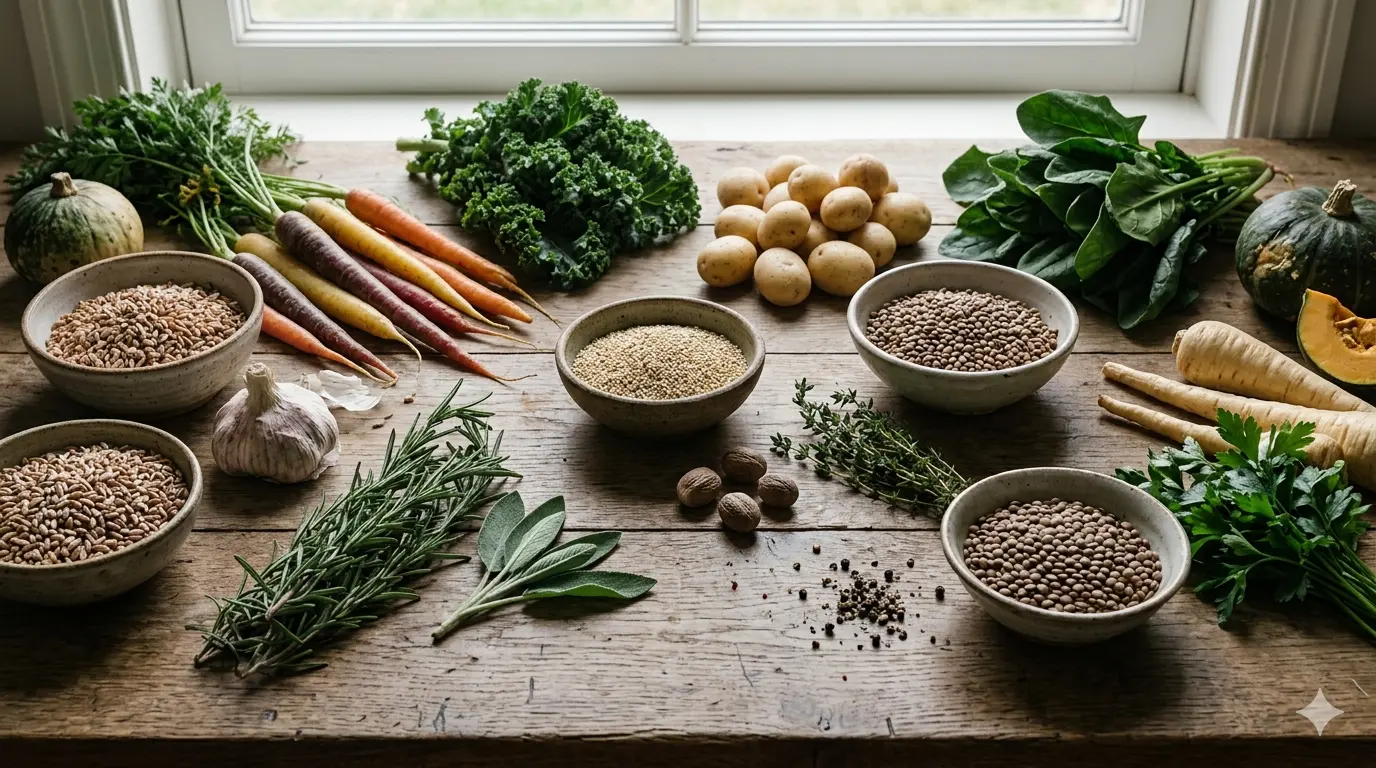
Cook It
The ingredients below are in season now, with how to actually cook them.
Move
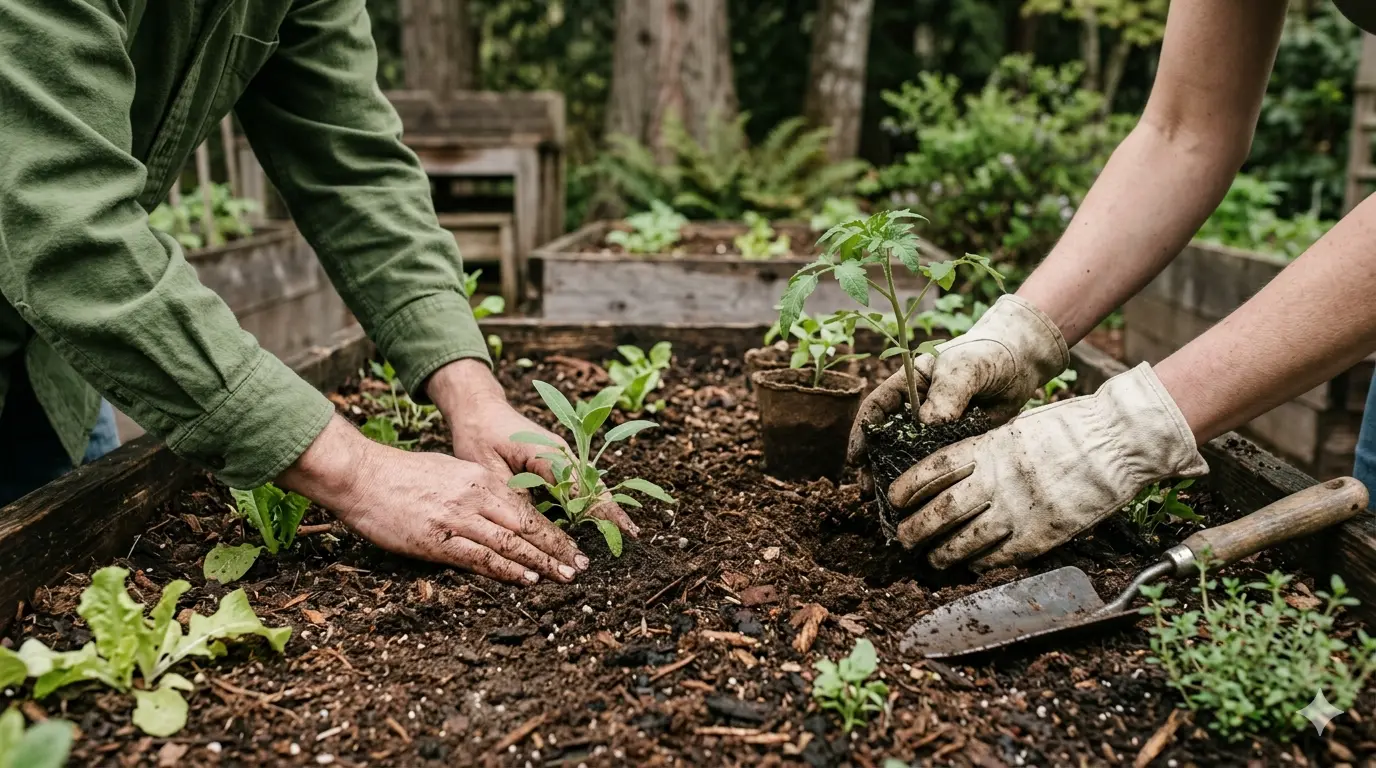
Grow & Cultivate
- Peak harvest season across temperate zones — apples, pears, late stone fruit, and root vegetables all ready within a 2-3 week window
- Begin drying and storing crops for winter: herbs hung in bundles, grains threshed, root vegetables cellared
- Plant overwintering garlic and shallots — they need 4-6 weeks of root establishment before the ground freezes
Ecology Signals
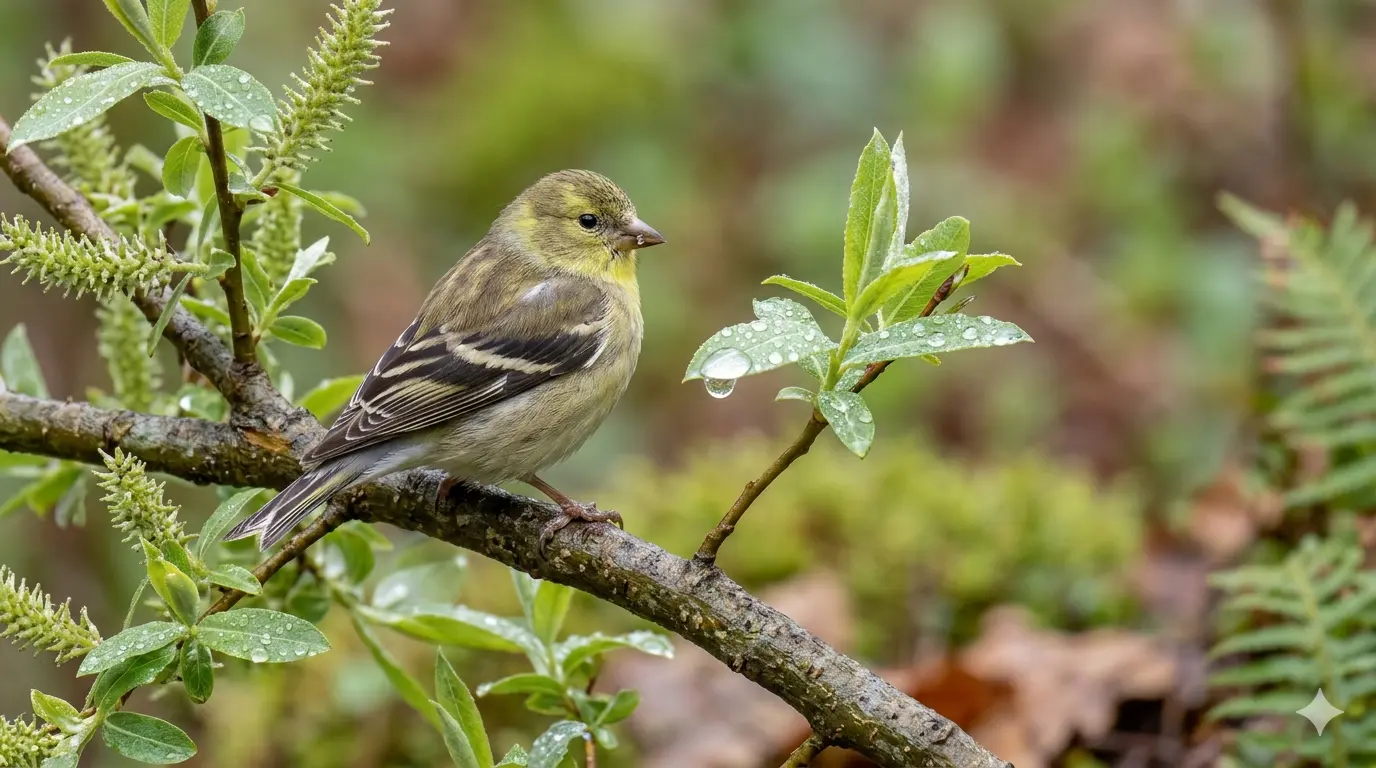
Animal behavior, migration, habitat changes
Migrating geese form V-formations high overhead — their calls carry to the ground as they navigate by landscape features and celestial cues
Squirrels at peak food-caching intensity — each animal spends the daylight hours burying nuts, relying on spatial memory and smell to recover them through winter
Valley fog forms when cooling ground meets still-warm water — the temperature inversion traps moisture at ground level, creating dense morning fog that burns off by midday
Reflection
“Balance returns to the world — not as a gift, but as a harvest”
“What you planted in spring is what you gather now”
Taoist Reflection
This term's seasonal wisdom echoes a deeper theme in Taoist philosophy. Explore it further on Tales With Lee:
Yin and Yang: How Balance and Change Actually WorkSeasonal Essay
A deeper look at this solar term
The Autumn Equinox (秋分) falls on September 23, 2026, and runs until October 7. It marks the second point of balance in the year — day and night equal once more, before the dark begins to outpace the light. The harvest is at its fullest, leaves turn brilliant, and the air carries the first hint of cold. It is a threshold season: not yet winter, but no longer truly warm.
The physics of the term is precise. The sun crosses the celestial equator moving south, and for the second time this year — the first was at the Spring Equinox in March — day and night are nearly equal in length. From this point the balance tips: each day will shorten until the Winter Solstice. Unlike the meteorological first day of autumn, which is fixed by date and temperature, the equinox is an astronomical event — one of the twenty-four solar terms defined by the sun’s longitude. For how this astronomical midpoint relates to the traditional start of autumn, see the When Does Autumn Start guide and the Start of Autumn guide. The direction of the tilt matters. Spring’s balance promised increasing warmth; this one leads toward darkness. In Northern China the change is impossible to miss: maples and ginkgos reach their most vivid reds and golds, a peak of color that lasts only 7-10 days before the leaves fall.
Below the show of color, the soil is quietly doing its own work. Soil temperatures begin their seasonal decline, slowing microbial decomposition and nutrient cycling — the ground is storing rather than spending. Morning moisture shifts from dew toward potential frost, and overnight temperatures in northern regions now approach the freezing threshold. Geese pass overhead in V-formations, navigating by landscape features as they begin migrations of 2,000-4,000 km; squirrels work through the daylight hours burying nuts for the winter ahead; and the first autumn fogs pool in valleys where cooling ground meets still-warm water. Each is a small sign that the season has turned decisively.
In classical Chinese medicine, autumn is associated with the lungs and the emotion of letting go — appropriate for a season when trees shed their leaves and farmers gather their crops. The equinox teaches us that release is not loss; it is preparation. What falls away returns to the soil and feeds the next cycle.
The table follows the same logic. Roasted root vegetables with five-spice, pear and ginger compote, and lotus root soup slow-simmered with pork bones are autumn classics — in the traditional Chinese framework, pears and lotus root are the foods associated with seasonal dryness. For gardeners, the equinox opens the peak harvest window: apples, pears, late stone fruit, and root vegetables are all ready within a 2-3 week span, and crops must be dried and stored before the ground cools further. It is also the last call to plant overwintering garlic and shallots — they need 4-6 weeks of root establishment before the ground freezes.
Movement practices shift toward strengthening the lungs and keeping joints mobile in cooling air. Deep, intentional breathing becomes a practice in itself — the literal taking-in and letting-go that mirrors the season. For a fuller look at how this term guides daily choices, the Autumn Equinox balance guide and the Autumn Equinox traditions page cover both sides of the same teaching. The equinox is not a pause between seasons but the fullest expression of one: balance, harvest, and the deliberate release that makes next spring possible. From here the sequence turns colder — Cold Dew, when autumn stops being merely beautiful, and Frost Descent, the last term before winter closes in.
The autumn practice cycle closes here too. If you began the seasonal qigong protocol at 立秋, the Qigong for Autumn guide runs to 秋分 — this term — and describes the Sī sound and Lung-Metal breath work that carries the transition from summer expansion into autumn gathering.
Frequently Asked Questions about Autumn Equinox
Quick answers to common questions about Autumn Equinox (秋分) — its dates, foods, and natural signs.
What is the Autumn Equinox (秋分) and why is it significant?
The Autumn Equinox (秋分, Qiūfēn) is the sixteenth solar term and the midpoint of autumn. For the second time this year, day and night are equal in length — but unlike spring's balance, this one leads toward darkness (see Wikipedia, 'September equinox'). The harvest reaches its fullest moment, tree colors peak, and soil temperatures begin their seasonal decline, slowing microbial decomposition and nutrient cycling.
When does the Autumn Equinox occur and what weather defines it?
The Autumn Equinox typically falls around September 22–24 each year and lasts about 15 days until Cold Dew (寒露). In 2026, it runs from September 23 to October 7. Overnight temperatures in northern regions now approach the freezing threshold, and morning moisture shifts from dew toward potential frost.
What foods are traditionally eaten during the Autumn Equinox?
In the traditional Chinese framework, autumn is associated with the lungs and seasonal dryness — Autumn Equinox foods are chosen to counter the drying air as the season turns. Common dishes include roasted root vegetables with five-spice, pear and ginger compote, lotus root soup slow-simmered with pork bones and goji berries, and braised shiitake mushrooms. These warming dishes balance the season's dryness while grounding the body for the cooling weeks ahead.
What should I plant or harvest during the Autumn Equinox?
This is the peak harvest window across temperate zones — apples, pears, late stone fruit, and root vegetables are all ready within a 2-3 week window. Begin drying and storing crops for winter: herbs hung in bundles, grains threshed, root vegetables cellared. Plant overwintering garlic and shallots now, as they need 4-6 weeks of root establishment before the ground freezes.
What natural phenomena mark the Autumn Equinox?
Several signs define this term: maple and ginkgo trees reach their most vivid reds and golds — peak fall color lasts only 7-10 days before leaves drop; migrating geese fly overhead in V-formations, their calls carrying to the ground; squirrels cache food intensely through the daylight hours; and the first autumn fogs form in valleys as cooling ground meets still-warm water.
Autumn Equinox is part of The Way of Nature Atlas — a broader exploration of ecological wisdom.