The Complete Seasonal Tea Guide — Drinking with the 24 Solar Terms
A comprehensive guide to choosing tea by season and solar term. From spring's first flush to winter's aged brews — learn how traditional tea wisdom aligns with the 24 solar terms for deeper connection to the natural year.
For thousands of years, traditional tea wisdom has selected leaves and herbs that harmonize with each solar term’s energy — a philosophy deeply explored in Taoist tea practice — cooling in summer, warming in winter, and balancing during the transitions. This guide organizes tea recommendations by the four seasons, building on centuries of tea civilization heritage, drawing on the unique character of each of the 24 solar terms.
The right tea at the right time supports the body’s natural transitions. A brew that refreshes in summer would chill you in winter; a tea that warms in winter would overwhelm in summer. Understanding this rhythm is the heart of seasonal tea practice.
Key Takeaways
- Spring teas awaken: Light, floral, and minimally oxidized — green teas, jasmine, and white teas support the body’s transition from winter’s stillness
- Summer teas cool and hydrate: Cold-brewed greens, mint, and herbal infusions help regulate body temperature — see proper brewing techniques for maximum flavor extraction during peak heat
- Autumn teas bridge the gap: Roasted oolongs, ripe pu-erh, and aged white teas offer warmth without overwhelming as temperatures cool
- Winter teas conserve and warm: Fully oxidized black teas, aged pu-erh, and spiced chai support circulation through the coldest months
- Hot tea can cool you down: Research demonstrates that warm beverages promote sweating, which provides net evaporative cooling more effectively than cold drinks in hot conditions — so don’t fear a warm cup even in summer
Spring Tea — Awakening and Renewal
Spring’s six solar terms carry the energy of awakening — from the first thaw of Start of Spring to the rain-soaked abundance of Grain Rain. Teas during this season should be light, uplifting, and supportive of the body’s natural detoxification after winter’s heavier fare.
Start of Spring (立春)
The birth of yang energy after winter’s stillness calls for light floral teas. Jasmine-scented pouchong or a delicate Bi Luo Chun green tea mirror the slow return of life to the landscape. Avoid heavy, aged teas that belong to winter’s deep rest.
Rain Water (雨水)
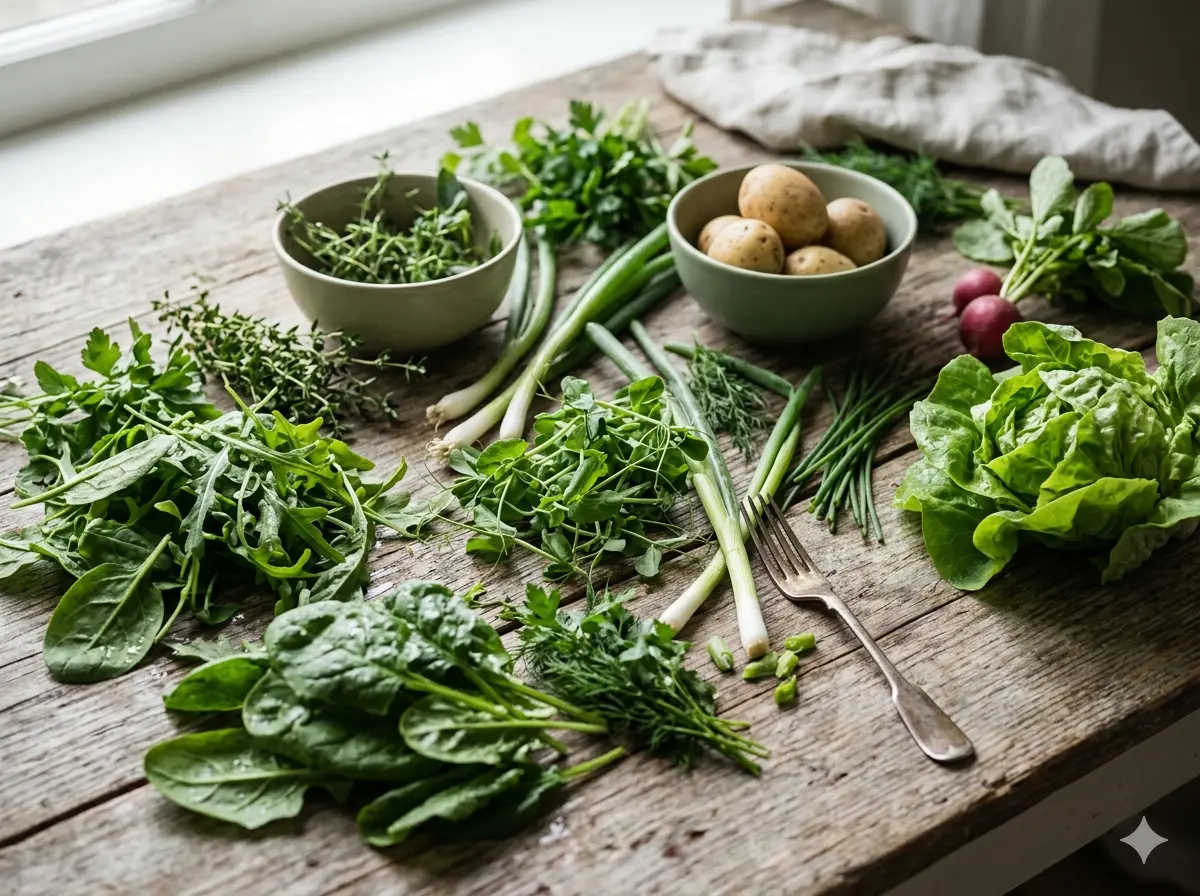
Increased dampness defines this term. Choose teas that support the body’s drainage — roasted barley tea (mugicha) or hojicha with its light, toasty character. Fresh ginger with lemon in warm water also cuts through seasonal damp without overwhelming the liver’s springtime work.
Insects Awaken (惊蛰)
Spring thunder stirs dormant life. Reach for a fresh green tea like Dragon Well (Longjing) — its clean, chestnut flavor and moderate caffeine provide the lift the body needs as activity returns. A cup of warm water with goji berries supports the liver.
Spring Equinox (春分)
Perfect balance between yin and yang calls for a tea that mirrors equilibrium. Medium-roast Tieguanyin oolong captures spring’s essence: neither too green nor too dark, with a floral aroma that signals renewal. Jasmine pearls unfurl slowly, teaching patience as the world accelerates.
Clear and Bright (清明)
Warming skies and the clearest light of the year. A fresh first-flush Darjeeling or Silver Needle white tea captures the clarity of this term — bright, clean, full of early-season vitality. These unoxidized teas support the body’s natural detoxification.
Grain Rain (谷雨)
The last spring term, when rains nourish the young grain. This is the traditional season for pre-Qingming green teas — the rarest and most prized pick of the year. Leaves harvested during Grain Rain are rich in amino acids (particularly theanine, creating umami flavor) and command premium prices. A cup of Ming Qian (pre-Ming) green tea connects you to the climax of spring’s renewal, just before the shift toward summer’s heat.
Grain Rain is the only solar term whose name is also a tea name — Grain Rain Tea (谷雨茶) is a recognized category in Chinese tea culture. → Explore Grain Rain’s full tea traditions
Summer Tea — Cooling and Hydration
Summer’s six solar terms bring heat, humidity, and the peak of yang energy. Teas in this season prioritize cooling, hydration, and gentle support — helping the body regulate temperature without shocking the system. For a deeper focus on summer-specific brews, see our science-backed summer tea guide.
Start of Summer (立夏)
The transition from growth to ripening. Begin shifting to cooler teas — a light green tea like sencha or Anping GABA tea supports the body as it adjusts to rising temperatures. Chrysanthemum and honeysuckle infusions help the heart, which traditional medicine associates with summer’s fire element.
Grain Full (小满)
Humidity along with warmth — the grains fill but have not yet ripened. Choose teas with gentle cooling and mild astringency to counter the damp. Cold-brewed green tea, osmanthus oolong, or a simple barley infusion supports the body through transitional humidity without shocking the system.
Grain in Ear (芒种)
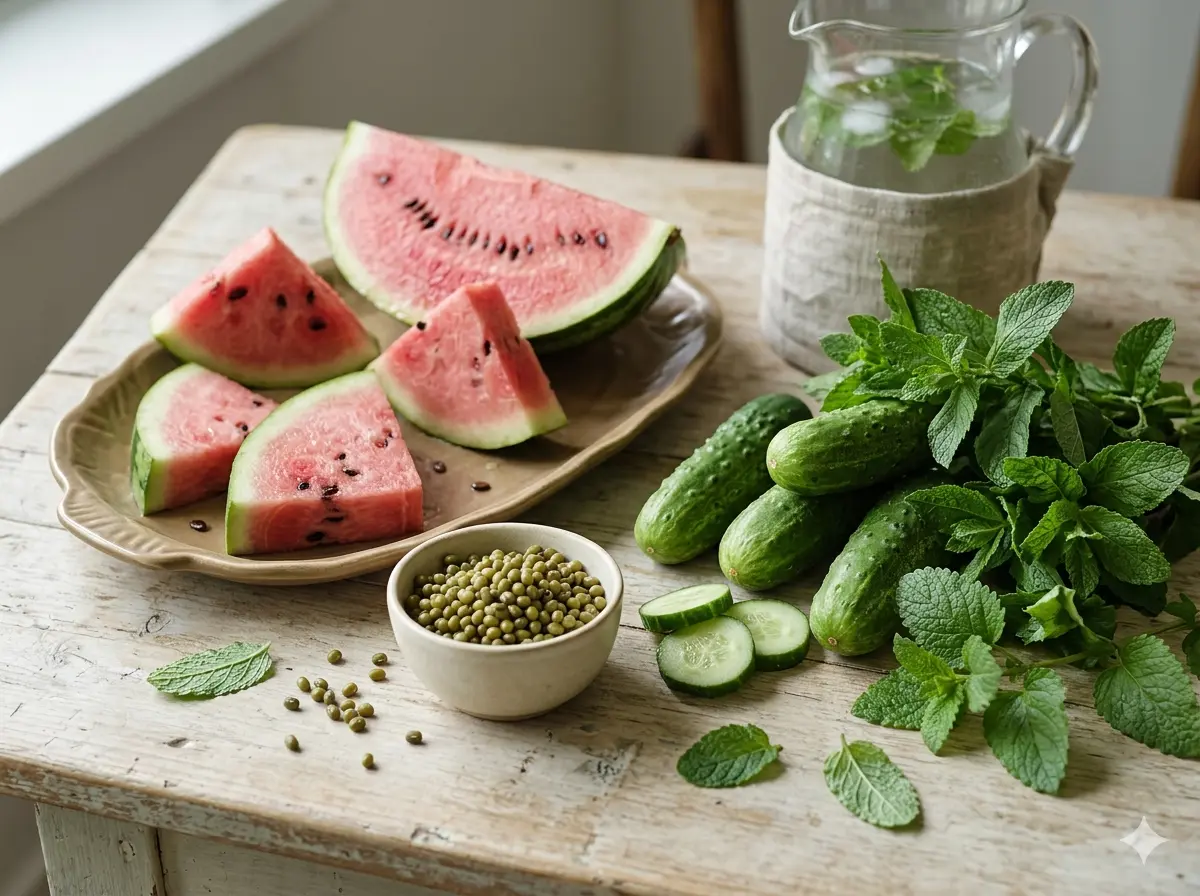
The plum rain season arrives — thick humidity settles, and the body feels heavy. Turn to strongly aromatic teas that cut through the damp: aged Tieguanyin, roasted genmaicha with its toasty rice notes, or a steaming bowl of fresh mint tea. These assertive brews match the season’s intensity.
Summer Solstice (夏至) — The Peak of Yang
The longest day — yang at its absolute peak. Yet within this maximum, yin quietly begins its return — making this the most paradoxical tea moment of the year. Drink cooling infusions that honor both extremes: cold-brewed white tea (Bai Hao Yin Zhen) for its delicate coolness, or chilled chrysanthemum with honey. The goal is to lower the body’s temperature without suppressing summer’s vitality.
Science note: A 2012 study by the University of Ottawa (Bain et al., Acta Physiologica 2012) found that drinking warm beverages (50°C) under conditions permitting full sweat evaporation actually cools the body more effectively than cold drinks. The mechanism: warm fluid triggers thermosensors in the esophagus, disproportionately increasing sweat output for net evaporative cooling. So don’t fear a warm cup of green tea even during the hottest days.
Minor Heat (小暑)
Intensifying heat and afternoon thunderstorms. This is the season for cold-brewed teas prepared overnight — green tea with cucumber slices, or mint and lemongrass steeped in cool water. The goal is not to fight the heat but to move with it, staying hydrated through infusions that support rather than overwhelm.
Major Heat (大暑)
The hottest term of the year — the body sweats freely and energy flags at midday. Prioritize hydration with electrolyte-rich infusions: prune tea (ume-shu), chilled barley tea (mugicha), or an infusion of dried longan and red dates. Avoid caffeine-heavy teas that tax the system. Cold-brewed light oolongs provide gentle energy without generating more internal heat.
Autumn Tea — Transition and Gathering
Autumn’s six solar terms carry the energy of transition — from summer’s heat outward to winter’s inward turning. Teas in this season bridge the shift, offering warmth without fighting the inevitable cooling.
Start of Autumn (立秋)
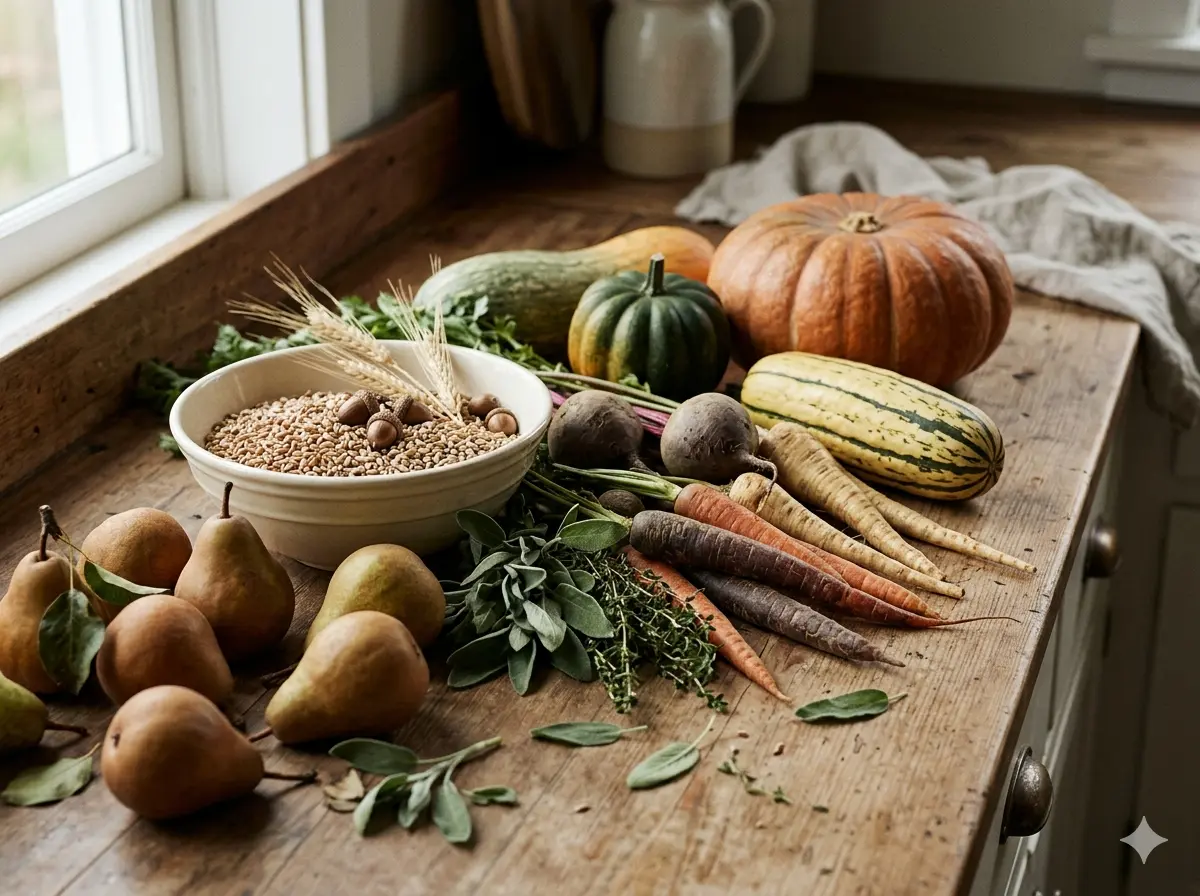
Still carries summer’s heat but hints at the cooling to come. A roasted oolong or hojicha bridges both worlds — toasted warmth that doesn’t overwhelm. Pears poached in tea (an Asian tradition) ease the lungs’ transition from summer’s outward energy to autumn’s inward gathering.
Limit of Heat (处暑)
The end of scorching days. The air begins to dry as yin energy increases. Reach for ripe pu-erh or dark roasted Wuyi rock tea (yancha) — their earthy depth prepares the body for autumn while their warmth is still comfortable. Dried goji berry and chrysanthemum tea nourishes yin without cooling too aggressively.
White Dew (白露)
Cool mornings where dew forms on grass and leaves — a visible sign that autumn has settled in. A cup of aged white tea (Shou Mei or Gong Mei) captures this moment perfectly: its honeyed sweetness and gentle warmth mirror the mellowing energy of early autumn. Osmanthus-scented oolong, harvested during this very term, offers another authentic seasonal choice.
White Dew Tea (白露茶) is a recognized concept in Chinese tea culture — tea leaves harvested during this term are said to carry a unique sweetness from the combination of warm days and cool nights. → Explore White Dew’s full tea guide
Autumn Equinox (秋分)
Balance between day and night, but leading toward darkness rather than light. A ripe pu-erh or dark roasted oolong represents this trade — warmth and depth without the bright energy of spring. Rock sugar and pear in hot water, served alongside your tea, supports the lungs as the air shifts from damp to dry.
Cold Dew (寒露)
Overnight temperatures approach freezing — the chill is unmistakable. Reach for fully oxidized black tea like Qimen Hongcha (Keemun) or a malty Dianhong from Yunnan. Their robust warmth wraps around you like a blanket. For an herbal alternative, cinnamon and ginger steeped with dried tangerine peel supports circulation against the deepening cold.
As the cold deepens, a gentle practice pairs well with the warming cup → Explore the Cold Dew and Tai Chi guide
Frost Descent (霜降)
Autumn’s final term before winter begins. The first frost appears, and the body instinctively seeks deep warmth. Aged white tea (10+ years) or a vintage Sheng Pu-erh holds the complexity of time itself — appropriate for this moment of seasonal closure. A concentrated ginger-tangerine decoction strengthens the body’s defenses before winter’s arrival.
Winter Tea — Warmth and Conservation
Winter’s six solar terms carry the energy of storage — yin at its peak, yang waiting to return. Teas in this season should be deeply warming, supporting circulation and internal warmth through the coldest months.
Start of Winter (立冬)
The conservation phase begins — energy turns inward, and the body’s metabolic rate slows. Deeply warming teas match this shift: aged Shou Mei, Hongyu black tea, or a spiced chai made with fresh ginger, cloves, and star anise. These brews support circulation without the sudden jolt of caffeine.
Minor Snow (小雪)
The first light snowfall — a gentle reminder that deep cold is settling in. Dark, aged teas suit this moment: a well-stored Shou Mei white tea (5+ years) develops honey and medicinal depth that mirrors winter’s quiet complexity. For daily drinking, roasted yerba mate or a cinnamon-heavy chai provides sustained, gentle warmth.
Major Snow (大雪)
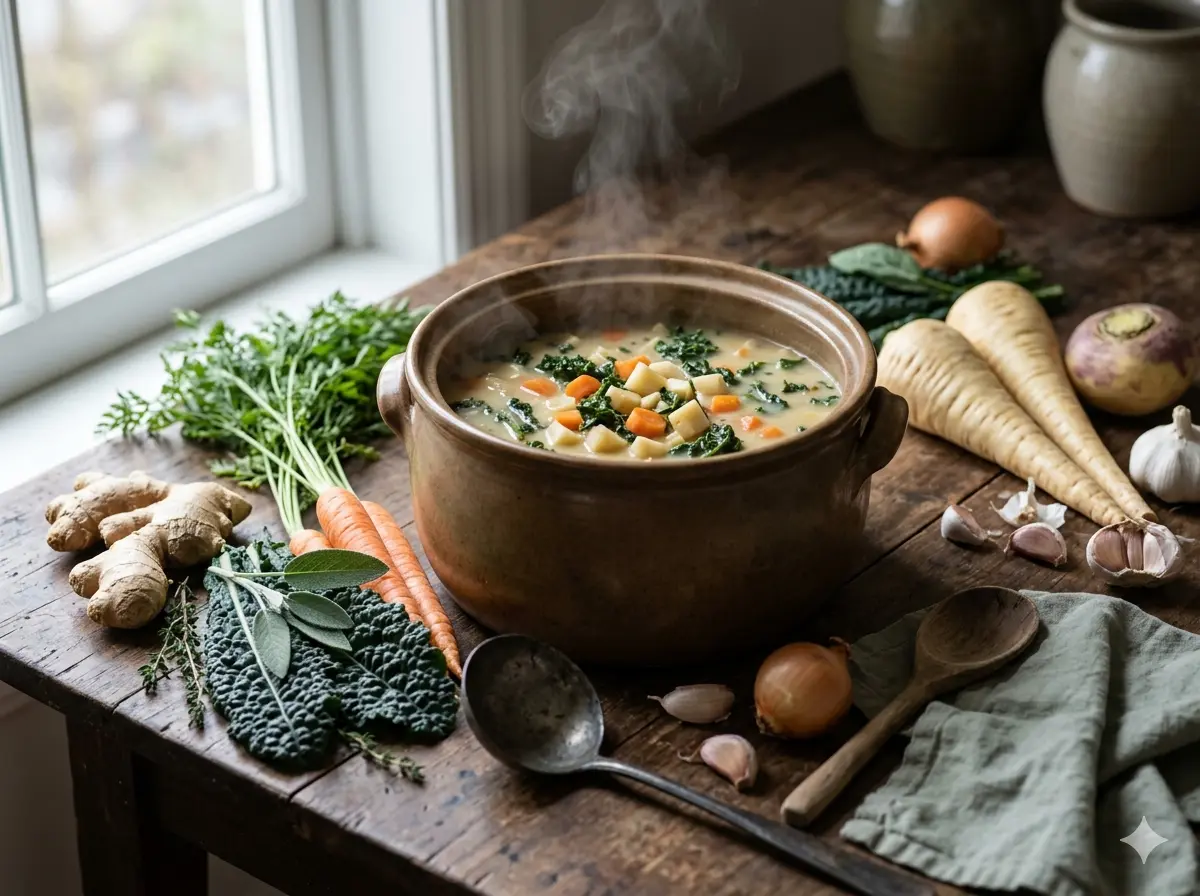
Accumulating snow and the landscape’s most dormant phase. This is the season for teas that have been aged through many years — a 15-year Sheng Pu-erh, vintage Hongcha, or dark, earthy Shou Pu-erh. Aged teas carry the memory of previous winters and connect the drinker to the deep patience this season demands.
Winter Solstice (冬至)
The longest night of the year — but within this deepest darkness, yang energy quietly stirs back to life. Honor the turn with a tea that carries both darkness and light: a well-aged Dong Ding oolong (roasted, dark, but not bitter) or a rich Lapsang Souchong whose smoky warmth recalls the hearth.
The solstice traditionally calls for Tang Yuan (glutinous rice balls) in ginger broth — drink the ginger-infused water as a tea in itself. This is a moment of profound stillness when tea becomes more than a warm drink: it is participation in the world’s oldest story, the return of light from within the deepest darkness. → Explore Winter Solstice’s full tea guide
Minor Cold (小寒)
The year’s most bitter cold, arriving just after the solstice when the body’s reserves are lowest. Reach for the deepest warming teas available: Yunnan golden buds (Dianhong), Shou Pu-erh with aged tangerine peel (Ju Pu-erh), or a strong ginger-cinnamon decoction sweetened with black sugar. Multiple small cups throughout the day support steady internal warmth better than one large serving.
Major Cold (大寒)
The final term in the 24-term cycle — the coldest moment before the wheel turns toward spring. This is the time for teas that have cycled through many years: a 20-year Sheng Pu-erh, vintage Shou Mei white cake, or fermented dark tea (Hei Cha) from Hunan. These teas are not drunk for their freshness but for their depth — the accumulated wisdom of many seasons, fitting for the last term before the cycle begins again.
Quick Reference: Tea by Season
| Season | Character | Recommended Teas | Avoid |
|---|---|---|---|
| Spring | Awakening, renewal | Green tea, jasmine, light oolong, white tea | Heavy aged teas |
| Summer | Cooling, hydration | Cold-brewed green, mint, chrysanthemum, white tea, barley tea | Heavy black teas |
| Autumn | Transition, gathering | Oolong, ripe pu-erh, roasted teas, black tea, osmanthus | Very cooling infusions |
| Winter | Warmth, conservation | Aged pu-erh, black tea, spiced chai, aged white tea, ginger | Cold-brewed or iced teas |
Brewing Tips for Every Season
- Spring: 70-80°C for green teas, shorter steeps (1-2 min) to preserve delicate flavors
- Summer: Consider cold brewing — steep green or white tea in cold water for 6-8 hours in the refrigerator for a smoother, less bitter result. See our summer tea guide for detailed brewing temperatures.
- Autumn: 85-95°C for oolongs and black teas, allowing fuller extraction
- Winter: Near-boiling for black teas and pu-erh (95-100°C), longer steeps (3-5 min) for maximum warmth
The principle is simple: the tea you choose should support where you are in the seasonal cycle — not fight it. A spring tea awakens, a summer tea cools, an autumn tea transitions, and a winter tea conserves. Drink with the season, and the season will sustain you.
Frequently Asked Questions
Quick answers about the complete seasonal tea guide — drinking with the 24 solar terms.
Why does the same tea taste different in different seasons?
Both the tea and the drinker change with the seasons. A tea's perception is influenced by ambient temperature, humidity, the drinker's hydration level, and even the flavor of foods consumed that day. More fundamentally, the body's needs shift seasonally — a warming tea that feels satisfying in winter can feel oppressive in summer for genuine physiological reasons.
Can I drink green tea in winter?
Yes — seasonal tea guidance is descriptive, not prescriptive. Green tea can be enjoyed year-round, but it may be less satisfying on cold winter days when the body craves deeper warmth. If you prefer green tea in winter, consider roasting the leaves lightly in a dry pan before brewing (creating a makeshift hojicha) or pairing it with warming spices like ginger.
What is the best way to cold-brew tea for summer?
Cold brewing is the gentlest extraction method and produces the smoothest, least bitter iced tea. Use 5g of tea leaves per 500ml of cold, filtered water. Steep in the refrigerator for 6-8 hours (green and white teas) or 8-12 hours (oolongs and herbal blends). Strain and serve over ice. Cold-brewed tea retains more antioxidants and less caffeine than hot-brewed tea.
How long should I age white tea before drinking it in autumn?
White tea begins to show noticeable aging character after 3-5 years of proper storage (cool, dark, low humidity). At 5-7 years, honey and dried fruit notes emerge strongly. For autumn drinking, a 5-7 year aged Shou Mei offers the best balance of complexity and approachability.
Is it true that hot tea cools you down in summer?
Yes — research by the University of Ottawa (Bain et al., Acta Physiologica 2012) demonstrated that consuming hot beverages (50°C) under conditions permitting full sweat evaporation results in lower body heat storage than cold (1.5°C) or room-temperature drinks. Warm-sensitive thermosensors in the esophagus trigger a disproportionate increase in sweat output that provides net evaporative cooling.
What solar terms have special tea traditions?
Three solar terms have particularly deep tea associations. Grain Rain (谷雨茶) is the only term whose name is also a recognized tea category. White Dew (白露茶) brings aged white teas and osmanthus oolong. Winter Solstice (冬至) calls for the deepest aged teas — Dong Ding oolong, Lapsang Souchong — and the traditional tang yuan ginger broth.
Related Solar Terms
Latest Articles
Recent guides and seasonal insights
From Dao of Seasons
Dumplings at Winter Solstice and Lunar New Year: Two Moments in the Seasonal Calendar
Explore why dumplings appear at China's Winter Solstice and Lunar New Year, how seasonal timing shapes food traditions, and why customs vary by region and family.
Cold Dew and Tai Chi: Moving Gently into Late Autumn
Explore Cold Dew, the 17th solar term, through seasonal Chinese wisdom and Tai Chi. Learn how to move, breathe, stay warm, and welcome late autumn.
Mid-Autumn Festival: the Full-Moon Harvest of the Third Quarter
Mid-Autumn Festival falls on lunar 8/15 — the full moon of the harvest month. In 2026 it lands on September 25, inside the same week as the equinox and the Harvest Moon. The traditions, foods, and moon-viewing culture of the year's great moon festival.
From Our Network
Winter Warming Stews — Lamb, Congee & Tang Yuan
Winter calls for deeply warming, nourishing foods that support the body through the coldest months. These three classic recipes — lamb stew, eight-treasure congee, and tang yuan — are traditional winter solstice fare.
When Does Autumn Start? Astronomical, Meteorological, and Seasonal Dates Explained
Autumn does not have one start date. Meteorological autumn begins September 1. Astronomical autumn starts at the equinox, around September 22–23. In the 24 solar terms, autumn begins earlier, with Start of Autumn around August 7–8. Each system measures a different kind of seasonal change.
July Garden — Peak Summer Care and Harvest
July's garden demands daily attention. From deep watering strategies to succession planting, here's how to keep your garden productive through the hottest weeks of the year.
July Walking — Summer Strolls and Moonlit Rambles
Walking in July is about timing. Learn the best hours, routes, and practices for comfortable summer walking — from dawn patrols to night walks under the stars.
Solar Terms FAQ — Answers to Common Questions About All 24 Solar Terms
Comprehensive FAQ covering all 24 solar terms — what each term means, when it occurs, what foods to eat, how to practice seasonal wellness, and what natural changes to observe. Organized by season for easy browsing.
Written by The Way of Nature
Dao of Seasons is part of The Way of Nature ecosystem — a network of seasonal practice, food wisdom, and nature observation.
Meet our contributors →