Midsummer Traditions Around the World — A Complete Guide to Celebrations and Their Seasonal Logic
Midsummer traditions from Scandinavia to East Asia — a practical guide to understanding, appreciating, and adapting these seasonal celebrations for modern life.
Midsummer is one of humanity’s oldest and most widespread celebrations — a festival of light, abundance, and community that appears in some form on nearly every continent. But what exactly is midsummer? Why do so many cultures mark this moment? And how can a modern person meaningfully participate?
This guide explores midsummer traditions from around the world, explains the seasonal logic behind them, and offers practical ideas for bringing the spirit of midsummer into contemporary life.
What Is Midsummer?
Midsummer is a cultural festival that falls near the summer solstice — the longest day of the year. It is not the same as the summer solstice, though the two are often conflated.
- Summer solstice: An astronomical event — the exact moment when the sun reaches its northernmost declination (June 21 at 08:24 UTC in 2026).
- Midsummer: A cultural celebration that may or may not fall on the solstice itself. In many traditions, midsummer is observed on a fixed calendar date — June 24 in much of Europe (St. John’s Day), or the weekend between June 19-25 in Scandinavia.
The confusion is understandable. Both celebrate the peak of summer light, but they operate on different calendars: one astronomical, one cultural. Our article on Summer Solstice Meaning & Science covers the astronomical side in detail.
For a deeper exploration of the philosophical dimension, Tales With Lee explores seasonal cultural traditions — the stories communities tell themselves about the longest light, and what those stories reveal about human relationship with seasonal time.
The Global Tapestry of Midsummer Traditions
Scandinavia — The Iconic Midsummer
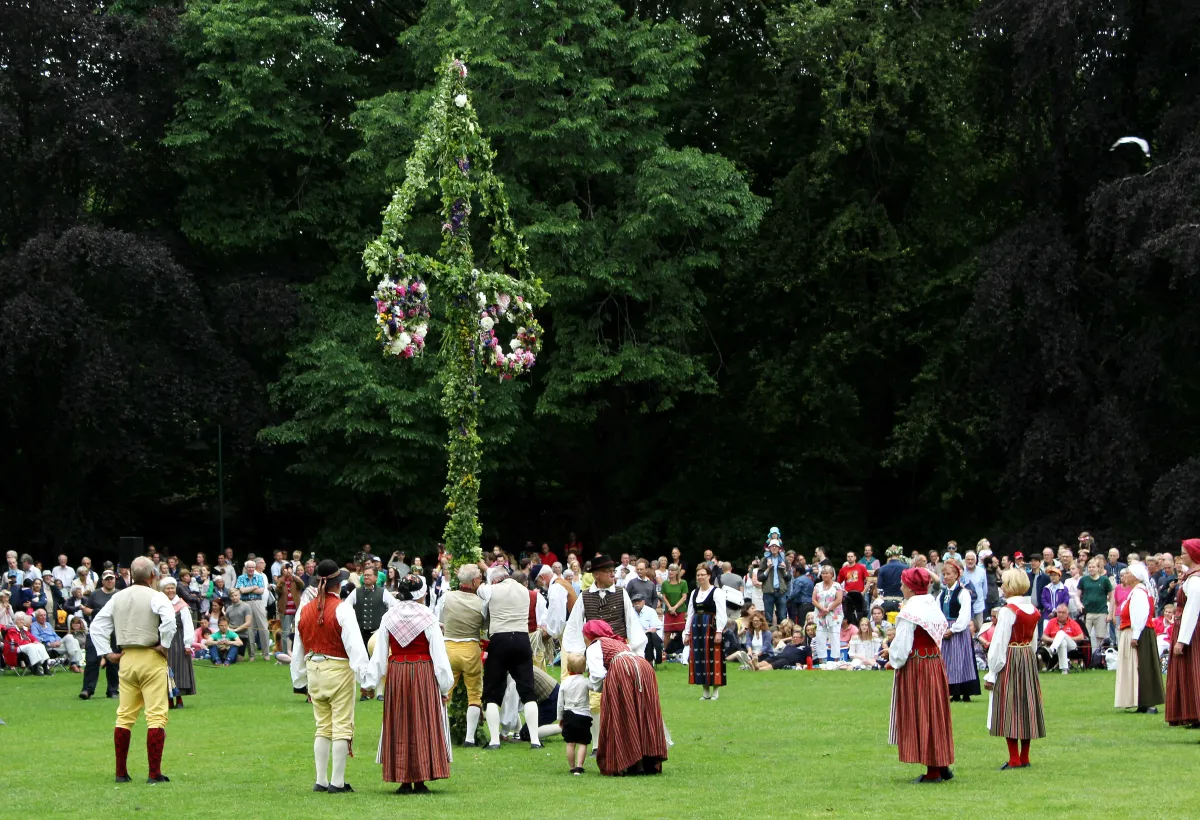
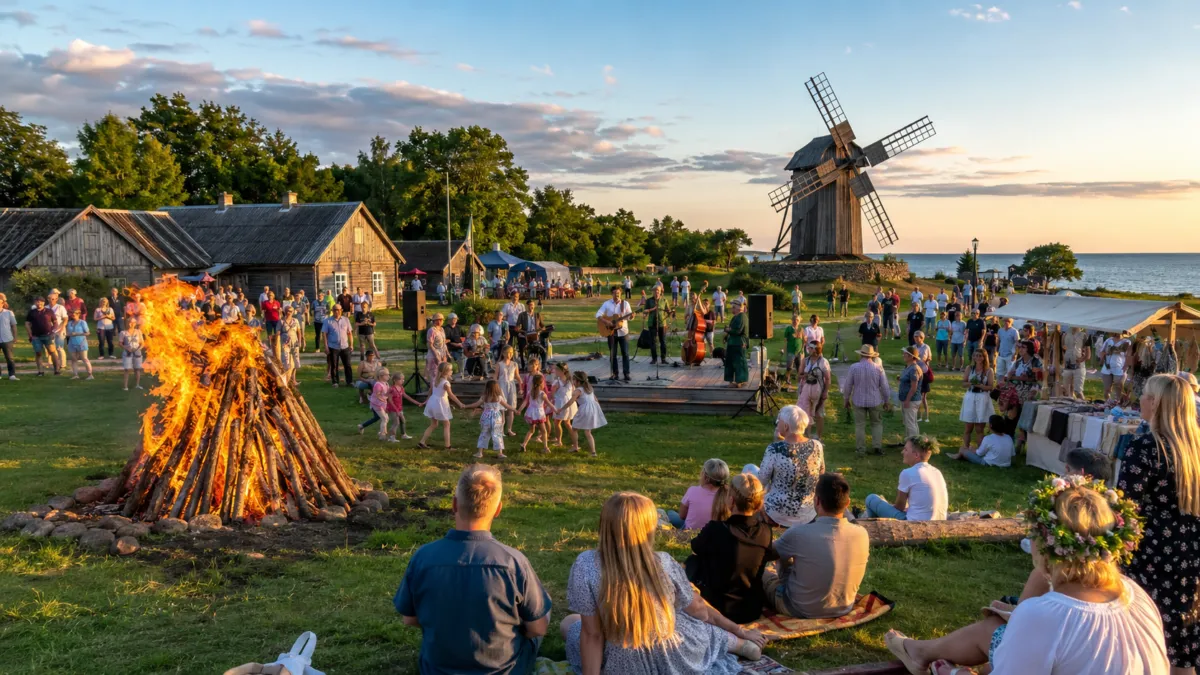
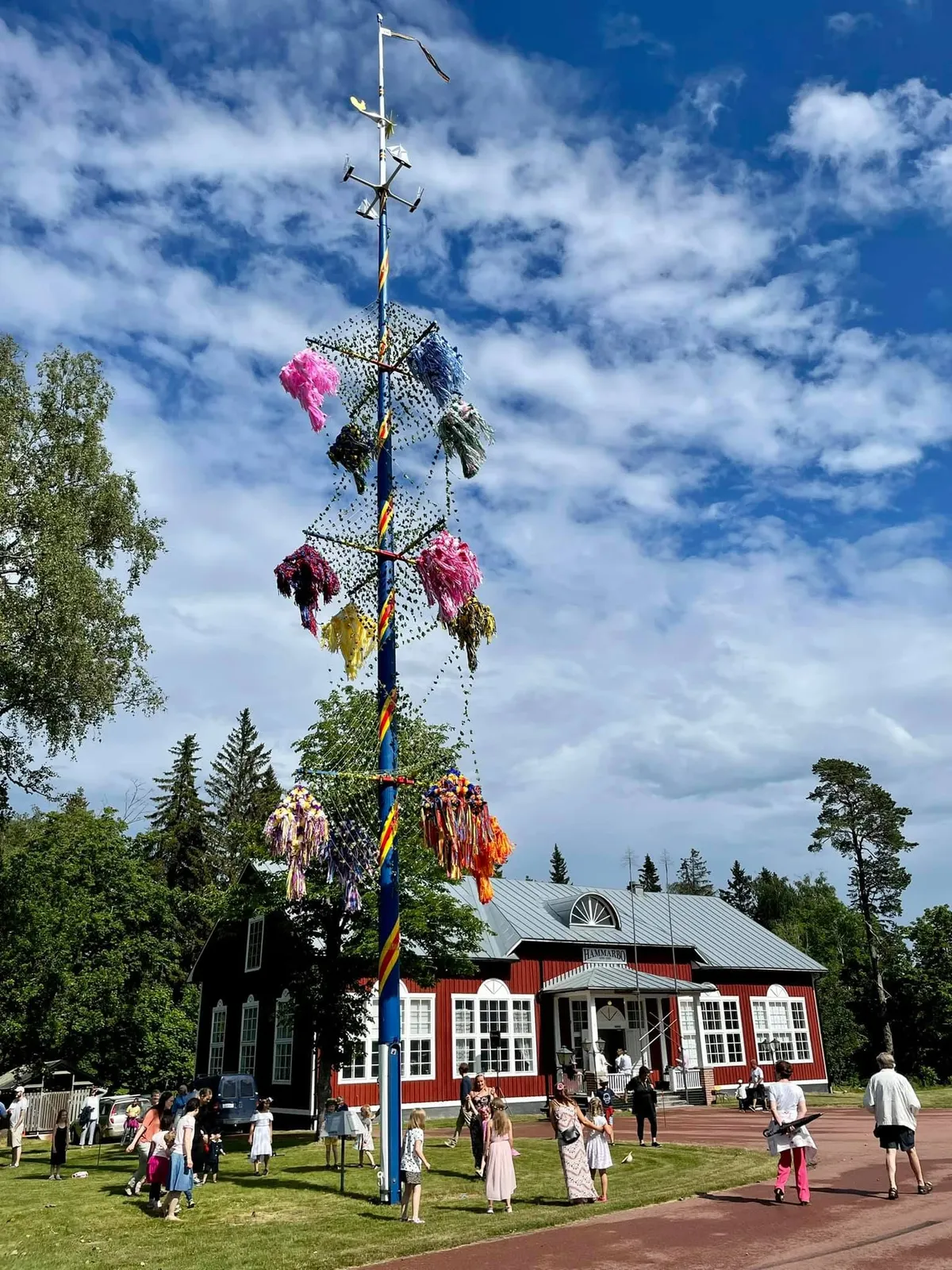
When most people think of midsummer, they picture Sweden: a maypole (midsommarstång) decorated with flowers and leaves, raised in a meadow while people in traditional folk costumes dance around it. Herring, new potatoes, sour cream, and chives are served with ice-cold aquavit. Flower crowns are woven and worn. The celebration continues late into the night — which, above the Arctic Circle, means the sun never fully sets.
In Sweden, midsummer is so central to national identity that many consider it the most important holiday after Christmas. Cities empty as people travel to the countryside. The maypole — originally a phallic fertility symbol — has been Christianized but retains its essential character: a celebration of life at its most abundant.
Finland’s Juhannus involves bonfires (kokko) lit on lakeshores, sauna, and a similar emphasis on being in nature. In Norway and Denmark, the celebration includes bonfires and singing, with the Danish celebrating Sankthansaften (St. John’s Eve).
Eastern Europe — Fire, Herbs, and Fertility
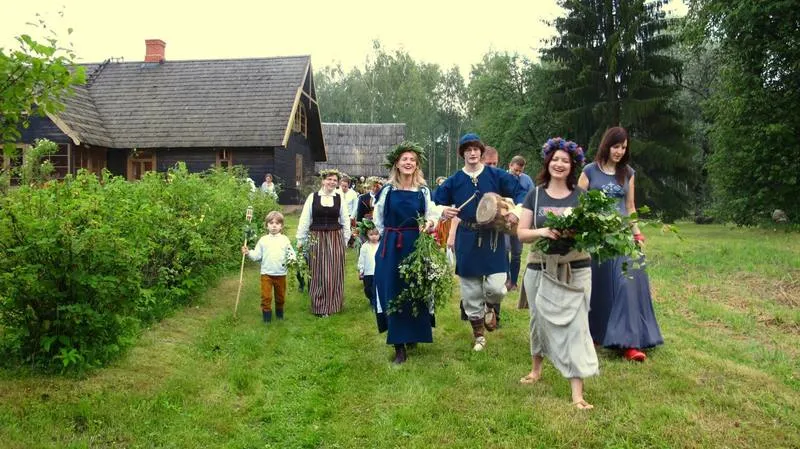
Latvia celebrates Jāņi on June 23-24, one of the most important festivals in Latvian culture. People wear oak wreaths (men) and flower crowns (women), eat caraway-seed cheese (Jāņu siers), drink beer, and sing hundreds of traditional Līgo songs throughout the night. Bonfires are lit, and couples jump over them for good luck and fertility. The celebration is pre-Christian in origin, honoring the god Jānis, and survived centuries of Christian and Soviet suppression.
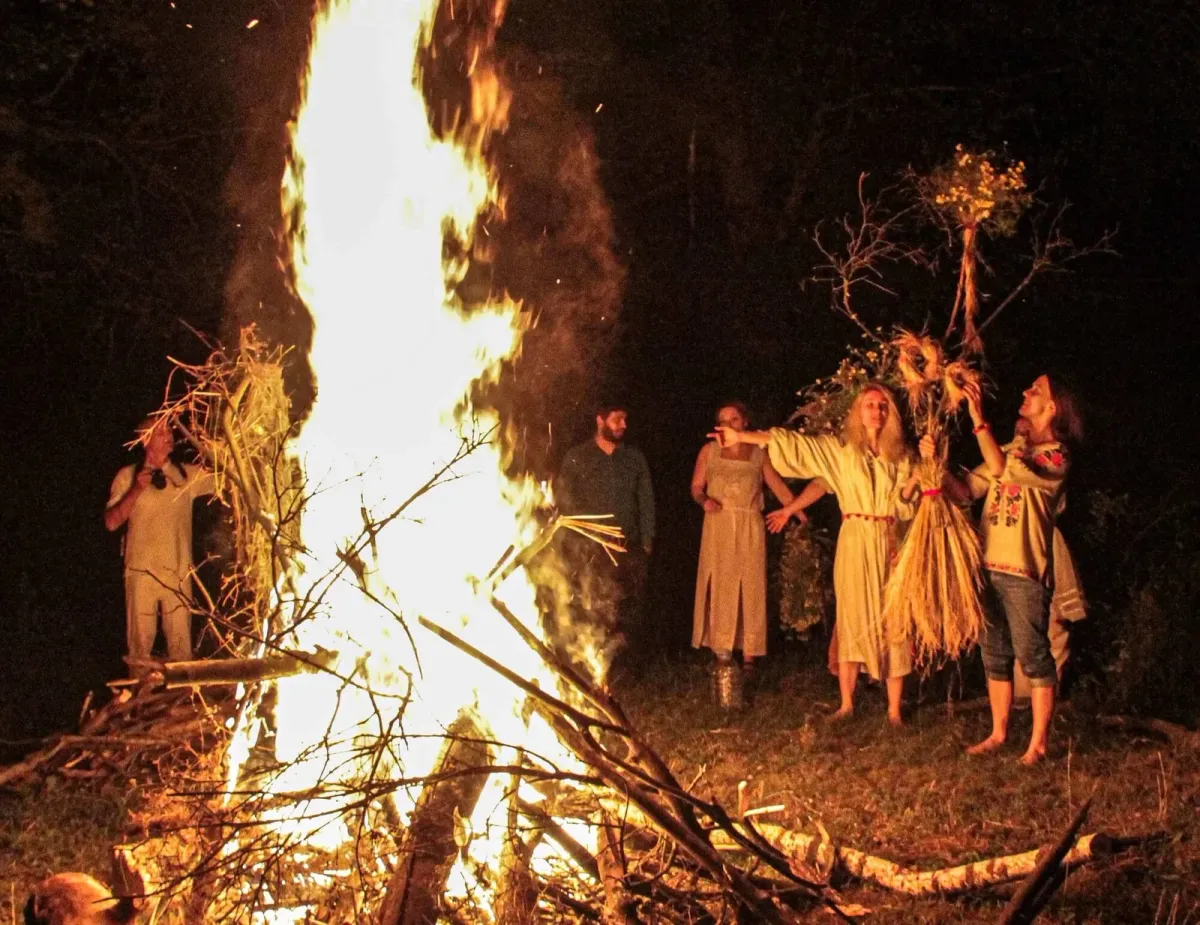
In Poland, Sobótka (St. John’s Eve, Noc Świętojańska) features bonfires, floating wreaths on rivers, and the search for the mythical fern flower that supposedly blooms only on this night, granting the finder supernatural powers. Young women traditionally floated candle-lit wreaths downstream — if a young man retrieved one, it was a sign of future romance.
UK & Ireland — Stonehenge, Bonfires, and Fairy Folklore
The summer solstice at Stonehenge draws thousands of people — modern druids, pagans, and curious visitors — to watch the sunrise align with the ancient stones. The monument, constructed over 5,000 years ago, is precisely oriented to the solstice sunrise, suggesting its builders were sophisticated astronomical observers.
Across Ireland and the British Isles, midsummer was traditionally marked with bonfires (tine cnámh in Irish Gaelic), which were believed to protect against fairies and evil spirits. Cattle were driven between bonfires for purification. Herbs gathered on midsummer morning were considered especially potent. The fairy folklore of A Midsummer Night’s Dream — Shakespeare’s most famous seasonal play — draws on this tradition.
Mediterranean — St. John’s Eve and Fire Jumping
Throughout the Mediterranean, midsummer is celebrated as the Feast of St. John the Baptist (June 24). The Christian holiday absorbed pre-existing solstice fire traditions almost completely.
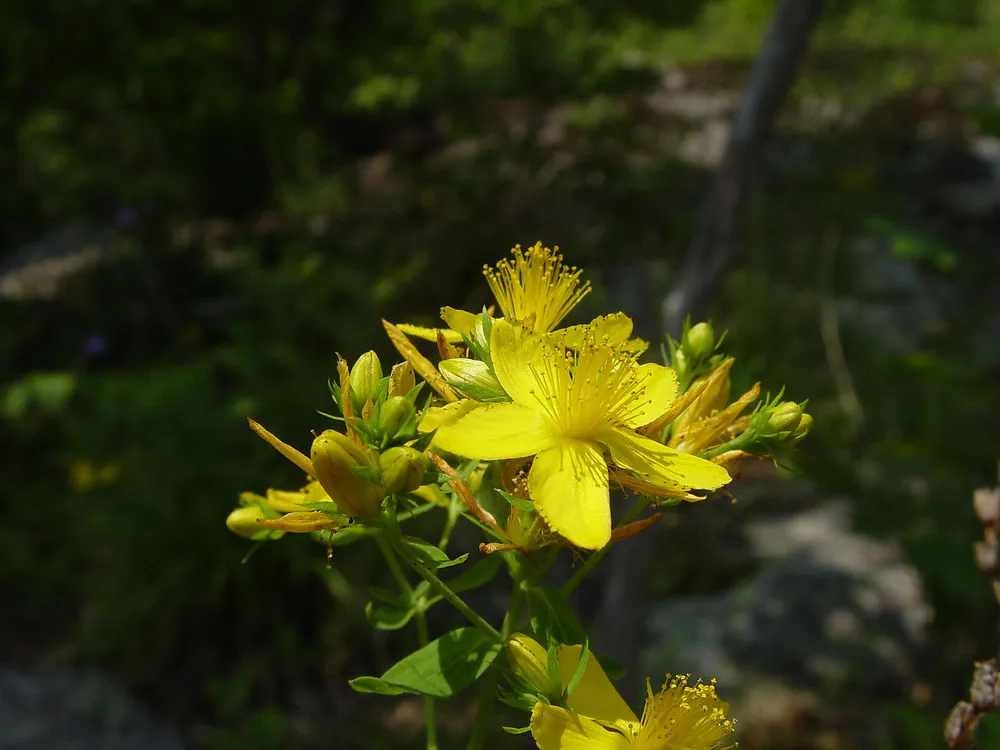
In Spain, the Noche de San Juan involves beach bonfires, fire-jumping, and midnight swims — believed to purify and bring good luck. In Italy, particularly in Turin and the South, celebrations include bonfires, fireworks, and the tradition of collecting St. John’s Wort (Hypericum perforatum), which is said to reach peak potency on this night. In Greece, the tradition of lighting bonfires and jumping over them three times while making a wish (to xeperasma) is still widely practiced.
China and East Asia — The Solstice as Yin-Yang Balance
In Chinese tradition, the summer solstice (夏至, Xiàzhì) is not a fire festival but a moment of balance. It is the peak of yang energy — the brightest, most active, most outward force — and yet within this peak, yin is already reborn. The philosophical teaching embedded in the solar term is that extremes contain their opposites.
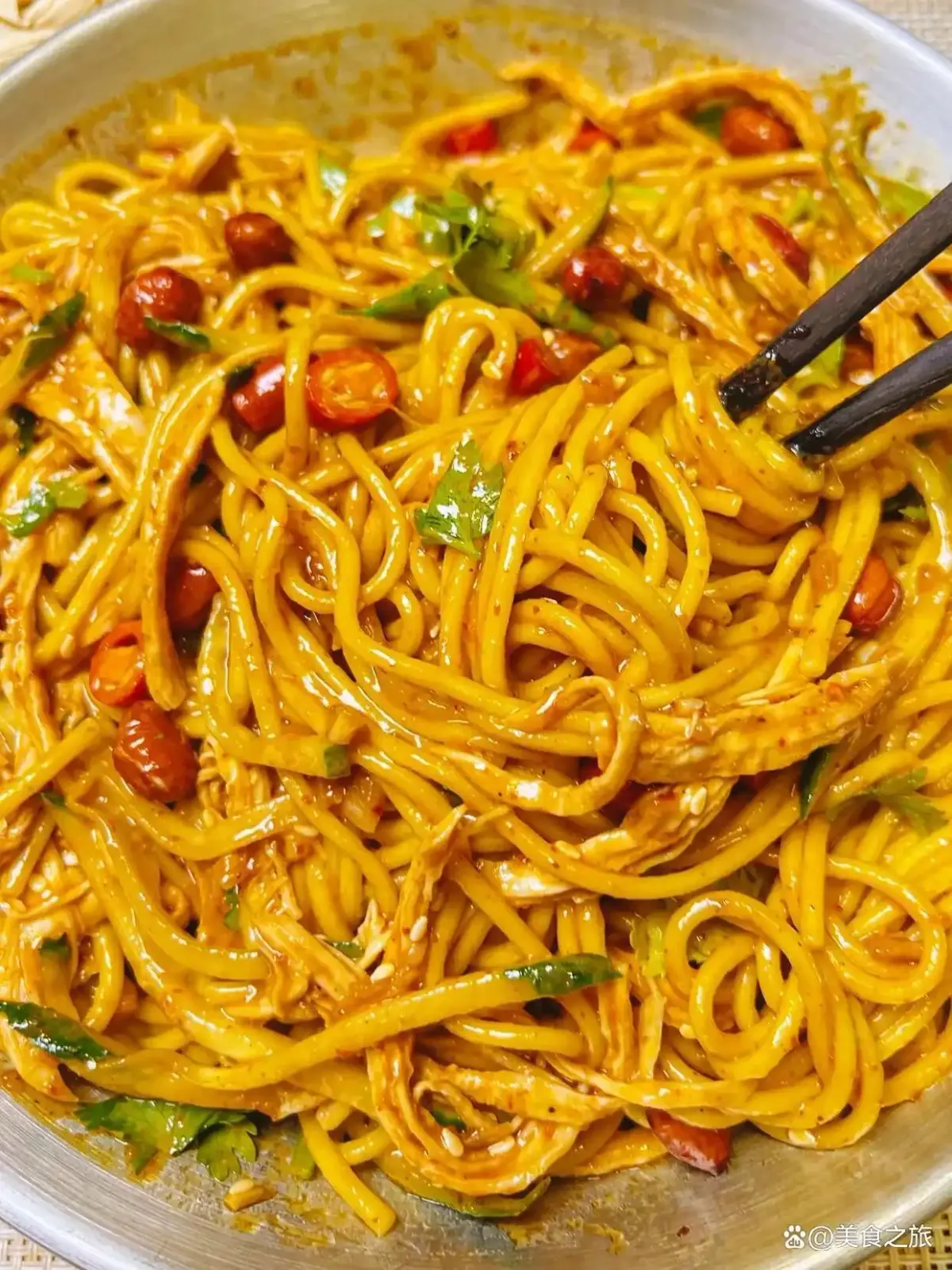
Traditional observance emphasizes cooling and restraint rather than celebration. Families in northern China eat chilled noodles (凉面, liáng miàn) — wheat noodles served cold with sesame paste, vinegar, and shredded vegetables. Outside China the pantry problem is immediate: Chinese sesame paste is not a substitute for itself, and the tahini most Western kitchens hold behaves differently under heat. Missing Umami compares the substitutes and explains why peanut butter and cashew butter each lose a different part of what the sauce is doing. The long noodles symbolize the long day. Mung bean soup (绿豆汤) is drunk for its cooling properties. The focus is on sustaining the body through the heat, not amplifying the sun’s energy.
For a complete look at the Chinese solstice traditions, including the lotus-viewing parties and the “dog days” (伏天), see our Summer Solstice Traditions page.
Indigenous and Ancient Traditions
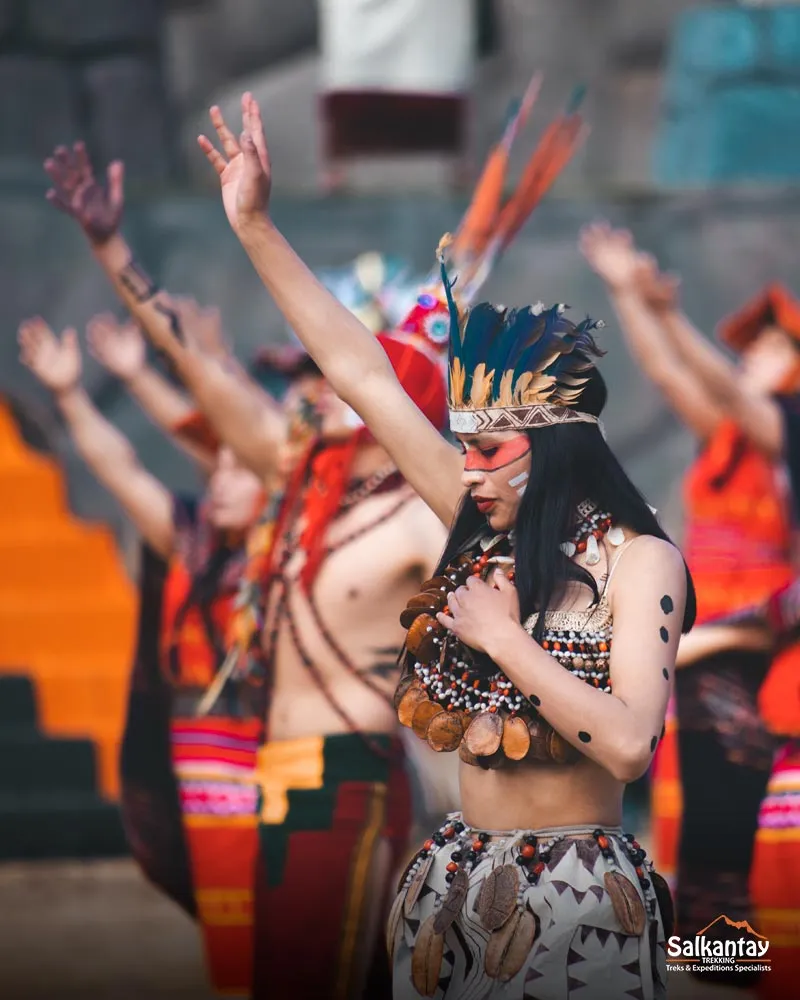
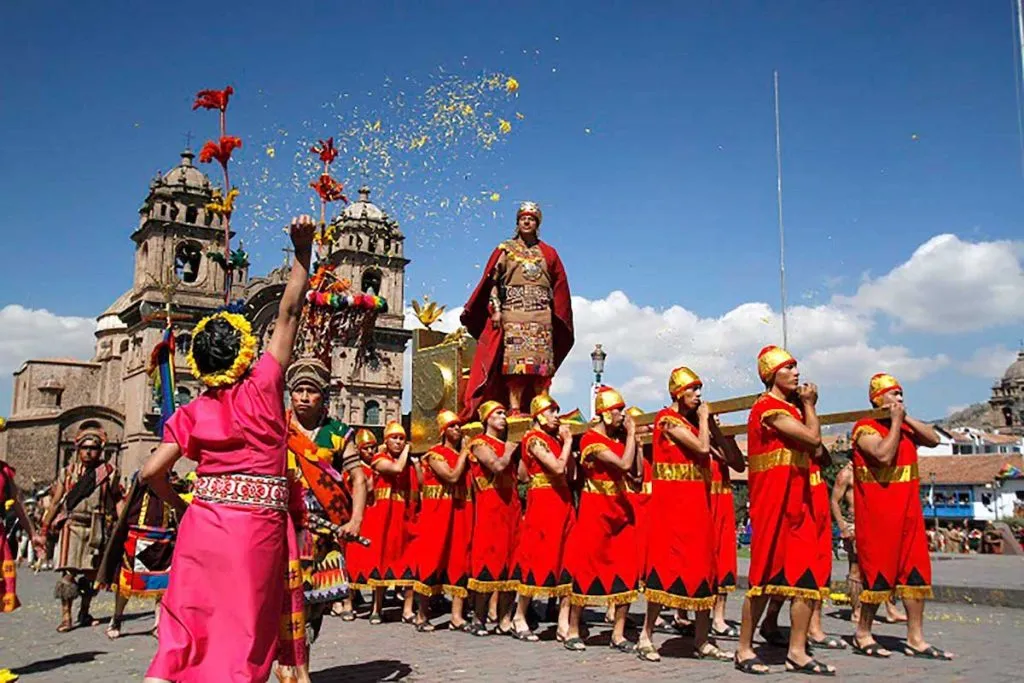
The Inca festival of Inti Raymi (Festival of the Sun) was held during the June solstice in the Southern Hemisphere — their winter solstice — honoring Inti, the sun god. The celebration involved elaborate ceremonies, sacrifices, and the mummification rituals of Inca royalty. Today, a reenactment in Cusco, Peru draws thousands of visitors.
Many Native American nations conducted Sun Dances around the summer solstice, particularly on the Great Plains. The Sun Dance is a multi-day ceremony of prayer, sacrifice, and renewal — not a celebration in the European sense, but a profound spiritual observance that aligns the community with the sun’s power.
Why These Traditions Emerged — The Seasonal Logic
Across cultures, midsummer traditions share common themes that reveal their underlying logic:
| Theme | Seasonal Logic | Examples |
|---|---|---|
| Fire | Light in the longest light — symbolic protection, purification against the darker half of the year | Bonfires in Sweden, Latvia, Spain, Ireland |
| Water | Cooling, purification, fertility | Midnight swims (Spain), floating wreaths (Poland) |
| Herbs | Plants at peak potency — traditional medicine aligned with solstice energy | St. John’s Wort (Mediterranean), flower crowns (Scandinavia) |
| Community gathering | Agricultural pause — after planting, before harvest, a moment to rest | Village celebrations everywhere |
| Fertility rituals | The sun’s power as a metaphor for life’s abundance | Maypole, fire jumping, flower crowns |
| Reversal / turning | The philosophical recognition that maximum contains its opposite | Chinese yin-yang, Shakespeare’s midsummer chaos |
Midsummer traditions are not arbitrary customs. They are coherent systems of seasonal adaptation — ways for human communities to mark the year’s peak light, celebrate abundance, and acknowledge the turning point that arrives at the height of summer.
Modern Midsummer: How to Celebrate Today
You do not need to be Swedish or pagan to meaningfully observe midsummer. The seasonal logic is universal. Here are grounded, respectful ways to bring midsummer into your own life:
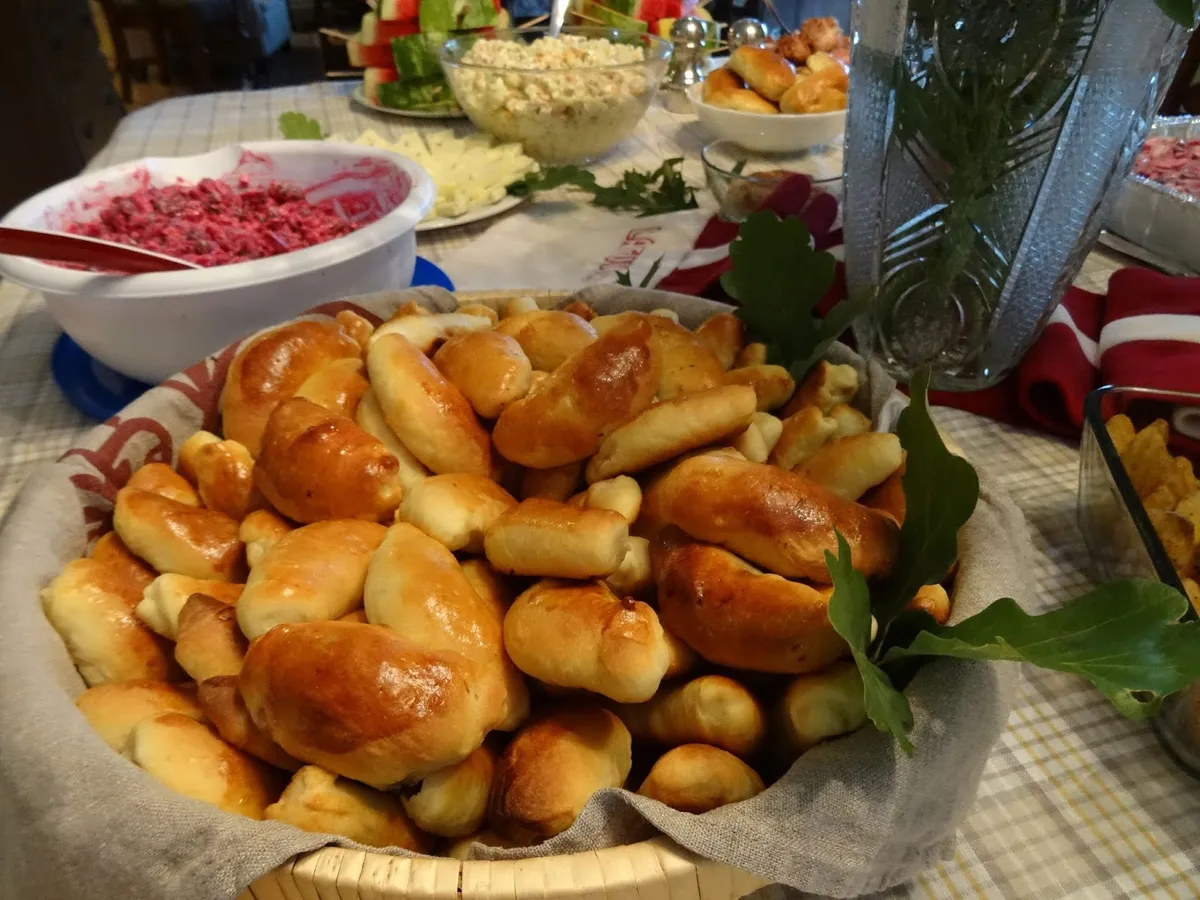
- Host a garden gathering: Invite friends for an evening meal as the sun sets late. Eat seasonal foods — new potatoes, fresh berries, grilled vegetables. Missing Umami’s seasonal cooking guides offer dishes designed for this occasion.
- Build a small bonfire or fire pit: Even a candlelit table honors the tradition. Fire is the universal midsummer element.
- Weave a flower crown: Pick wildflowers or garden blooms. The act of crafting is itself a meditative practice.
- Eat seasonally: New potatoes with dill, strawberries, fresh cheeses, chilled soups — foods that celebrate the abundance without heating the body further.
- Stay up to watch the sunset or sunrise: If you live at a latitude with long twilight, simply observing the quality of light is a midsummer practice in itself.
- Start a garden journal: Note when the first berries ripen, when the fireflies appear, when the sun sets from your window. Midsummer is an excellent anchor for seasonal observation.
For those interested in the ecological dimension, Panda Common’s wildlife observations track fireflies, nesting birds, and peak-season insect activity — a scientific complement to the cultural traditions.
Midsummer vs. Summer Solstice vs. Litha
These three terms are often used interchangeably, but they refer to distinct concepts:
| Term | Type | Meaning |
|---|---|---|
| Summer Solstice | Astronomical | The exact moment the sun reaches maximum declination (June 21, 2026) |
| Midsummer | Cultural | The festival period surrounding the solstice — dates vary by culture |
| Litha | Neopagan | The modern pagan name for the solstice sabbat, part of the Wheel of the Year |
Litha is a contemporary reconstruction of an Anglo-Saxon or Germanic solstice festival. It is meaningful within neopagan religious practice but is not a historical tradition — unlike midsummer, which has unbroken cultural continuity in many parts of the world.
Our upcoming guide on Litha and Pagan Midsummer will explore this in more detail.
Frequently Asked Questions
Q: Do people still celebrate midsummer? A: Yes — in Scandinavia, Eastern Europe, and the Baltic states, midsummer is one of the most important holidays of the year. Millions of people participate annually.
Q: Is celebrating midsummer cultural appropriation if I’m not Nordic? A: Not if you approach it with respect and understanding. Midsummer traditions exist in many cultures, not just Nordic ones. The best approach: learn about the specific tradition’s origins, give credit where due, and adapt the universal seasonal logic — gathering, fire, seasonal food — to your own context.
Q: What should I eat on midsummer? A: Seasonal, fresh, and simple. New potatoes, herring or other fresh fish, berries, fresh cheeses, salads, and cold soups. The focus is on celebrating the first harvest of summer without heavy cooking.
Q: Is midsummer the same date everywhere? A: No. Astronomical solstice is the same moment globally (in UTC), but cultural celebrations may be on different dates. Scandinavia celebrates around June 19-25. The Feast of St. John is June 24 in most Christian traditions. The Chinese solar term 夏至 (Xiàzhì) runs from approximately June 21 to July 6. For more seasonal FAQs, see our Solar Terms FAQ.
Q: What does midsummer mean spiritually? A: That depends on the tradition. In many European folk traditions, it is a liminal time when the boundary between worlds is thin — fairies are active, herbs are at peak power, and divination is possible. In Chinese philosophy, it is the peak of yang and the birth of yin. In secular modern celebrations, it is simply a time to gather with community and celebrate summer’s abundance.
Related Guides
- Summer Solstice Meaning & Science — The astronomical explanation
- The Longest Day of the Year — Day length data and observations
- Summer Solstice Hub — Solar term overview with deep links
- Summer Solstice Celebration Ideas — Coming in W2
- Litha and Pagan Midsummer — Coming in W1
- Atlas of Heritage: Twenty-Four Solar Terms — The solar-term system as living cultural heritage
- Missing Umami: Seasonal Cooking Guides — Seasonal eating guide for midsummer
Related Solar Terms
Latest Articles
Recent guides and seasonal insights
From Dao of Seasons
Dumplings at Winter Solstice and Lunar New Year: Two Moments in the Seasonal Calendar
Explore why dumplings appear at China's Winter Solstice and Lunar New Year, how seasonal timing shapes food traditions, and why customs vary by region and family.
Cold Dew and Tai Chi: Moving Gently into Late Autumn
Explore Cold Dew, the 17th solar term, through seasonal Chinese wisdom and Tai Chi. Learn how to move, breathe, stay warm, and welcome late autumn.
Mid-Autumn Festival: the Full-Moon Harvest of the Third Quarter
Mid-Autumn Festival falls on lunar 8/15 — the full moon of the harvest month. In 2026 it lands on September 25, inside the same week as the equinox and the Harvest Moon. The traditions, foods, and moon-viewing culture of the year's great moon festival.
From Our Network
Winter Warming Stews — Lamb, Congee & Tang Yuan
Winter calls for deeply warming, nourishing foods that support the body through the coldest months. These three classic recipes — lamb stew, eight-treasure congee, and tang yuan — are traditional winter solstice fare.
When Does Autumn Start? Astronomical, Meteorological, and Seasonal Dates Explained
Autumn does not have one start date. Meteorological autumn begins September 1. Astronomical autumn starts at the equinox, around September 22–23. In the 24 solar terms, autumn begins earlier, with Start of Autumn around August 7–8. Each system measures a different kind of seasonal change.
July Garden — Peak Summer Care and Harvest
July's garden demands daily attention. From deep watering strategies to succession planting, here's how to keep your garden productive through the hottest weeks of the year.
July Walking — Summer Strolls and Moonlit Rambles
Walking in July is about timing. Learn the best hours, routes, and practices for comfortable summer walking — from dawn patrols to night walks under the stars.
Solar Terms FAQ — Answers to Common Questions About All 24 Solar Terms
Comprehensive FAQ covering all 24 solar terms — what each term means, when it occurs, what foods to eat, how to practice seasonal wellness, and what natural changes to observe. Organized by season for easy browsing.
Written by The Way of Nature
Dao of Seasons is part of The Way of Nature ecosystem — a network of seasonal practice, food wisdom, and nature observation.
Meet our contributors →