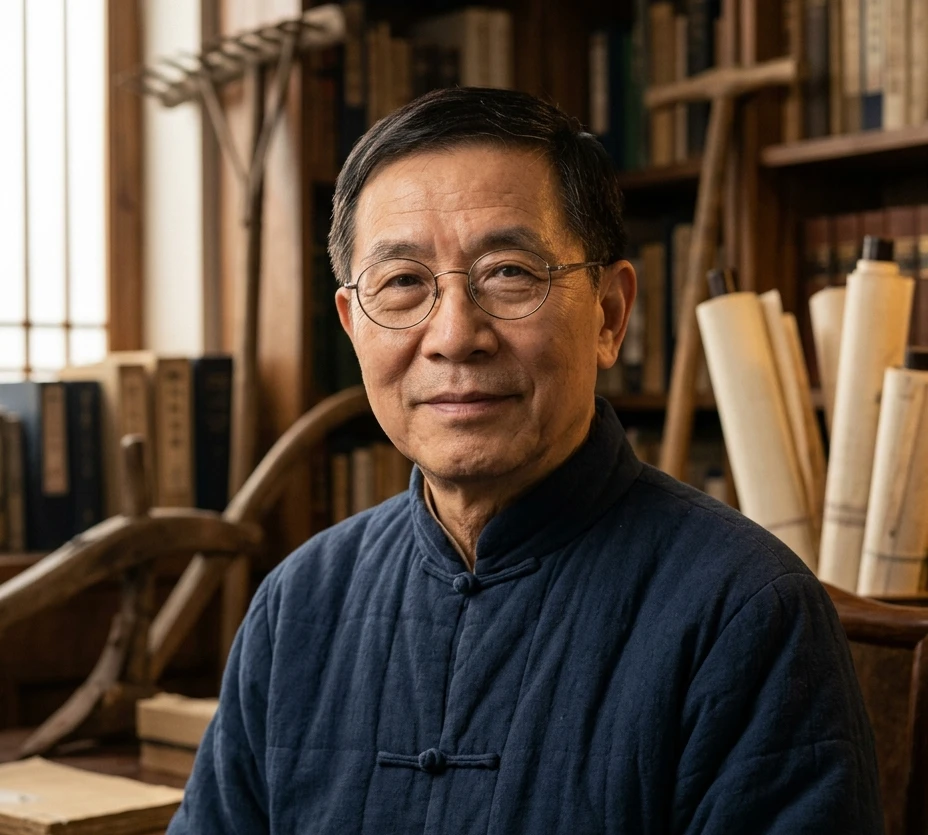
Senior research librarian at the China Agricultural Museum, Secretary-General of the 24 Solar Terms Protection Alliance. Specializes in agricultural history, farming civilization, and the application of solar term wisdom in agricultural practice.
Connected Sites
Article References
Voice Type
Fan Cunzhi was born in 1965. He serves as a Senior Research Librarian (Grade 2) at the China Agricultural Museum (National Agricultural Exhibition Center), Director of the Agricultural History Research Department, and Secretary-General of the 24 Solar Terms Protection Alliance. He is also Vice President of the Beijing Museum Society and Executive Council Member of the China Agricultural History Society, and receives the State Council Special Allowance. Fan Cunzhi is a leading advocate for the research and preservation of the 24 solar terms. He was deeply involved in the UNESCO intangible cultural heritage nomination process for the solar terms and has dedicated his career to academic research, public education, and social dissemination of solar term culture. His core academic contribution is systematically explaining how the 24 solar terms evolved from astronomical observation into a timekeeping system that guides agricultural practice — as the Chinese farming saying goes: 'There is no fixed rule for planting fields; everything depends on reading the solar terms.' He has authored and edited authoritative works including 'Deep Reading of the 24 Solar Terms', 'The Wisdom of Five Thousand Years of Farming', and 'Chinese Traditional Agricultural Ecological Wisdom'. He directed the compilation of sub-projects within the 'Chinese Encyclopedia — Agriculture Volume' and has published numerous popular science articles on solar terms in People's Daily and Beijing Daily. His widely cited concept that 'the 24 solar terms represent the ecological wisdom of the harmony between heaven, earth, and humans' has become a foundational framing for the field. Fan Cunzhi is particularly focused on the contemporary transformation of solar term culture — from museum exhibitions and cultural heritage creative design competitions, to seasonal food experiences and educational study tours. He believes that the solar terms are not museum artifacts but 'cultural assets that must move from books into daily life, from heritage lists into everyday practice.'